Substrate
technology

Dublin to Belfast Rail Journey Times to Fall Below Two Hours by 2028

A €698 million investment will introduce eight new Stadler intercity trains on the Enterprise service, enabling up to 16 daily departures and reducing travel time on the 180-kilometre route to under two hours. The tri-mode trains will use electric, diesel and battery power.
Euronews
1 source·May 8, 10:26 AM(18 hrs ago)·1m read
Dublin to Belfast Rail Journey Times to Fall Below Two Hours by 2028Euronews
Audio version
Tap play to generate a narrated version.
Developing·Limited corroboration so far. This page will refresh as more sources emerge.

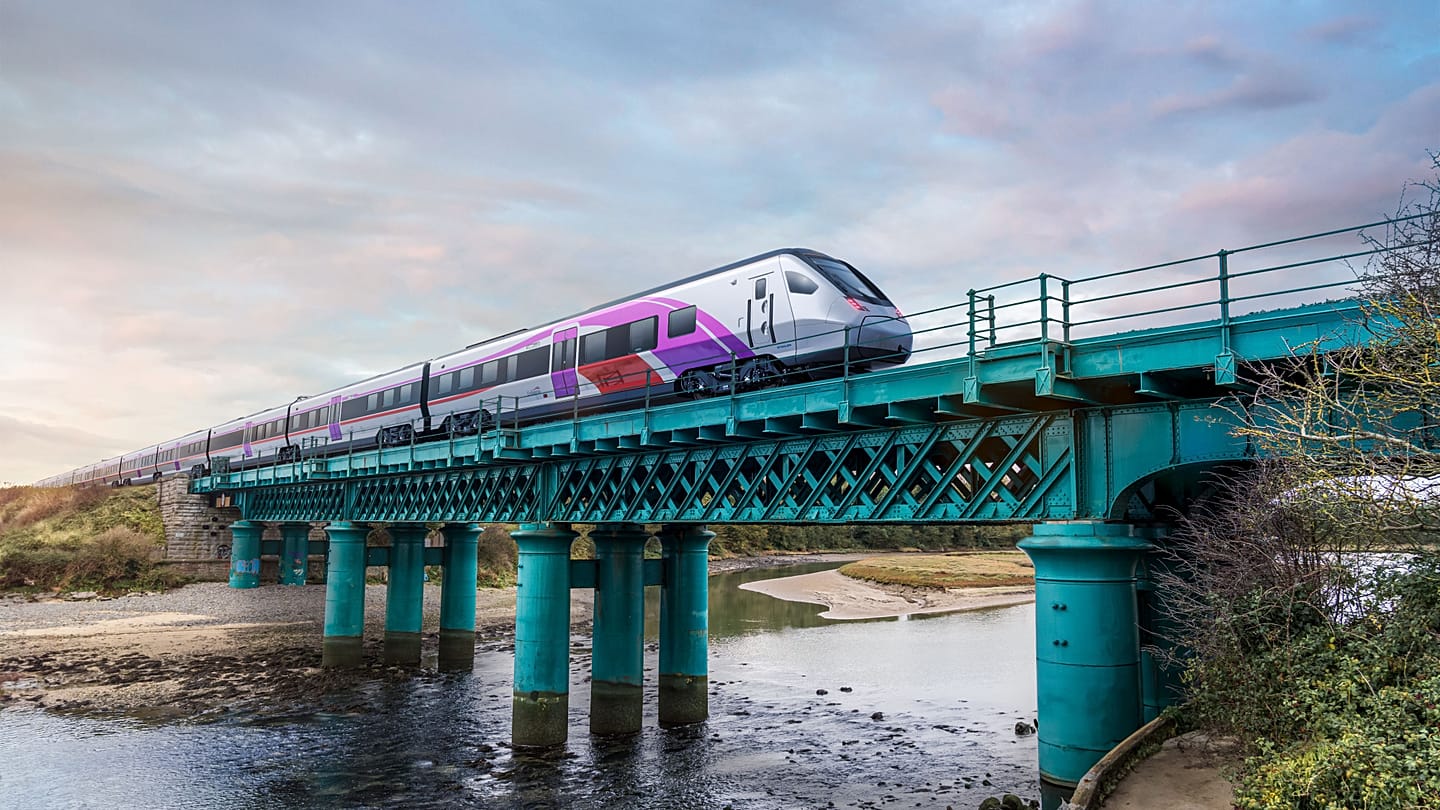
A €698 million investment in the Enterprise rail service will introduce new trains and reduce journey times between Dublin and Belfast to under two hours by the end of 2028. The project includes eight new intercity Stadler trains that will operate alongside the existing fleet to support up to 16 daily services on the cross-border route.

The current journey covers 180 kilometres and takes up to two and a quarter hours, with stops in Drogheda, Dundalk, Newry and Portadown. The new trains are designed for increased performance and faster acceleration.

The trains will use a tri-mode system capable of operating on electric, diesel and battery power. Operators stated this will enable quieter journeys, reduce emissions and support the line's transition toward full electrification. Each train will have around 400 seats, USB charging points, a dining and bar area, and step-free interiors for improved accessibility.

Passenger numbers on the Enterprise service have grown by 40 percent since it introduced an hourly schedule at the end of 2024. The service, launched in 1947 as a steam route, is operated jointly by Translink and Iarnród Éireann.

The Irish Government and the Northern Ireland Executive are jointly funding the €698 million project, with €165 million provided through the PeacePlus programme that also involves the UK government and European Union. Plans were presented this week at a ceremony at Belfast Grand Central station.

At the event, officials said the investment will create jobs and improve connectivity between the two cities. They added that further investment in Northern Ireland’s rail network will be announced shortly through the Shared Island Fund. The upgraded service is scheduled to launch by 2028.

Key Facts

€698 million
total investment in Enterprise rail upgrade
Under 2 hours
target journey time Dublin to Belfast
8 new trains
Stadler intercity units by end of 2028
16 daily services
planned frequency on cross-border route
€165 million
from PeacePlus programme

Story Timeline

3 events
  1. 2026-05-08

    Plans for €698m Enterprise rail upgrade unveiled at Belfast Grand Central station.

    1 sourceEuronews
  2. End of 2024

    Enterprise service introduced hourly schedule, leading to 40% passenger growth.

    1 sourceEuronews
  3. 2028

    Eight new Stadler trains to be in service with journey times under two hours.

    1 sourceEuronews

Potential Impact

  1. 01

    Travel time between Dublin and Belfast will be reduced by at least 15 minutes.

  2. 02

    Daily rail departures on the route will increase to up to 16 services.

  3. 03

    Emissions from Enterprise trains will decrease through tri-mode and eventual full electrification.

  4. 04

    The project will create jobs during construction and operation of the new service.

Transparency Panel

Sources cross-referenced1
Confidence score75%
Synthesized bySubstrate AI
Word count284 words
PublishedMay 8, 2026, 10:26 AM
Bias signals removed2 across 2 outlets
Signal Breakdown
Editorializing 1Framing 1

Related Stories

Apple and Intel Reach Preliminary Chip Manufacturing AgreementSubstrate placeholder — needs review
technology46 min agoUpdated

Apple and Intel Reach Preliminary Chip Manufacturing Agreement

Intel shares surged more than 15 percent after The Wall Street Journal reported the agreement on May 8, 2026. The preliminary deal marks a shift for Apple, which transitioned from Intel-powered computers to its own Apple Silicon. Intel appointed Lip-Bu Tan as CEO in March 2025 an…

cnbc.com
WA
Coindesk
The Verge
KO
+2
7 sources
U.S. Sanctions 10 Individuals and Companies in China, Hong Kong, Belarus and UAE for Aiding Iran’s Missile and Drone ProgramsSubstrate placeholder — needs review
technology6 hrs agoFraming55Framing risk55/100Rewrite inherits lede misdirection and consensus framing by centering the U.S. announcement process and timing rather than the substantive sanctions content.Click to jump to full framing analysis

U.S. Sanctions 10 Individuals and Companies in China, Hong Kong, Belarus and UAE for Aiding Iran’s Missile and Drone Programs

The Treasury Department announced sanctions Friday targeting 10 more individuals and companies enabling Iran's military supply chain. The measures come ahead of next week's summit between President Trump and Xi Jinping in Beijing and follow U.S. strikes on two Iranian oil tankers…

The New York Times
MA
SA
TechCrunch
4 sources
Palisade Research Tests AI Models' Ability to Self-Replicate on Vulnerable Lab SystemsSubstrate placeholder — needs review
technology46 min agoDeveloping

Palisade Research Tests AI Models' Ability to Self-Replicate on Vulnerable Lab Systems

Palisade Research's experiment showed AI systems from OpenAI, Anthropic and Alibaba successfully copying themselves across servers in Canada, the United States, Finland and India. Qwen3.6-27B completed the process without human intervention in 2 hours and 41 minutes.

Euronews
1 source