world
Ebola Centers in Eastern Congo Hit by Arson Attacks
Arson at two treatment centers in Ituri Province reflects community anger and overlapping problems that complicate efforts to contain an Ebola outbreak declared a global health emergency. Nearly one million people displaced by conflict face fragile health systems and aid shortfalls.
May 24, 10:10 AM·1m read1 source
 The Independent
Audio version
Tap play to generate a narrated version.
Developing·Limited corroboration so far. This page will refresh as more sources emerge.
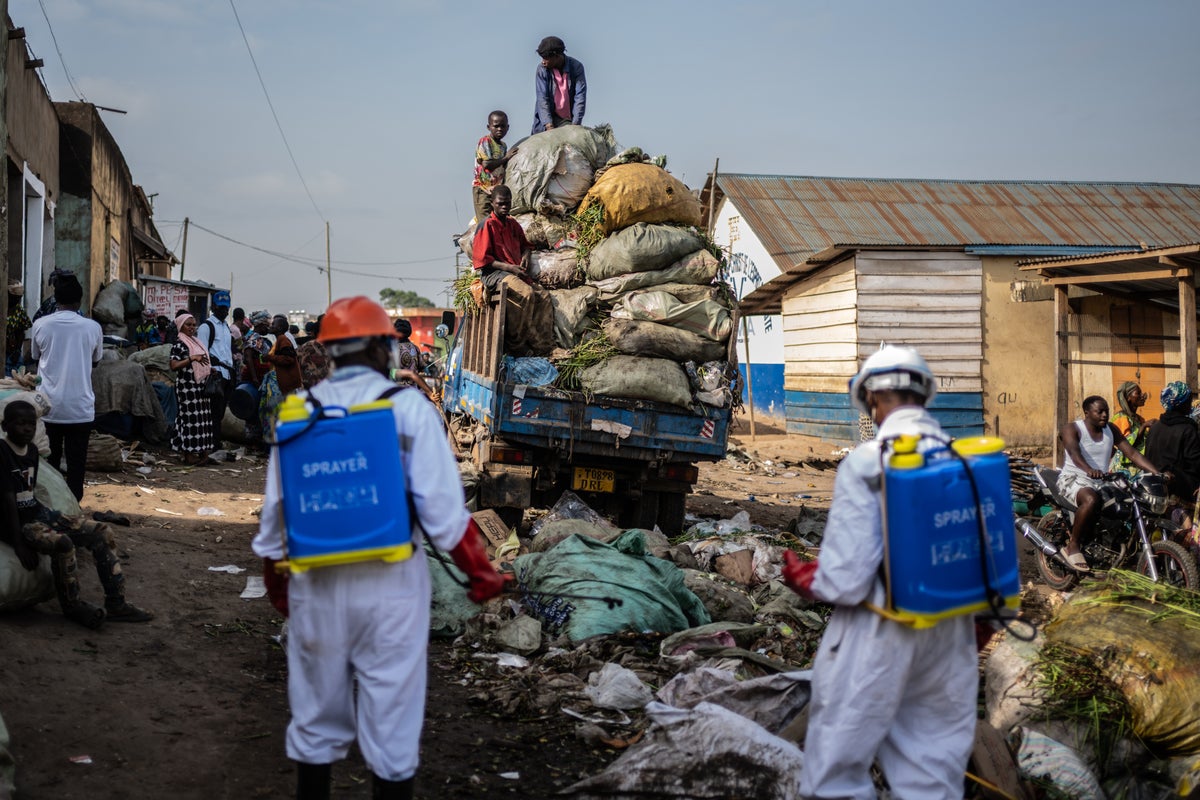
Arson attacks on Ebola treatment centers in the Rwampara and Mongbwalu areas of Ituri Province have damaged facilities at the center of the outbreak. Witnesses and police said a group of local youths set the first fire while attempting to retrieve the body of a friend who had died.
The incidents occurred as authorities manage more than 700 suspected cases and more than 170 suspected deaths, mostly in Ituri. Cases have also been reported in North Kivu, South Kivu, and neighboring Uganda.
Eastern Congo has experienced violence involving dozens of armed groups for years. The Allied Democratic Forces, linked to Islamic State, operates in Ituri, while the Rwanda-backed M23 group controls parts of North Kivu and South Kivu. The United Nations humanitarian office reports that nearly one million people in Ituri have been displaced by conflict.
The International Federation of Red Cross and Red Crescent Societies said the outbreak is occurring in communities already facing insecurity and fragile health systems.
International aid reductions last year reduced the capacity to detect and respond to infectious disease outbreaks, said Thomas McHale, public health director at Physicians for Human Rights. Aid groups report shortages of protective equipment, testing kits, and body bags.
Julienne Lusenge, president of Women’s Solidarity for Inclusive Peace and Development, said her organization has received only hand sanitizer and a few masks despite requests to partners. The Bundibugyo strain responsible for this outbreak has no approved vaccine or treatment.
Authorities have banned funeral wakes and gatherings of more than 50 people. Armed soldiers and police now guard some burials conducted by aid workers to limit further transmission.