Eli Lilly Weight Loss Drug Retatrutide Shows Up to 30 Percent Body Weight Loss in Trial
Eli Lilly reported that its experimental drug retatrutide produced average weight loss of 28 percent after 80 weeks and up to 85 pounds in some patients. The results come from a phase 3 trial of roughly 2,300 people and remain comparable to outcomes from bariatric surgery.
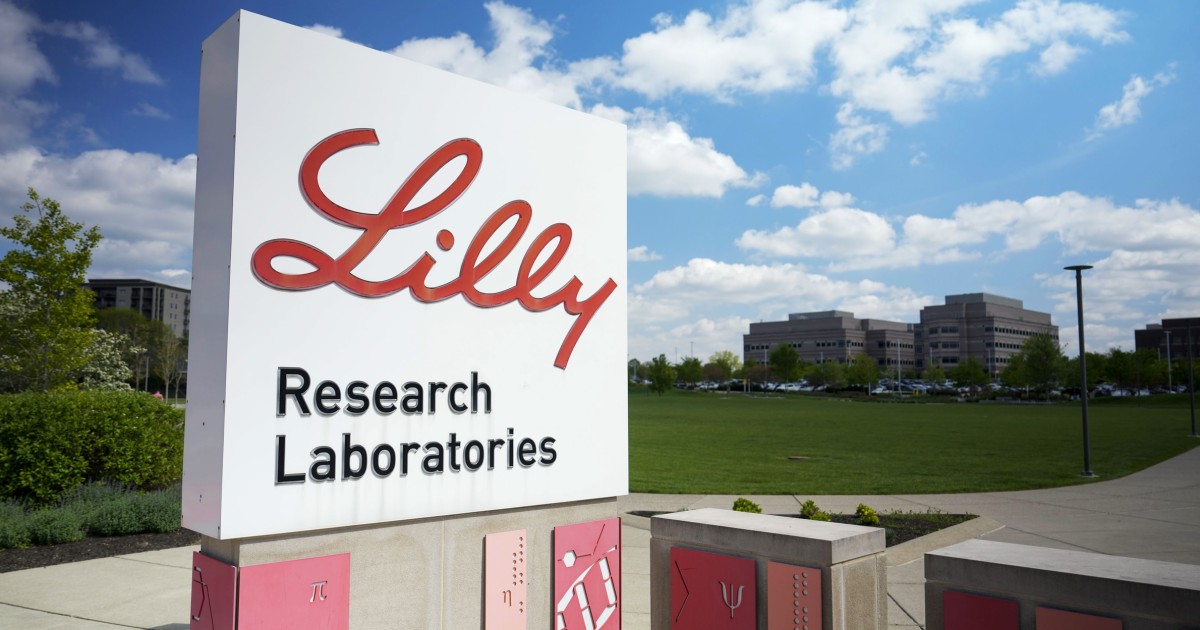 Nbc News
Eli Lilly said Thursday that its experimental weight-loss drug retatrutide produced average body-weight reductions of 28 percent after 80 weeks in a late-stage trial. Some participants lost up to 30 percent of their starting weight, or about 85 pounds, when they continued treatment for 104 weeks.
The company said the findings are based on a phase 3 study of about 2,300 adults with obesity or overweight. Lilly has not yet filed for Food and Drug Administration approval but expects to submit an application as early as this year.
Participants who received the highest weekly dose lost an average of 70 pounds over 80 weeks, with nearly half achieving at least 30 percent weight reduction. A smaller group with severe obesity who took the drug longer reached an average loss of 85 pounds.
Those figures are similar to weight loss reported after bariatric surgery, which typically produces 25 percent to 35 percent reductions within one to two years. Direct head-to-head comparisons with existing drugs were not conducted. In earlier trials, patients taking the highest dose of Lilly’s Zepbound lost about 21 percent of body weight over 72 weeks, while patients on Wegovy lost about 15 percent after 68 weeks.
Retatrutide is a triple agonist that mimics the hormones GLP-1, GIP, and glucagon. Current approved medicines such as Zepbound act on GLP-1 and GIP, while Wegovy targets GLP-1 alone. Common side effects included nausea, constipation, and diarrhea. Patients also reported higher rates of unusual skin sensations and urinary tract infections compared with placebo.
Dropout rates were higher than those seen with Zepbound but similar to those observed with Wegovy.
Expert Reactions Dr.
Susan Spratt, an endocrinologist at Duke Health who was not involved in the trial, said the results represent the largest weight loss observed in any medication study. She noted that retatrutide could help the roughly 10 percent of patients who do not respond to existing GLP-1 drugs.
Dr. Shauna Levy, medical director of the Tulane Weight Loss Center, said the drug may offer an effective option for patients with higher body mass index who currently rely on surgery to reach a healthy weight. " — Dr.
Key Facts
Potential Impact
- 01
Lilly plans to file for FDA approval of retatrutide as early as 2026.
- 02
Side-effect profile remains similar to existing GLP-1 medicines.
- 03
Retatrutide could serve patients who do not respond to current GLP-1 drugs.
Transparency Panel
Related Stories
 The Guardian
WHO Chief Visits DRC as Ebola Death Rate Reaches 30-50%
World Health Organization director-general Tedros Adhanom Ghebreyesus arrived in the Democratic Republic of the Congo to support containment of a new Ebola outbreak. The agency revised the death rate to 30-50% based on confirmed cases and recorded 10 confirmed and 223 suspected d…
 westernjournal.com
Greek National Charged in UK With Aiding Iran-Linked Intelligence Service
A 46-year-old Greek man living in Germany was charged under the UK National Security Act with assisting an intelligence service believed to be Iran by targeting a journalist at Iran International.
 physicianonfire.com
Bilt Rewards reports $1 billion revenue target for 2026
Bilt Rewards CEO Ankur Jain said the company's flagship credit card accounts for less than 11 percent of revenue. The firm now processes more than $100 billion in annual housing spend across one in four U.S. apartment buildings.