Elon Musk Testifies in OpenAI For-Profit Shift Trial
Elon Musk testified in a federal trial against OpenAI and CEO Sam Altman, accusing them of abandoning the company's nonprofit mission. He cited meetings with Barack Obama and Larry Page to underscore his AI safety concerns. The case, filed in 2024, seeks over $100 billion in damages and aims to restore OpenAI's nonprofit status.
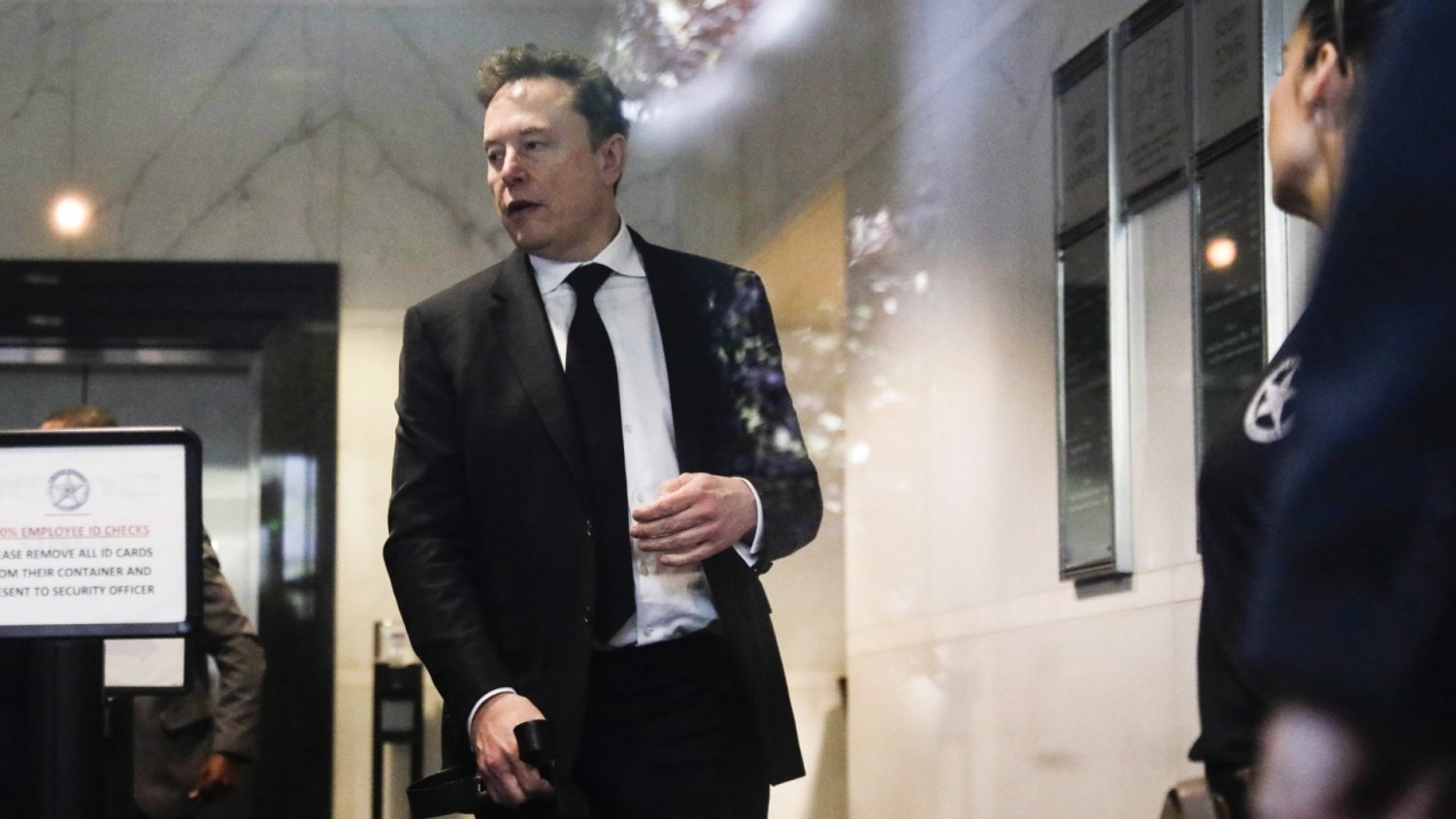
Nbc NewsElon Musk took the stand as the first witness in his civil trial against OpenAI and CEO Sam Altman in an Oakland federal court. The trial began Tuesday, with Musk accusing OpenAI of betraying its founding mission as a nonprofit dedicated to developing AI for public benefit.
He seeks more than $100 billion in damages and requests to unwind the company's for-profit structure. Musk testified that he co-founded OpenAI in 2015 alongside Altman and president Greg Brockman after discussions about AI risks. He donated $38 million to the organization, which was established as a nonprofit.
OpenAI later shifted to a for-profit model, with Microsoft holding a roughly 27% stake in the for-profit entity.
Musk described AI as a very smart child that needs the right values instilled to prevent it from running out of control. He cited a 2015 meeting with former President Barack Obama, where he spent an hour warning about AI dangers. Musk also recounted a 2015 conversation with then-Google CEO Larry Page, who called him a "speciesist" for prioritizing humans over AI.
Musk stated he founded OpenAI as a counterbalance to Google, which he said did not prioritize AI safety at the time. He testified about recruiting AI researcher Ilya Sutskever from Google to OpenAI. Musk left OpenAI in 2018 and launched his own AI startup, xAI, in 2023.
“I thought it was extremely important to have a counterbalance to Google.”
The lawsuit alleges Altman and Brockman deceived Musk into funding the nonprofit, then transformed it into a for-profit entity effectively subsidiary to Microsoft. OpenAI maintains that Musk agreed in 2017 to the need for a for-profit shift but left after demanding full control.
The company described the lawsuit as baseless. During opening statements, OpenAI attorney William Savitt said Musk lost a power struggle and is now motivated by rivalry, especially after starting xAI. Musk's attorney Steven Molo highlighted Musk's tech contributions.
The trial, expected to last about three weeks, involves a nine-person jury presided over by U.S. District Judge Yvonne Gonzalez Rogers. Musk testified that a loss would set a precedent harming charitable giving in America. He pledged to donate any damages to OpenAI's charitable arm.
Potential witnesses include Microsoft CEO Satya Nadella.
OpenAI was founded in 2015 with a mission to develop AI safely for humanity's benefit. By 2017, leaders discussed a for-profit arm for funding, but Musk said he insisted the nonprofit retain control. Last year, OpenAI restructured, shifting toward a conventional for-profit structure while keeping the nonprofit in control.
Musk referenced pop culture, contrasting a "Terminator" outcome with a "Star Trek" future for AI. He also discussed his brain-chip startup Neuralink as aimed at AI-human symbiosis for safety, and SpaceX as life insurance for humanity.
“It’s not okay to steal a charity." — Elon Musk, testimony on Tuesday (nypost.com). The case centers on claims of breach of contract and unjust enrichment. If liable, the judge will determine remedies, potentially including removing Altman and Brockman from leadership. OpenAI's valuation stands at about $850 billion, with reports of a potential IPO this year at $1 trillion. Musk's SpaceX acquired xAI in February and is preparing for an IPO that could value it at more than $2 trillion. The trial follows jury selection on Monday, during which Musk posted on X about the case, prompting judicial admonition to both sides.”
Key Facts
Story Timeline
6 events- Tuesday
Elon Musk testified as the first witness in the trial against OpenAI and Sam Altman in Oakland federal court.
6 sourcesBusiness Insider · nypost.com · fortune.com - Monday
Jury selection began for the Elon Musk v. OpenAI trial.
3 sourcesNbc News · nypost.com · ABC - Last year
OpenAI completed a major restructuring toward a for-profit structure with Microsoft holding a 27% stake.
2 sourcesBusiness Insider · fortune.com - 2024
Musk filed the lawsuit against OpenAI and Sam Altman seeking over $100 billion in damages.
4 sourcesBusiness Insider · fortune.com · ABC - 2023
Musk launched his AI startup xAI.
2 sourcesBusiness Insider · fortune.com - 2015
Musk co-founded OpenAI as a nonprofit after meetings with Barack Obama and Larry Page on AI risks.
5 sourcesBusiness Insider · fortune.com · nypost.com
Potential Impact
- 01
OpenAI's potential IPO at $1 trillion valuation could be delayed or altered by the ruling.
- 02
The trial outcome may set legal precedent for nonprofit conversions in tech charities.
- 03
A Musk victory could force OpenAI to revert to nonprofit status and remove Altman and Brockman from leadership.
- 04
Microsoft's investment in OpenAI faces risk of restructuring if damages are awarded.
- 05
Musk's xAI may gain competitive edge if OpenAI is weakened by the verdict.
- 06
Increased scrutiny on AI safety debates could influence industry funding and regulations.
Transparency Panel
Related Stories
naturalnews.comBrockman Testifies on Heated 2017 Dispute with Musk Over OpenAI's For-Profit Shift in Federal Trial
OpenAI President Greg Brockman detailed a heated 2017 confrontation with Elon Musk during testimony in the federal trial Musk v. Altman. He described Musk storming around a table and grabbing a painting after rejecting shared control proposals. The lawsuit seeks $150 billion in d…
Italian Prime Minister Meloni Warns of AI-Generated Deepfakes and Shares Altered Image
Italian Prime Minister Giorgia Meloni highlighted risks from AI-generated fake images, noting one depicting her in underwear and urging verification of online content. She filed a libel suit two years ago over similar deepfake images. Meanwhile, U.S. Secretary of State Marco Rubi…
Richard Dawkins Claims AI Chatbot Shows Signs of Consciousness After Three-Day Conversations
Evolutionary biologist Richard Dawkins engaged in three-day discussions with an AI bot named Claudia, leading him to state that AIs are conscious and human-like. He shared unpublished work and philosophical reflections with the bot, which responded with poems and praise.