Ethiopia Holds General Election with Over 50 Million Registered Voters
More than 50 million registered voters select candidates for federal and regional seats on 31 May 2026. The elected parliament will choose the next prime minister.
 Al Jazeera
Ethiopians vote on 31 May 2026 in a general election to choose members of parliament. Al Jazeera reported that the elected members will select the next prime minister under Ethiopia’s federal parliamentary system. The National Election Board of Ethiopia said 47 political parties and more than 10,900 candidates are participating.
The board reported 2,198 candidates running for the federal parliament, 8,736 for regional and city councils, and 73 independent candidates. More than 50 million voters are registered, with women accounting for around half of the electorate. The median age of Ethiopians is about 19 years according to United Nations population estimates, giving young voters a substantial presence.
The Prosperity Party, led by Prime Minister Abiy Ahmed, is fielding candidates for seats in the House of Peoples’ Representatives and regional councils across almost all federal and regional constituencies. The party was formed in 2019 following the merger of several regional parties that previously made up the Ethiopian People’s Revolutionary Democratic Front and holds a majority in the House of Peoples’ Representatives following the 2021 general election.
The National Movement of Amhara, led by Belete Molla, is fielding candidates primarily within the Amhara region for federal and regional council seats.
The Ethiopian Citizens for Social Justice, led by Berhanu Nega and formed in 2019, is contesting seats in both the House of Peoples’ Representatives and regional councils across multiple federal and regional constituencies. The Peace for Ethiopia coalition, which includes the Agew National Council, Gamo Democratic Party, Gambella Peoples’ Freedom Movement, Kaffa Green Party, and Tigray Democratic Cooperation, coordinates candidate lists across its member parties for both federal and regional councils.
Regional and ethnic-based parties contest seats across Ethiopia’s federal system, including in Oromia, Somali, Tigray and southern regions.
They operate within their respective states and are registered with the National Election Board of Ethiopia to field candidates in federal and regional constituencies. Citizens aged 18 and above have the right to vote under Ethiopia’s legal framework for universal adult suffrage.
The election is held under Ethiopia’s federal parliamentary system as defined by the 1995 constitution, and the National Election Board of Ethiopia oversees the administration of voting and candidate registration.
Transparency
Reported by a single outlet. This score reflects source tier and factual specificity — corroboration is limited with one source.
Story details
Related Stories
 The Independent
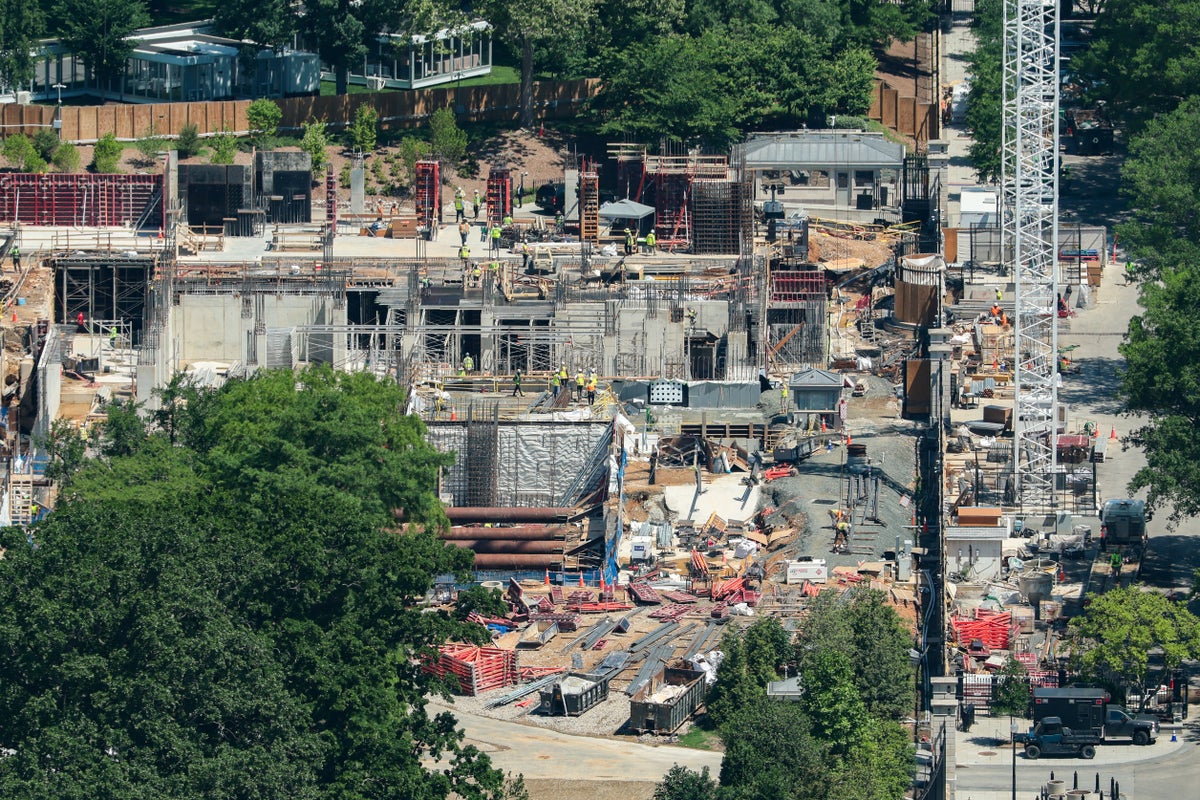
Appeals Court Allows White House to Resume Construction of Secure Ballroom and Counter-Drone Facility
U.S. District Judge Richard Leon ruled that President Trump lacks authority to build the 90,000-square-foot ballroom. An appeals court later allowed above-ground work to continue.
 news.sky.com
Trump and Syrian President Ahmed al-Sharaa Discuss Sanctions Relief in Phone Call
The two leaders discussed supporting Syria's economy and recent regional developments. Ahmed al-Sharaa stated that lifting remaining U.S. sanctions is essential for economic revival.
 nypost.com
Israeli Forces Seize Historic Beaufort Castle in Southern Lebanon
Israeli forces seized the 12th-century hilltop fortress overlooking the Litani River. The operation marks Israel's deepest advance into Lebanon in more than 26 years.