science
Euclid Telescope Captures Largest Image of Milky Way Center
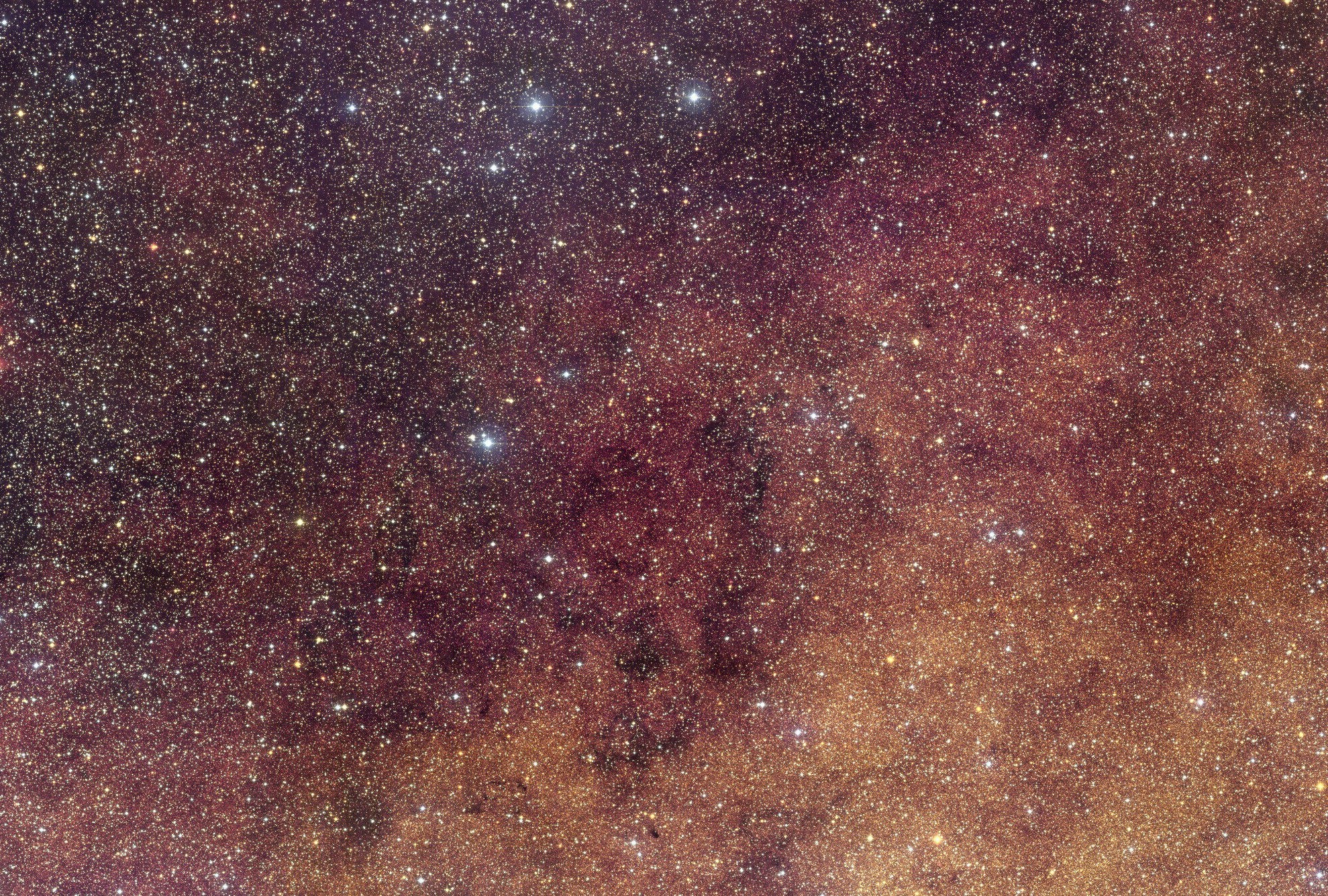
The Euclid space telescope produced a mosaic covering the Milky Way's central bulge with 60 million stars. The image was assembled from nine frames taken over 26 hours in March 2025.
 deccanchronicle.com
Audio version
Tap play to generate a narrated version.
The Euclid space telescope has captured the largest and most detailed photo yet of the Milky Way's central bulge, an image containing 60 million stars, the European Space Agency said Wednesday. The mosaic is composed of nine photographs, each covering an area larger than the Moon.
It was recorded in black and white with the telescope's visible-light camera and later colorized using data from the Canada-France-Hawaii Telescope.
Euclid launched on July 1, 2023, from Cape Canaveral aboard a SpaceX Falcon 9 rocket. The $1.5 billion observatory is stationed roughly one million miles from Earth on the far side of the Moon's orbit. Its six-year mission calls for imaging one-third of the sky to study the distribution of dark matter and dark energy through observations of galaxies and galaxy clusters dating back 10 billion years.
The new image will not identify new planets outside the Solar System, but it will help measure the mass of known and future exoplanets through microlensing. In this process, a foreground star briefly magnifies the light of a background star; any orbiting planet produces an additional, detectable shift in brightness.
The image includes 51 known planetary systems. During the past 20 years, nearly 300 exoplanets have been found using microlensing, all with ground-based telescopes pointed toward the galactic center. A three-minute video released with the image shows the telescope's performance during the 26-hour observation period in March 2025.