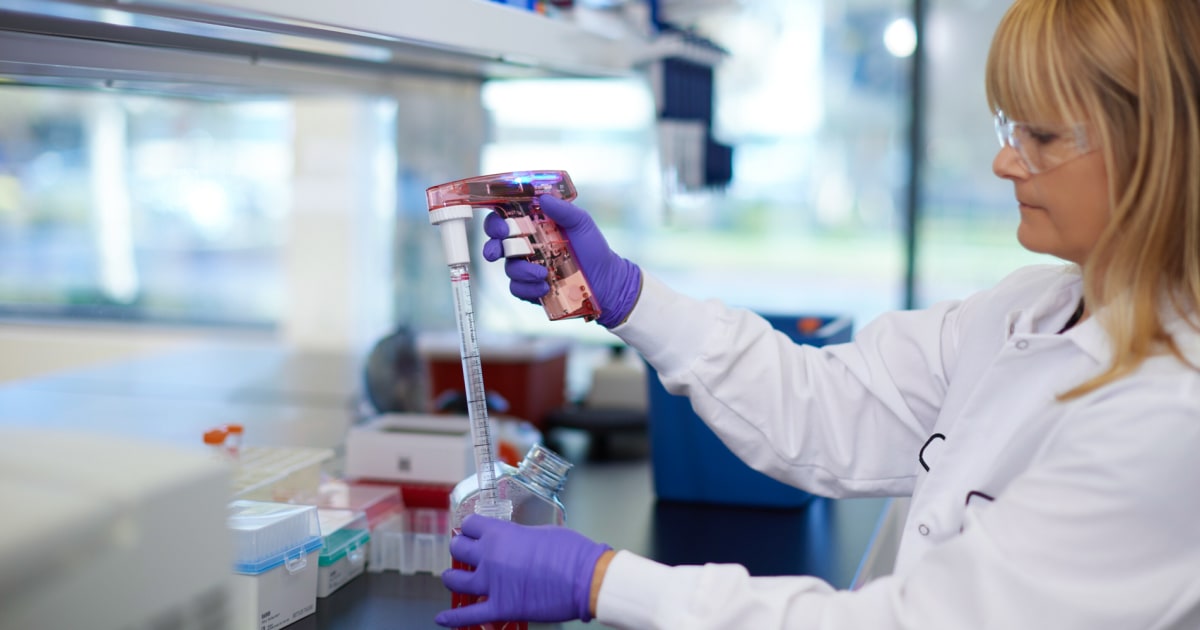
Experimental Pancreatic Cancer Drug Doubles Survival in Advanced Cases
An experimental drug called daraxonrasib has shown it can double survival time for patients with advanced pancreatic cancer when combined with chemotherapy. The Food and Drug Administration has fast-tracked the drug for approval and allowed expanded access outside clinical trials. Results from Phase 1/2 and Phase 3 studies were released in April and published this week.
Nbc NewsAn experimental pancreatic cancer drug called daraxonrasib has been shown to double survival time in patients with advanced stages of the disease when added to chemotherapy. The drug has received fast-track designation from the Food and Drug Administration.
Last week the agency permitted the drugmaker to provide daraxonrasib to patients outside of clinical trials through an expanded access program. In April the company released early findings from its Phase 3 clinical trial. Patients who received daraxonrasib plus chemotherapy had a median overall survival of 13.2 months compared with 6.7 months for those who received chemotherapy alone.
On Wednesday results from an earlier Phase 1/2 study were published in the New England Journal of Medicine. In patients with metastatic pancreatic cancer the drug stopped tumors from progressing for a median of 8.1 months at the highest dose and produced median overall survival of 15.6 months.
Pancreatic cancer is typically diagnosed after it has spread to other parts of the body. Even with chemotherapy many patients do not live more than a year after diagnosis. The American Cancer Society reports that only 3 percent of patients with metastatic pancreatic cancer survive five years.
More than 67,000 people in the U.S. are expected to be diagnosed with pancreatic cancer this year and more than 52,000 are predicted to die from it. There is no screening test and early symptoms are often vague so that 80 percent of cases are found at later stages.
Daraxonrasib targets a protein called RAS that is mutated in more than 90 percent of pancreatic cancers. The mutation keeps the protein permanently switched on driving uncontrolled cell growth. Previous efforts to target RAS had failed for years leading researchers to describe it as undruggable.

The drug works by pairing with another protein called cyclophilin A inside cells. The combination acts as a molecular glue that binds to and blocks the mutated RAS protein. Side effects included a blistering rash sores in the mouth and throat vomiting and diarrhea.
These effects were managed with antibiotics topical creams and anti-diarrheal medication. They were considered severe in about 30 percent of patients and eight people left the trial because of them. The company has scheduled a presentation of the Phase 3 results later this month at the American Society of Clinical Oncology annual meeting.
The Phase 3 trial also included patients without the KRAS mutation suggesting the drug could benefit a wider group of pancreatic cancer patients.
Two smaller studies presented in April examined daraxonrasib as a first-line treatment given before or alongside chemotherapy. Those studies also reported survival benefits. Researchers are studying whether the drug could work in other RAS-mutated cancers including colorectal and lung cancer.
Oncologists not involved in the trials described the findings as a significant development in a disease that has had few treatment advances. The expanded access program will allow eligible patients to receive the drug while the approval process continues.
The FDA is expected to review the data on an accelerated timeline.
Key Facts
Story Timeline
4 events- 2026-04
Company released early Phase 3 trial findings showing doubled survival.
1 sourceNbc News - Last week
FDA permitted expanded access program for daraxonrasib outside trials.
1 sourceNbc News - This week
Phase 1/2 study results published in New England Journal of Medicine.
1 sourceNbc News - Later this month
Phase 3 results scheduled for presentation at oncology meeting.
1 sourceNbc News
Potential Impact
- 01
Patients with advanced pancreatic cancer may gain roughly six additional months of survival with the new drug.
- 02
The FDA could grant approval on an accelerated timeline allowing broader patient access.
- 03
Oncologists may begin offering daraxonrasib through expanded access to eligible patients before full approval.
- 04
Treatment protocols for pancreatic cancer may shift away from chemotherapy-only approaches.
- 05
Research may accelerate on using the drug for colorectal and lung cancers with RAS mutations.
Transparency Panel
Related Stories
France 24Zambia’s Kabwe Residents Sue Mining Company Over Lead Contamination
Children in Kabwe, Zambia, show blood lead levels above World Health Organization limits after decades of mining. An estimated 140,000 women and children have joined a class-action lawsuit against Anglo American South Africa Limited.
citizen.co.zaEbola Outbreak in Eastern DRC Kills at Least 240 Since Early May
The virus has spread from Ituri province into other eastern DRC regions and Uganda. Health workers report reduced international aid and limited local resources as they attempt to contain transmission.
manilatimes.netOutbreaks of hantavirus and Ebola prompt U.S. quarantine and travel measures
The U.S. government ordered quarantines after a hantavirus outbreak on a cruise ship and imposed new traveler restrictions during an Ebola outbreak in Africa. Federal agencies stated that response operations continue despite recent staffing reductions at health agencies.