world
Falcon 9 Upper Stage Expected to Strike Moon in August
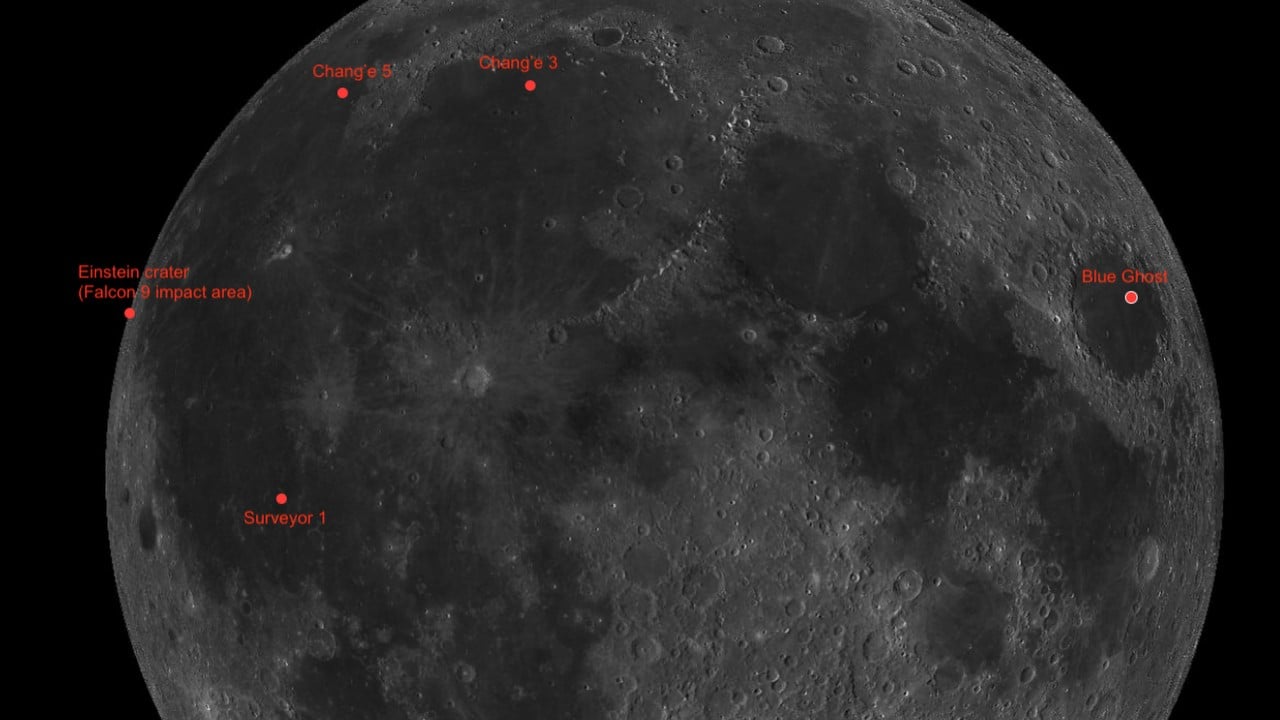
A SpaceX Falcon 9 rocket upper stage launched in January 2025 is projected to impact the lunar surface on August 5, 2026. The object, measuring 13.8 metres long, is expected to strike Einstein crater at 2.43 kilometres per second. South China Morning Post reported that the event poses no immediate risk to Chinese lunar landers but highlights gaps in space debris management rules.
May 14, 5:00 AM·1m read1 source
 South China Morning Post
Audio version
Tap play to generate a narrated version.
Developing·Limited corroboration so far. This page will refresh as more sources emerge.
A SpaceX Falcon 9 rocket upper stage is on course to strike the moon in August. The object has been drifting in Earth-moon space since January 2025, when it launched a U.S. commercial lander and a Japanese lander. The upper stage measures 13.8 metres long and 3.7 metres wide.
m. Beijing time on August 5, according to calculations by an independent astronomer. The impact is expected to produce a flash of light and eject lunar rocks from the crater at high speeds. Some of the ejected material could conceivably reach the vicinity of Chinese lunar landers, though the probability is described as very low.
The expected strike underscores the absence of comprehensive international rules for managing space debris as lunar missions by the United States, China and private companies increase. The upper stage is one of several objects currently tracked in cislunar space.
An independent astronomer stated that none of the Chinese landers are near the impact site. The event is not expected to noticeably raise the usual risk level for objects on the lunar surface.