Fijian Farmers Use Traditional Signs to Predict Cyclones
Farmers in Fiji observe natural indicators such as yam vines and bee behavior to anticipate cyclones during the hurricane season from November to April. The Fijian Meteorological Service announced in 2024 that it would integrate this traditional knowledge with scientific forecasting. Pacific nations including Vanuatu and Tonga are participating in similar projects to enhance early warning systems.
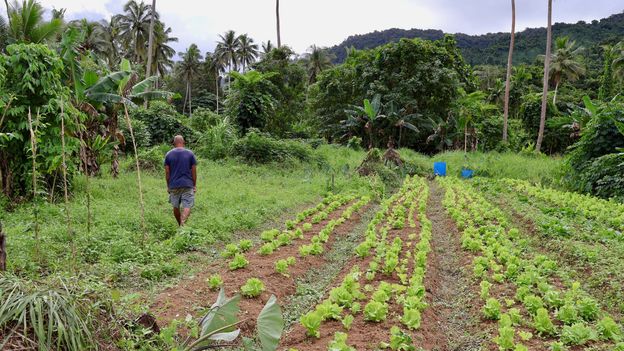
bbc.comFarmers in Fiji monitor wild yam vines in July to predict cyclones. If the vines creep along the ground, a cyclone is expected between November and April, according to farmer Marika Radua. If the vines grow upwards, a cyclone is unlikely, he stated.
Radua's farm on Vanua Levu includes crops like lettuce, taro, and cassava. He uses traditional ecological knowledge to decide when and where to plant. This knowledge includes observing bananas, bees, and breadfruit as indicators of extreme weather.
The Fijian Meteorological Service stated in 2024 that it would combine traditional environmental knowledge with scientific methods. This approach follows similar efforts in Vanuatu, Tonga, Samoa, Niue, and the Solomon Islands. Siosinamele Lui, climate traditional knowledge officer at the Secretariat of the Pacific Regional Environment Programme, said natural indicators help remote communities prepare for weather events.
Since 2016, the Secretariat of the Pacific Regional Environment Programme has researched these indicators through reports from islanders via calls, messages, social media, and local centers. Vanuatu developed an app called ClimateWatch for crowd-sourcing data, such as green turtles nesting further inland indicating an approaching cyclone.
Lui noted that integrating this data requires long-term monitoring to correlate with weather events.
equipment is limited in the Pacific due to the region's vast ocean and numerous islands, leading to data gaps, Lui stated. Traditional knowledge provides an alternative for areas without technology. The goal is to ensure communities receive warnings and prepare, regardless of the source.

Radua, a climate resilience expert on Vanua Levu, compiled a seasonal calendar based on traditional knowledge passed through stories, songs, dances, and idioms. He teaches farmers to use diverse planting methods to observe natural signs, such as unusual flowering patterns.
This practice supports preparedness, he said.
and Future Outlook Cyclone Winston
in 2016 damaged Fiji's agricultural sector, costing over $2 million. A 2025 report ranked Fiji 103 out of 190 countries for climate risk, noting expected increases in cyclone severity. Pacific Island countries require about $1 billion for climate adaptation, according to the International Monetary Fund.
Some Fijian communities reported traditional signs as the first alerts for Cyclone Winston, up to four months in advance. A 2025 report by the International Institute for Sustainable Development documented observations in Tailevu, including hornets nesting low, unusual breadfruit growth, and curled plantain shoots.
Other signs included warmer seas, dead fish on shores, and seabirds flying low a week before the cyclone.
Key Facts
Story Timeline
5 events- 2025
A report by the International Institute for Sustainable Development documented traditional signs observed before Cyclone Winston in Tailevu.
1 sourcebbc.com - 2025
A climate risk report ranked Fiji 103 out of 190 countries, noting expected increases in cyclone severity.
1 sourcebbc.com - 2024
The Fijian Meteorological Service announced integration of traditional knowledge into scientific forecasting.
1 sourcebbc.com - 2016
The Secretariat of the Pacific Regional Environment Programme began researching natural indicators.
1 sourcebbc.com - 2016
Cyclone Winston caused over $2 million in damage to Fiji's agricultural sector.
1 sourcebbc.com
Potential Impact
- 01
Fijian farmers could adopt more resilient planting practices based on natural indicators.
- 02
Increased focus on traditional methods could reduce agricultural losses from cyclones in Fiji.
- 03
Meteorological services in Pacific nations might expand data collection via apps like ClimateWatch.
- 04
Pacific Island countries may seek additional funding for climate adaptation incorporating local knowledge.
Transparency Panel
Related Stories
NASA Releases Thousands of Photos from Artemis II Lunar Mission
NASA has released over 12,000 images from the Artemis II mission, which orbited the moon in April 2026. The photos capture views of Earth, the lunar surface, and a solar eclipse observed during the crew's return. Astronauts from the mission also visited the United Nations headqua…
deccanchronicle.comHantavirus Cases Reported on MV Hondius Cruise Ship, Three Fatalities Amid Low Transmission Risk
A hantavirus outbreak on the MV Hondius cruise ship has killed three passengers and sickened seven others, prompting an international response coordinated by the World Health Organization. The ship, carrying 147 people from 23 nationalities, is set to sail to Spain's Canary Islan…
newscientist.comHoutman Abrolhos Corals Show High Resilience to 2025 Heatwave, Unlike Global Losses
Coral reefs at the Houtman Abrolhos Islands off Western Australia endured a prolonged heatwave in early 2025 virtually unscathed, unlike widespread global die-offs. Researchers found exceptional heat tolerance across multiple species, with lab tests showing survival rates far exc…