First Cameras Installed This Summer on Fred Young Submillimeter Telescope in Chile
The Fred Young Submillimeter Telescope, perched at 5,600 metres in Chile's Atacama Desert, will soon receive quantum sensor cameras developed by Canadian researchers. Scott Chapman and Mike Fich described the project as opening a new window on the universe at a fraction of space-mission costs. First data are expected by mid-fall, with public findings to follow about a year later.
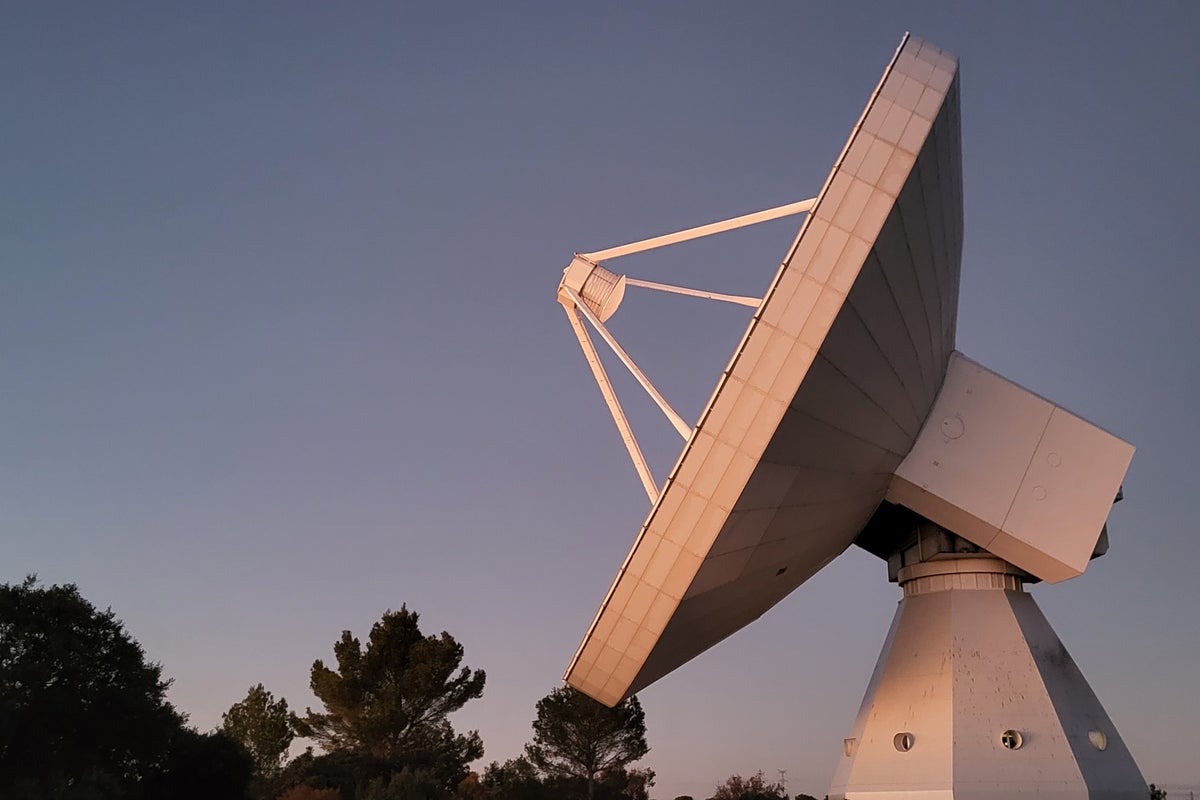
The Fred Young Submillimeter Telescope stands ready to receive its first Canadian-built cameras this summer after an official launch event last month at its site 5,600 metres above sea level on a peak in Chile's Atacama Desert. The location, higher than the Mount Everest base camp, requires visitors to use oxygen tanks.
The telescope's six-metre diameter and the arid setting ensure its view remains unobscured by water vapour and other atmospheric elements, Cbc reported.
Scott Chapman, a Killam professor in astrophysics at Dalhousie University and member of the Canadian project team, attended the launch. He said he was happy to get off the summit after about an hour breathing through an oxygen mask. "It's one of those rare moments when you, in some sense, get to open up a new window on the universe," Chapman said.
Chapman joined the project in 2012. He leads a team of researchers from Dalhousie University, the University of British Columbia and the National Research Council who built two of the first cameras to be installed in the telescope. 1 degrees above absolute zero.
The technology has been in development for the last three decades and can observe submillimetre wavelengths of light between radio and infrared waves. "What it's good at, science-wise, is detecting very cold things in the universe," Chapman said. Such capability matters because stars form from collapsing clouds of extremely cold gas, allowing the telescope to observe star formation in the Milky Way and distant galaxies while offering a glimpse back in time to the formation of the universe.
The Fred Young Submillimeter Telescope project is led by Cornell University’s CCAT Observatory in partnership with universities from Chile, Germany and Canada. Researchers at a dozen Canadian institutions are involved, including the University of Toronto, the University of Alberta, McGill University and McMaster University.
Mike Fich, Canadian team lead and an astronomer at the University of Waterloo, said the telescope offers a clarity of view that some colleagues thought was only possible in space.
"Of course, if you go into space, it costs 100 times more. I mean, satellites just are very, very expensive," Fich said. The telescope cost about $40 million US, not including modules like cameras. Its heaviest components weigh about 55 tonnes.
Those components were built in Germany, shipped to Chile and reassembled on the mountaintop. A nearby Japanese observatory built a road to the site at a cost of about $10 million. The Fred Young project is supplying power to the Japanese observatory for the next decade to compensate for the road’s construction.
The team constructed a dedicated power station at a lower altitude and dug a trench up the mountain for the cable. "We're at such a high altitude there’s no oxygen so you can’t burn diesel [in generators]," Fich said. The telescope can hold up to seven different instrument modules at a time, and the modules can be easily swapped out.
German partners are building a dedicated computing centre to process terabytes of data the telescope will produce every day. A second data processing centre in North America will likely be needed as well. Chapman’s cameras will be installed on the telescope this summer.
First data from the telescope is expected by mid-fall. Findings from the telescope will be released publicly about a year after first data.
Key Facts
Story Timeline
5 events- 2012
Scott Chapman joined the Fred Young Submillimeter Telescope project
1 sourceCbc - 2026-04
Scott Chapman attended official launch event at the telescope site
1 sourceCbc - 2026 Summer
Chapman’s quantum sensor cameras scheduled for installation
1 sourceCbc - 2026 Mid-Fall
First data from the telescope expected
1 sourceCbc - 2027 Mid-Fall
Findings from the telescope to be released publicly
1 sourceCbc
Potential Impact
- 01
Establishes decade-long power supply agreement with nearby Japanese observatory in exchange for road access
- 02
Enables ground-based observations of cold gas clouds and early universe galaxy formation at far lower cost than space-based alternatives
- 03
Requires dedicated computing centres in Germany and likely North America to handle terabytes of daily data
Transparency Panel
Related Stories
straitstimes.comJournalists in Gaza to Receive 2026 Golden Pen of Freedom Award
Three international news agencies will accept the award on behalf of their local staff still reporting from the territory. The World Association of News Publishers cited the journalists' continued coverage under extreme conditions.
upi.comSupreme Court Revives Havana Docks Lawsuit Over Confiscated Cuban Property
The U.S. Supreme Court sent a Helms-Burton Act case back to lower courts for further argument. The suit seeks damages from cruise lines that used docks seized by Cuba in 1959.
France 24Pakistan Population Growth Outpaces Infrastructure as Male Contraception Stays Taboo
Pakistan's population exceeds 258 million and could reach 300 million by 2030. Contraception remains largely taboo in a society shaped by traditional values. The country continues to lag behind neighbors India and Bangladesh in key social sectors.