Unbiased AI-powered news
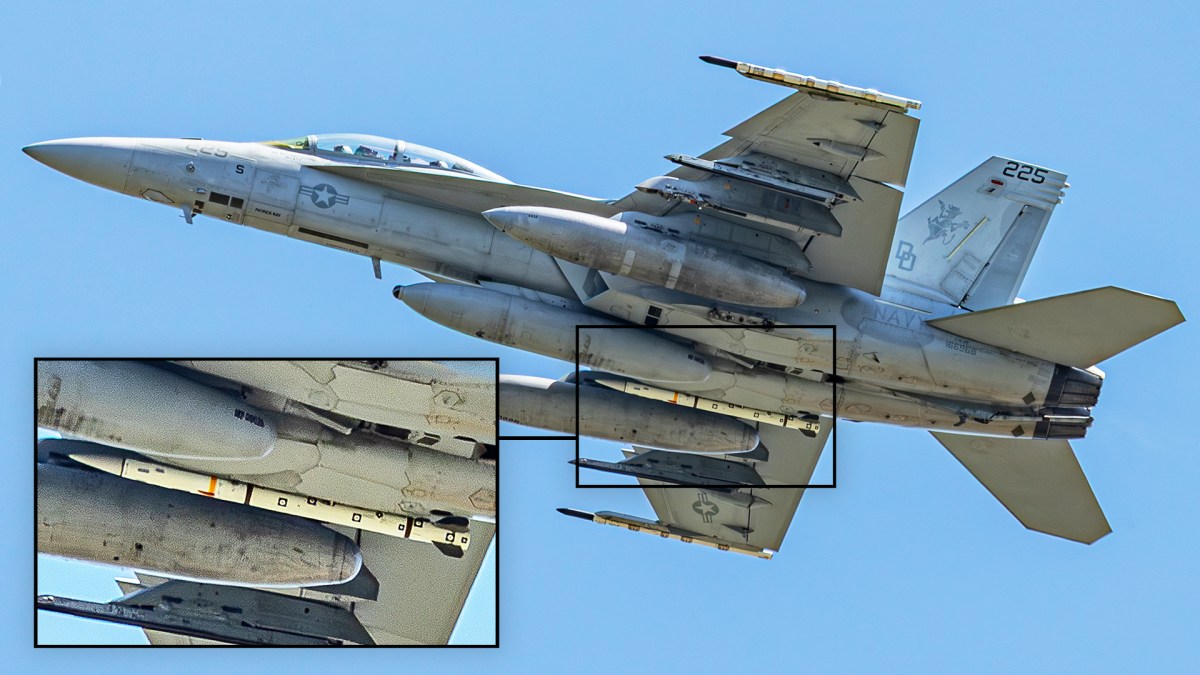
Photographs taken on May 13 at Eglin Air Force Base show an F/A-18F Super Hornet from VX-31 carrying the secretive AIM-260 Joint Advanced Tactical Missile. The missile is designed as a longer-range successor to the AIM-120 AMRAAM with a similar form factor for compatibility with stealth fighters. Development began at least in 2019 with flight testing already including multiple live-fire shots.
The War ZoneThe first public photographs of the U.S. military's AIM-260 Joint Advanced Tactical Missile have surfaced, showing the weapon mounted on a Navy F/A-18F Super Hornet at Eglin Air Force Base in Florida. Photographer Jonathan Tweedy captured the images on May 13 as the jet from Air Test and Evaluation Squadron 31 departed the base.
The aircraft carried the AIM-260 on the fuselage station outboard of its right engine intake, along with a modified drop tank equipped with an infrared search and track sensor and flight data pods on its wingtips. The AIM-260 has been in development for years as a longer-range successor to the AIM-120 Advanced Medium-Range Air-to-Air Missile.
Officials have cited the extended reach of Chinese air-to-air missiles, particularly the PL-15, as a primary driver for the program.
The photographed AIM-260 features a minimalist external design with only four tail fins and no mid-body control surfaces or strakes. This configuration is optimized for maximum speed and range while maintaining roughly the same form factor as the AIM-120 to enable internal carriage on stealth aircraft such as the F-22 and F-35.
A yellow band near the front indicates a live high-explosive warhead, while two black bands toward the rear likely mark the rocket motor. The nose cone appears in a distinct light gray compared to the predominantly white body, with square markings added for visual tracking during tests.
The design matches previously released official renderings. The missile is reportedly designed to engage targets at least 120 miles away. An advanced rocket motor with highly loaded propellant, likely in a dual-pulse configuration, is expected to deliver greater range and speed without increasing the missile's size.
The Navy is developing the AIM-260 jointly with the Air Force. The program traces back to at least 2019 with an initial goal of fielding the missile in 2022. Flight testing has been underway for some time and has already included multiple live-fire shots.
The AIM-260 is expected to be the first new long-range air-to-air missile integrated onto Navy Super Hornets and Air Force F-22 Raptors. It will later arm other platforms including future sixth-generation fighters and stealthy Collaborative Combat Aircraft drones.
Additional capabilities under consideration include an active electronically scanned array radar seeker, potential multi-mode guidance with imaging infrared and passive radio-frequency options, advanced networking for third-party targeting data, and thrust vectoring for enhanced maneuverability in the absence of extra control surfaces.
“An advanced rocket motor with highly loaded propellant has long been seen as a likely route to give the AIM-260A significantly greater range, as well as speed, over the AIM-120 without making the new missile larger." — The War Zone The program remains largely classified, with limited public details available beyond its core requirements for range, size compatibility, and integration with existing and future aircraft.”
Navy officials announced in 2024 the limited fielding of the separate AIM-174B very-long-range air-to-air missile derived from the Standard Missile-6. The AIM-260 is expected to complement rather than replace the AIM-174B. Reports late last year indicated a three-month delay in the JATM program due to funding issues, but the information was later corrected.
The projected timeline for the AIM-260 to enter operational service remains unclear. The sighting on a VX-31 test jet at Eglin, a frequent staging point for weapons testing over the Gulf of Mexico ranges, signals continued progress toward eventual fielding of the new missile.
These outlets didn't split into competing frames — coverage was uniform.
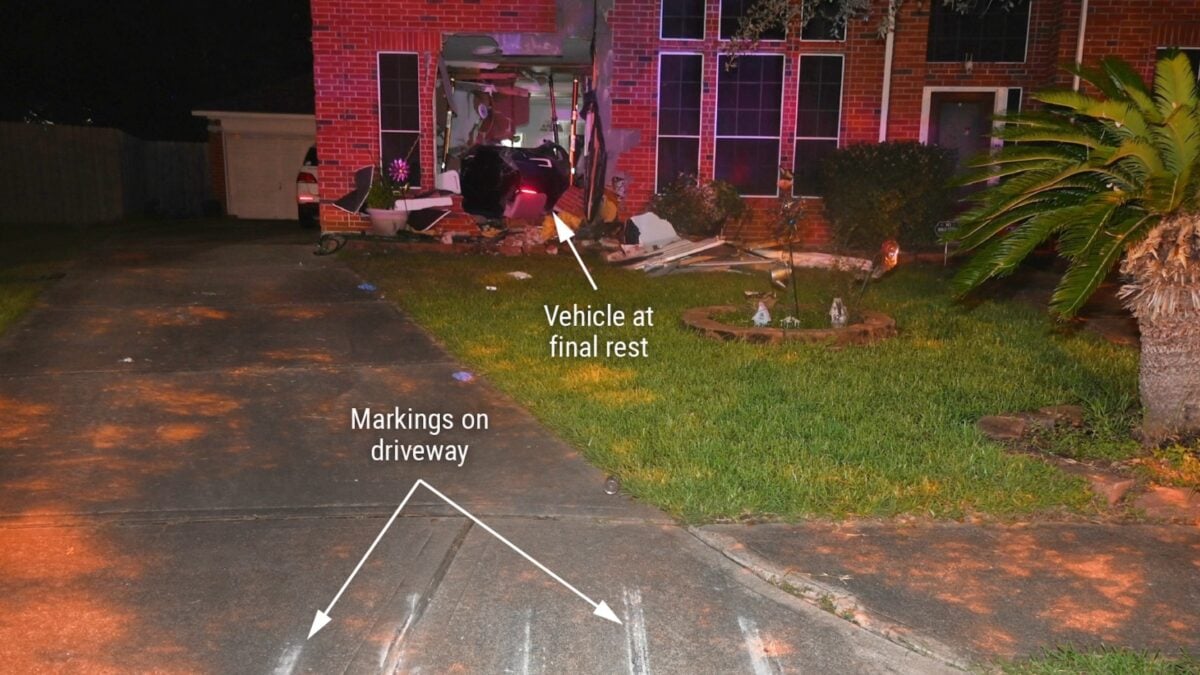
gizmodo.comThe National Transportation Safety Board released a preliminary report Wednesday on a June crash in Katy, Texas. Data showed the driver pressed the accelerator pedal to 100 percent while using Full Self-Driving (Supervised). The incident killed 76-year-old Martha Avila and prompt…
news.sky.comTreasury Secretary Scott Bessent said hard work and good decisions still lead to success in the United States. The remarks were made during an interview on a podcast hosted by Mike Rowe.
rte.ieA Genoa court sentenced Giovanni Castellucci, ex-chief executive of Autostrade per l'Italia, to 12 years in prison for the Morandi bridge collapse. The 2018 disaster killed 43 people when the structure fell during a rainstorm. Four other officials also received prison terms.