Five EU Countries Submit Joint Objections to Commission’s Proposed Centralised Grid Planning
Bulgaria, Finland, France, Poland and Sweden have challenged the European Commission’s December 2025 proposal for a “central scenario” to guide long-term electricity investment. The five nations argue that a top-down approach would slow the green transition, raise costs and reduce energy security.
 Euronews
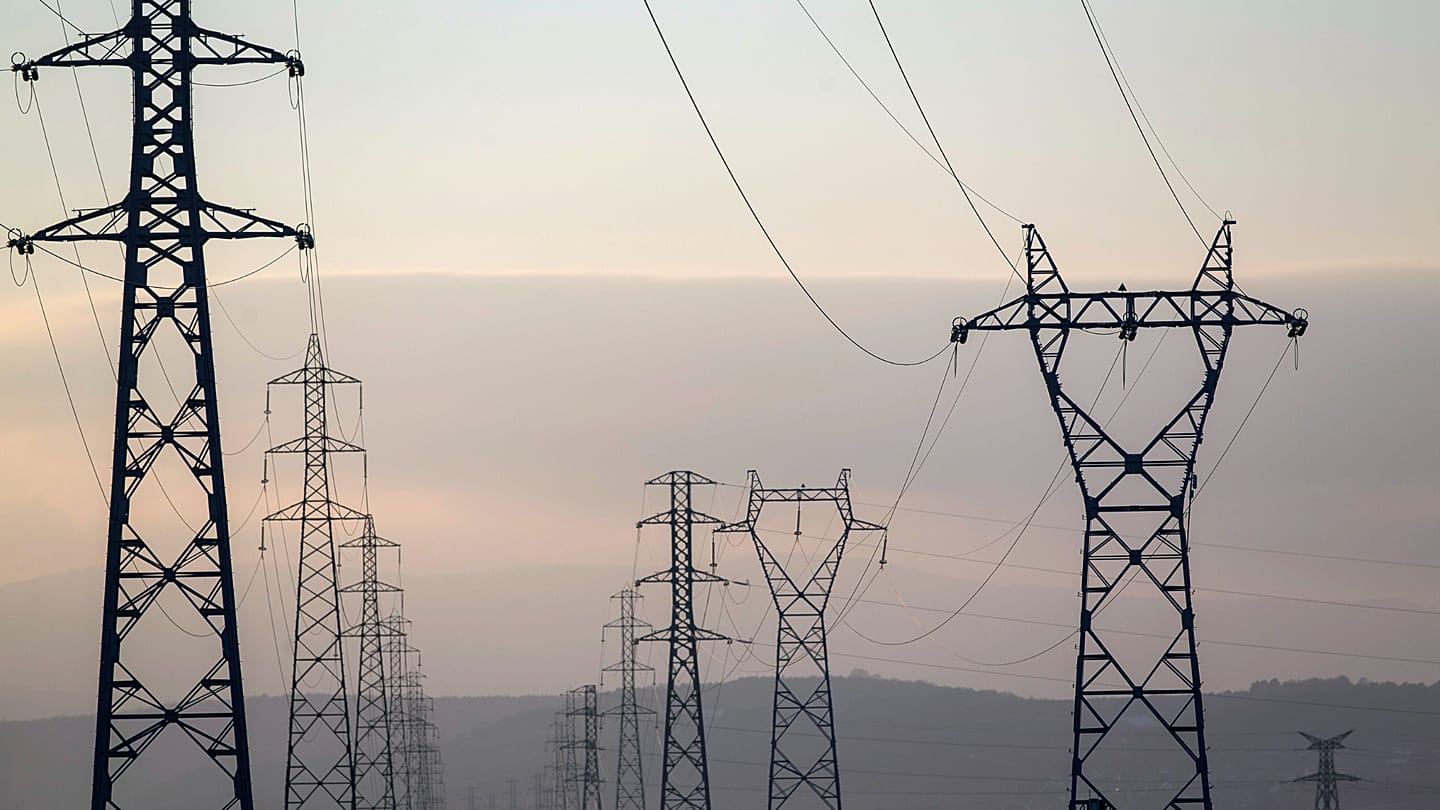
Bulgaria, Finland, France, Poland and Sweden have pushed back against the European Commission’s plans for centralised planning of Europe’s future electricity. The five countries submitted a joint document arguing that the EU’s green transition risks becoming slower, more expensive and less secure if Brussels attempts to command grid development from the centre.
The European Commission launched its legislative proposal to overhaul the grids in December 2025.
The proposal calls for stronger coordination in revising the EU’s law governing trans-European energy infrastructure and includes the creation of a “central scenario” to guide long-term investment across EU countries. An exclusive focus on a top-down approach would hinder the Grids Package's objective, the five countries stated.
They instead suggest that the regional planning and evaluation approach be strengthened and extended upon.
The coalition argues that energy infrastructure is too complex, too regionally specific and too politically sensitive to be designed through a single Brussels-led model. A single scenario wrongly assumes that there is only one way to achieve energy and climate policy objectives, according to the document.
The five countries fear a future in which massive interconnectors are built without adequate alignment to domestic grid reinforcements.
Such misalignment would leave expensive infrastructure underused while consumers absorb the cost through higher electricity bills, they warned. National companies responsible for energy transmission such as the French Réseau de Transport d'Électricité or the Swedish Svenska kraftnät should remain the technical architects of planning, the five countries stated.
The Commission should act primarily as coordinator rather than director.
The five countries claim the Commission is moving beyond coordination and edging towards political control over investment planning. They insist the division of responsibilities must be clear: member states must retain political decision-making powers, European Network of Transmission System Operators (ENTSOs) and Transmission System Operators (TSOs) must provide their technical expertise and knowledge of the energy grids and the Commission must ensure coordination and dialogue with the Trans-European Transport Network (TEN) groups.
The five EU countries are not rejecting European coordination altogether.
2 trillion investment by 2040 to revamp power infrastructure. Swedish energy minister Ebba Busch said on 11 May 2026 that the EU should not receive Swedes’ electricity money. She added that Brussels is not listening to Sweden and that is why Sweden is pausing plans for new cables for power exports.
Revenues from electricity congestion are the excess funds generated when power lines reach capacity, which are then recycled back into building better infrastructure or lowering consumer fees. Ebba Busch said the legislative text currently under negotiation still restricts member states’ use of congestion revenues more than the current law does.
The Swedish government is considering whether to proceed with new cables to Finland.
Euronews reported that Sweden has emerged as one of the most outspoken EU countries against the Commission's power grid plan. A spokesperson of the Cyprus Presidency said we are now moving toward a balanced compromise and we are close to reaching an agreement.
Commission President Ursula von der Leyen has recently urged the EU co-legislators, the Council and the Parliament, to speed up a political agreement on the Grids Package before the summer of 2026.
Due to political infighting the Grids Package file is more likely to be pushed to the upcoming EU Irish Presidency taking the helm on 1 July 2026.
Key Facts
Story Timeline
4 events- 2025-12
European Commission launches legislative proposal to overhaul grids including creation of a central scenario
1 sourceEuronews - 2026-05-11
Swedish energy minister Ebba Busch states Sweden is pausing plans for new export cables
1 sourceEuronews - 2026-05-15
Five-country document opposing centralised planning is reported
1 sourceEuronews - 2026-07-01
Irish EU Presidency expected to take over Grids Package negotiations
1 sourceEuronews
Potential Impact
- 01
Continued debate over division of responsibilities between member states, TSOs and the Commission
- 02
Delay of political agreement on Grids Package until after 1 July 2026
- 03
Potential pause or review of new interconnectors between Sweden and Finland
Transparency Panel
Related Stories
 Los Angeles Times
EU Fines Temu €200 Million Over Unsafe Products
The European Commission imposed a €200 million fine on Chinese e-commerce platform Temu for failing to assess risks from illegal goods. The penalty is the second issued under the Digital Services Act.
Aggreko to Build Off-Grid Hybrid Plant for Eva Copper Mine
Global energy company Aggreko will construct Australia's largest off-grid renewable hybrid power facility at the Eva Copper Mine in North West Queensland. The 15-year project will supply 72 megawatts of power using solar, battery storage and thermal generation.
 theyeshivaworld.com
EU fines Temu more than $230 million over illegal product sales
The European Commission imposed a €200 million penalty on the Chinese e-commerce platform after finding consumers are very likely to encounter illegal items. Temu has until August 26 to submit a compliance plan or face further penalties.