Substrate
science

Fossilized Jaws Show Giant Octopuses Up to 19 Meters Long Dominated Cretaceous Oceans

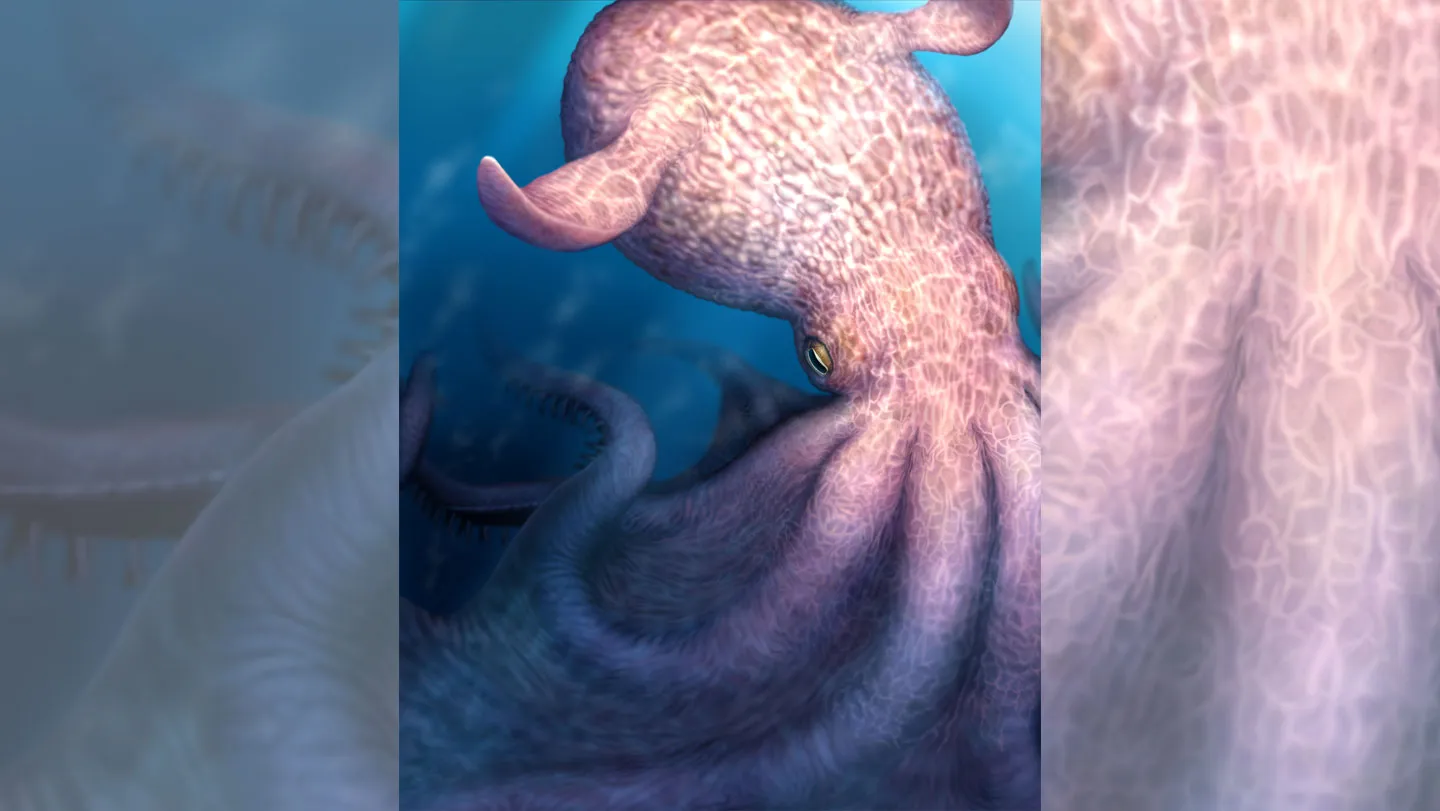
Researchers have uncovered evidence of enormous octopuses from the Late Cretaceous Period, with some reaching lengths of up to 19 meters. The findings, based on fossilized jaws, indicate these creatures were top predators. The study reclassifies the fossils into two species and highlights their role in ancient marine ecosystems.
Science News
1 source·Apr 23, 6:00 PM(13 days ago)·1m read
Fossilized Jaws Show Giant Octopuses Up to 19 Meters Long Dominated Cretaceous OceansSubstrate placeholder — needs review · Wikimedia Commons (CC BY-SA 3.0)
Audio version
Tap play to generate a narrated version.
Developing·Limited corroboration so far. This page will refresh as more sources emerge.

Fossilized jaws reveal that enormous octopuses growing up to 19 meters long were top predators in the oceans during the Cretaceous Period. Researchers reported these findings in Science on April 23. Yasuhiro Iba, a paleontologist at Hokkaido University in Sapporo, Japan, noted that most soft bodies of octopuses decompose before fossilization, leaving few hard parts like beaklike jaws to fossilize.

Some particularly large fossil jaws were found by researchers in Japan and on Canada’s Vancouver Island. The fossil jaws date back to the Late Cretaceous Period, about 72 million to 100 million years ago. The jaws appeared to belong to octopus-like creatures.

Iba and colleagues examined 15 fossil cephalopod jaws. They used a technique to discover and document 12 more jaw fossils embedded in rocks found in Japan. The rocks containing the 12 jaw fossils were ground down layer by layer and photographed at each step.

With artificial intelligence, the team created a detailed digital model of fossils too fragile to mine out using traditional methods. The 27 cephalopod jaws were initially thought to be from five different extinct species. The researchers reassigned the 27 cephalopod jaws as just two species: Nanaimoteuthis jeletzkyi and N.

Haggarti. Based on comparisons with other cephalopod jaws, the creatures appear to be early finned octopuses. Today’s finned octopuses, such as the dumbo octopus, are deep-sea animals with webbing between their arms and flapping fins.

The largest lower jaw belonging to N. haggarti was about 50 percent bigger than that of the 12-meter-long modern giant squid. Iba and colleagues estimate N. haggarti could have been between about seven and 19 meters long including its arms.

The fossil jaws show consistent wear and damage, suggesting the octopuses were powerful predators biting on shells and bones. ” The publication also noted that the discovery suggests ancient marine ecosystems were more complex with a wider range of predators than previously thought.

Key Facts

Giant octopuses up to 19 meters long
Fossilized jaws indicate N. haggarti reached lengths of 7 to 19 meters, larger than modern giant squid.
Reclassification of fossils
27 cephalopod jaws reassigned from five species to two: Nanaimoteuthis jeletzkyi and N. haggarti, identified as early finned octopuses.
Predatory evidence
Fossil jaws show wear and damage from biting shells and bones, suggesting powerful predators in Cretaceous oceans.
Discovery methods
Used layer-by-layer grinding, photography, and AI to model fragile fossils embedded in Japanese rocks.

Story Timeline

5 events
  1. 2026-04-23

    Researchers report findings on giant Cretaceous octopuses in Science.

    1 sourceScience News
  2. Undated recent

    Iba and colleagues examine 15 fossil cephalopod jaws and discover 12 more using grinding and AI techniques.

    1 sourceScience News
  3. Undated recent

    Researchers reassign 27 cephalopod jaws to two species: Nanaimoteuthis jeletzkyi and N. haggarti.

    1 sourceScience News
  4. Undated recent

    Large fossil jaws found in Japan and on Canada’s Vancouver Island.

    1 sourceScience News
  5. 72 million to 100 million years ago

    Late Cretaceous Period when the giant octopuses lived as top predators.

    1 sourceScience News

Potential Impact

  1. 01

    Enhances understanding of Cretaceous marine ecosystems by showing invertebrates as top predators alongside reptiles.

  2. 02

    Could revise estimates of ancient invertebrate sizes, influencing models of prehistoric biodiversity.

  3. 03

    May prompt further paleontological research into cephalopod fossils for dietary evidence like stomach contents.

  4. 04

    Informs comparisons between ancient and modern deep-sea octopuses, such as the dumbo octopus.

Transparency Panel

Sources cross-referenced1
Framing risk0/100 (low)
Confidence score70%
Synthesized bySubstrate AI
Word count313 words
PublishedApr 23, 2026, 6:00 PM
Bias signals removed3 across 3 outlets
Signal Breakdown
Loaded 3

Related Stories

64 Million Cubic Metres of Rock Slide into Alaska’s Tracy Arm Fjord, Generating 481-Metre Wavewinnipegfreepress.com
science41 min ago

64 Million Cubic Metres of Rock Slide into Alaska’s Tracy Arm Fjord, Generating 481-Metre Wave

A 64-million-cubic-metre rock collapse into Tracy Arm Fjord produced the second-largest megatsunami on record. The 5.26 a.m. wave reached 481 metres and prompted several cruise operators to stop sending vessels into the area. Scientists attribute the event to long-term retreat of…

The Bbc
GB News
New Scientist
3 sources
NASA Releases Thousands of Photos from Artemis II Lunar Missionkoreaherald.com
science8 hrs ago

NASA Releases Thousands of Photos from Artemis II Lunar Mission

NASA has released over 12,000 images from the Artemis II mission, which orbited the moon in April 2026. The photos capture views of Earth, the lunar surface, and a solar eclipse observed during the crew's return. Astronauts from the mission also visited the United Nations headqua…

Nbc News
UN
The Atlantic
Benzinga
Business Insider
5 sources
Three Die in Hantavirus Cases on MV Hondius Cruise Shipdeccanchronicle.com
science18 hrs agoFraming55Framing risk55/100Rewrite largely sticks to facts but inherits mild consensus framing around human-to-human transmission risk and repeatedly centers WHO spokespeople for reassurance.Click to jump to full framing analysis

Three Die in Hantavirus Cases on MV Hondius Cruise Ship

A hantavirus outbreak on the MV Hondius cruise ship has killed three passengers and sickened seven others, prompting an international response coordinated by the World Health Organization. The ship, carrying 147 people from 23 nationalities, is set to sail to Spain's Canary Islan…

Stat
Cbs News
2 sources