science
Fossils in China Show Earlier Evolution of Complex Life
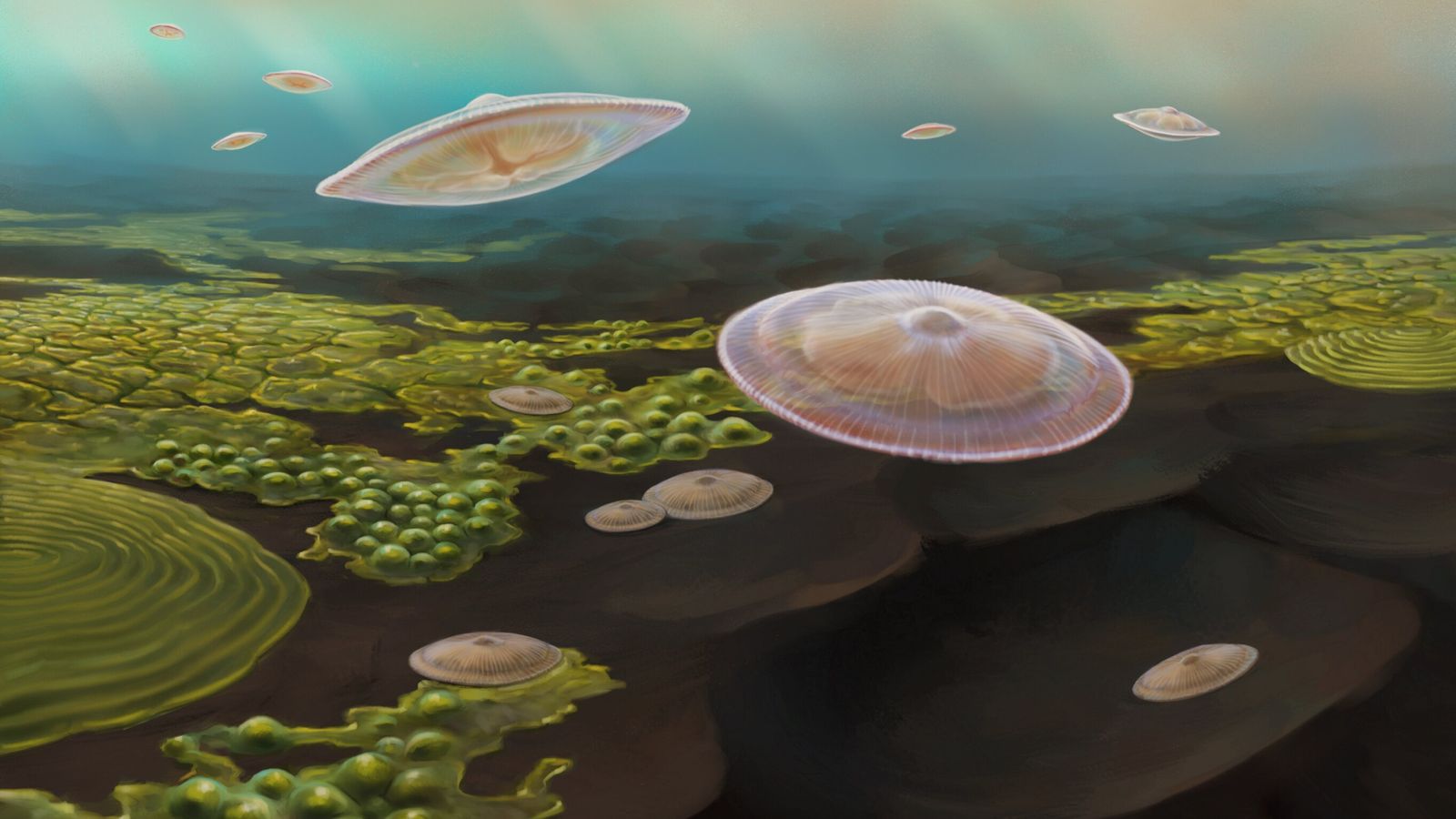
Scientists have discovered over 700 fossils in China's Yunnan province that date to about 539 million years ago, revealing traits of complex animals earlier than previously thought. The fossils indicate a transition from simple, two-dimensional life forms to three-dimensional ones capable of movement and feeding.
Apr 4, 4:50 AM·2m read1 source
 news.sky.com
Audio version
Tap play to generate a narrated version.
Scientists have uncovered over 700 fossils in China's southwestern Yunnan province, dating to approximately 539 million years ago at the end of the Ediacaran period. These fossils provide evidence of a transition from simple animal life to more complex forms.
The Independent reported that this discovery suggests such complexity emerged earlier than the previously estimated start of the Cambrian period.
The fossils show creatures that lived in three dimensions, allowing them to move through water and feed, unlike the earlier two-dimensional organisms. Previously, scientists believed these traits developed at least four million years later during the Cambrian explosion.
A study published in the journal Science on Thursday detailed these findings, based on analysis by researchers including paleontologists from Oxford University.
' Ross Anderson, another co-author from the same institution, noted that the fossils include early examples of organisms with bilateral symmetry, featuring similar structures on left and right sides, as well as a head and an anus. The Independent reported that before this discovery, such features were only inferred from fossil tracks, not the organisms themselves.
The fossil site is located near a United Nations Chengjiang world natural heritage site, in an area with exposed layers that allow researchers to observe geological changes over time. Dunn described it as a place where both ancient, unusual life forms and early ancestors of modern animals coexist in the fossil record.
This setting provides a snapshot of evolutionary transitions during the Ediacaran period.
' Genetic analyses had suggested that common ancestors of humans and starfish existed in the Ediacaran period, but lacked fossil evidence until now. Dunn indicated that these fossils may align the geological record more closely with genetic timelines.