France Deploys Aircraft Carrier to Red Sea
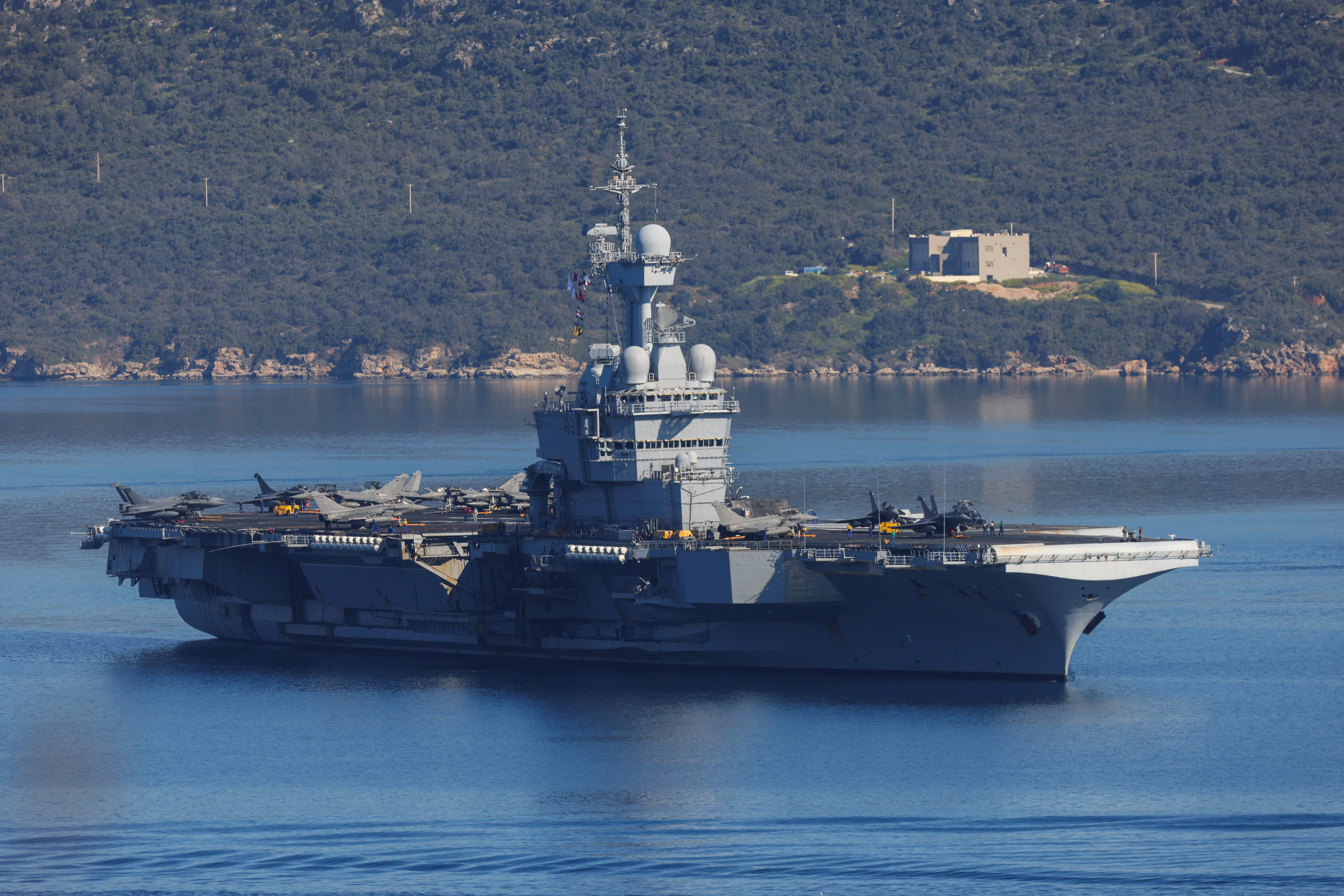
France sent its Charles de Gaulle carrier strike group through the Suez Canal on May 6 toward the Gulf of Aden as part of Franco-British planning for a possible multinational operation to secure the Strait of Hormuz. Officials described the deployment as a way to signal readiness to protect navigation while remaining at a distance from U.S.-Iran tensions.
France deployed its Charles de Gaulle aircraft carrier strike group to the Red Sea on May 6 as planning advances for a potential multinational mission to secure safe passage through the Strait of Hormuz. The carrier passed through the Suez Canal on Wednesday and is now less than a week's sailing from the strategic waterway.
Officials said the deployment aims to assess the operational environment, expand crisis-management options, integrate partner assets within a defensive framework under international law, and reassure maritime trade stakeholders. The French initiative forms part of a mission launched at the end of April in cooperation with the UK to unite around 50 countries seeking to peacefully restore passage in the region.
A dozen countries have indicated willingness to participate following preparatory meetings. Officials told reporters the proposal would require coordination with Iran. Under the suggested terms, Iran would gain passage for its ships through the strait in exchange for committing to negotiations with the United States on nuclear materials, missiles and regional issues.
In return, the U.S. would lift its blockade and receive Iran's commitment to those talks. "The reason why we must make a renewed effort today is simply that the blockade of Hormuz continues, the damage to the world’s economy is therefore becoming more and more pronounced, and the risk of a prolongation of hostilities is too serious for us to accept it," a French presidency official said.
" — French presidency official (Defense News) Fresh exchanges of fire on Monday underscored the stakes as the U.S. and Iran continue to struggle for control of the narrow waterway. The strait remains a vital artery for global energy and trade, and its closure since late February has destabilized economies worldwide.
Oil prices have hovered around $100 per barrel, with pessimistic forecasts warning of spikes to $150 or $200 if the conflict drags on.
Britain have worked for several weeks on a proposal to lay groundwork for safe transit once the situation stabilizes or the conflict resolves. The plan envisions a multinational force securing convoys crossing the strait, which would require Iran not to fire on the ships.
"We collectively want to send the signal that not only are we ready to secure the Strait of Hormuz, but that we are also capable of doing so," the French official added. " The Elysée stated that any action would remain at a distance from the belligerents.
European states have largely remained onlookers in the broader conflict involving the U.S., Israel and Iran, but shipping disruptions and elevated energy costs have prompted them to defend their economic interests.
Iran has used its control over the strait as key leverage in discussions with Washington to end the war. It was not immediately clear whether Tehran would accept the French proposal given that leverage. The French presidency official noted that refusal to support the U.S. The deployment of naval assets may serve to address those concerns while maintaining European independence.
The carrier group is accompanied by an Italian and a Dutch warship. The French army described the mission as helping strengthen security and integrate partner countries' capabilities. Officials continue to urge both Washington and Tehran to consider the European proposal given the pronounced global economic damage from the competing blockades.
Key Facts
Story Timeline
5 events- May 6, 2026
France deployed the Charles de Gaulle carrier strike group through the Suez Canal toward the Gulf of Aden.
2 sourcesDefense News · Le Monde - May 6, 2026
French officials briefed reporters on the Franco-British proposal for a multinational Hormuz security mission.
2 sourcesDefense News · Le Monde - May 5, 2026
Fresh exchanges of fire occurred between parties contesting the Strait of Hormuz, shaking a four-week truce.
1 sourceDefense News - Late April 2026
France and UK launched a joint mission to unite around 50 countries for peaceful restoration of passage.
2 sourcesDefense News · Le Monde - Late February 2026
Iran closed the Strait of Hormuz following the start of Israeli-American strikes.
2 sourcesDefense News · Le Monde
Potential Impact
- 01
Global shipping costs could remain elevated until safe passage through the strait is restored.
- 02
Oil prices may stabilize or decline if the French proposal gains traction in U.S.-Iran talks.
- 03
European naval presence in the Red Sea expands options for protecting maritime trade routes.
- 04
France and Britain position themselves as independent mediators in the Hormuz crisis.
- 05
A multinational security force could be assembled if both Washington and Tehran consent to the plan.
Transparency Panel
Related Stories
BBC NewsTrump Meets Advisers to Decide on Iran Ceasefire Extension
President Trump said he is holding a Situation Room meeting to make a final decision on a possible deal with Iran. The proposed agreement would extend the ceasefire by 60 days and reopen the Strait of Hormuz.
Trump to Decide on Iran Deal in Situation Room Meeting
President Trump said Friday he is heading into the Situation Room to make a final determination on a potential agreement with Iran. The proposed deal would reopen the Strait of Hormuz without tolls and require destruction of Iran's highly-enriched uranium.
benzinga.comVietnam Clears Graves for Trump Organization Project in Hung Yen Province
Farmers in Hung Yen province are exhuming family graves to make way for a $1.5 billion Trump Organization development that includes hotels, villas and a golf course. The project, approved last year, has drawn local resistance over compensation levels and relocation of remains.