technology
Genesis AI Unveils GENE-26.5 Robotic Brain for Human-like Dexterity
Genesis AI has released GENE-26.5, a system that combines a robotics foundation model, a human-scale dexterous hand and a new data engine. The company said the technology enables general-purpose robots to perform complex physical tasks with human-level manipulation after learning from human movement data. Early deployments are expected in industrial settings later this year.
May 6, 1:00 PM·2m read1 source
 Fox News
Audio version
Tap play to generate a narrated version.
Developing·Limited corroboration so far. This page will refresh as more sources emerge.
Genesis AI has unveiled GENE-26.5, a robotic brain it says enables general-purpose robots to perform complex physical tasks with human-level dexterity. The company, which describes itself as a global full-stack robotics firm, said the system pairs a robotics foundation model with a human-scale dexterous robotic hand and includes a new data engine.
Together the components allow robots to learn from human movement and handle tasks requiring precision and coordination. Theo Gervet, Co-Founder and President of Genesis AI, said the easiest way to understand the system is to view it as the component guiding the robot's actions.
"Think of GENE-26.5 like a robotic brain that takes in information and tells the robot what to do," Gervet said. "It is the industry's most advanced robotic brain, with the most advanced capabilities. The company developed a method to feed GENE-26.5 large volumes of data on human hand movements so the system can direct robotic hands to replicate them.
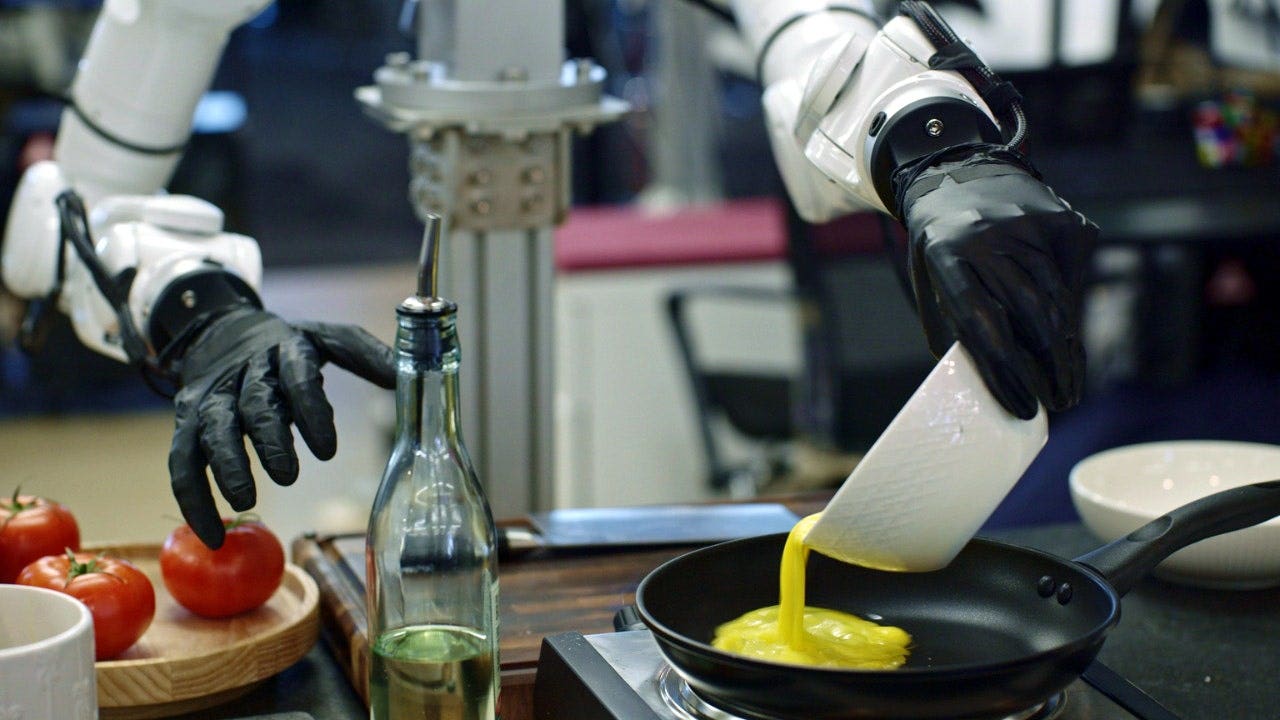
"GENE-26.5 can also tell our robotic hands how to do tasks with many, many steps," Gervet said. He cited an example in which a robot powered by the system follows a 20-step process to prepare a full omelet from start to finish. The company built a robotic hand that matches the form and function of a human hand.
It pairs with a glove that captures motion and pressure data. Genesis AI said the glove is 100 times cheaper than typical options and has shown up to five times greater data collection efficiency compared with traditional methods. "When a human wears the gloves as they interact with objects or do their work, we can capture details about the exact movements their fingers and wrists make," Gervet said.