Glossary Defines Key Terms in Artificial Intelligence Development
A reference list explains common terms used in discussions of artificial intelligence. The list covers technical concepts, company names, and policy debates that have appeared since 2022.
A glossary published by Insider defines terms that have entered public discussion since OpenAI released ChatGPT in 2022. The list presents definitions for technical capabilities, safety research areas, and infrastructure requirements associated with current AI systems.
AI refers to systems that can make autonomous decisions with limited human input. AGI describes the theoretical ability of artificial intelligence to perform complex cognitive tasks at human levels. Alignment covers research aimed at ensuring AI systems operate according to human values.
Bias in AI models occurs when training data contains human prejudices that the systems then reproduce. Capability overhang describes the gap between what models can do and what applications currently use. Compute refers to the processing resources, including GPUs and data centers, required to train and run models.
Context window measures how much information a model can retain during a conversation. Distillation is the process of transferring knowledge from a larger model to a smaller one. Hallucinations occur when models generate inaccurate information presented as fact.
ChatGPT is OpenAI's chatbot released in 2022.
Claude is Anthropic's model first launched in March 2023. Gemini is Google's model originally released under the name Bard in 2023. Frontier models are defined by the Frontier Model Forum as large-scale systems that exceed current capabilities. Large language models process and generate text after training on large data sets. Multimodal systems can handle text, images, and audio inputs.
Federal preemption describes the debate over whether AI rules should come from states or the federal government. President Donald Trump and his administration pushed for a moratorium on state-level AI laws. Data centers require large amounts of space and energy, prompting some cities and states to consider development restrictions.
Deepfakes are AI-generated media used to deceive viewers. Doomer is a term applied to those expressing concerns about AI risks. Effective altruists focus on using AI to address issues such as climate change and poverty.
Transparency
Reported by a single outlet. This score reflects source tier and factual specificity — corroboration is limited with one source.
Story details
Related Stories
 nbcnews.com
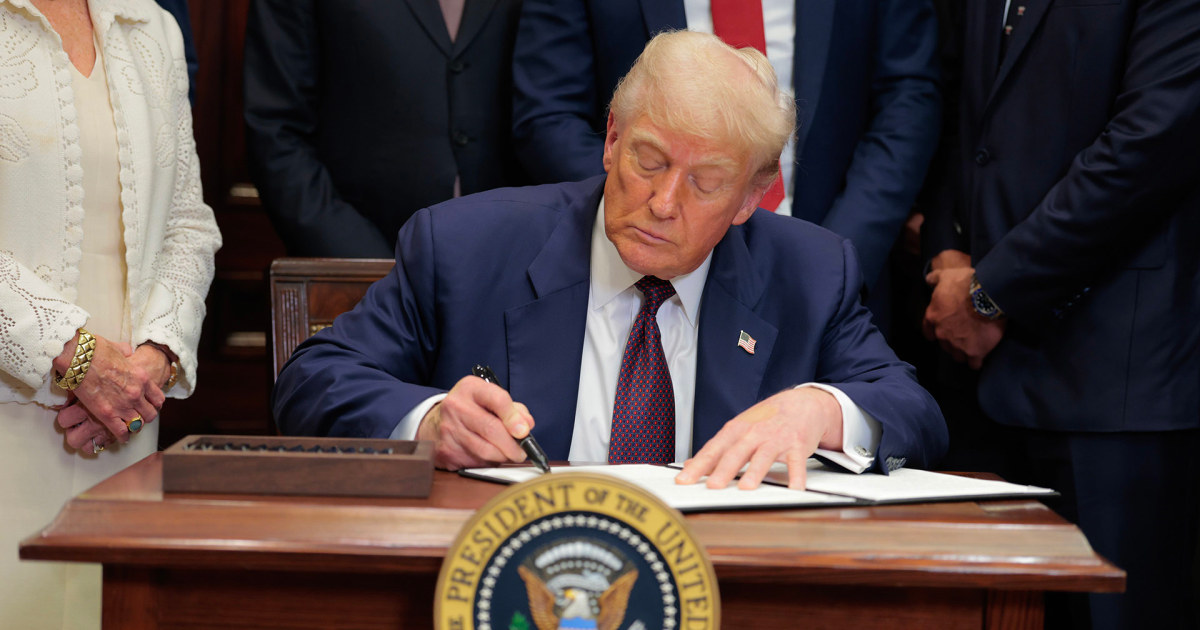
Trump Signs Executive Order for Voluntary AI Model Testing
President Trump signed an executive order creating a voluntary 30-day government testing process for AI models. OpenAI CEO Sam Altman will meet with White House officials and congressional leaders on Wednesday to discuss the policy.
 Cnbc
CnbcOpenAI CEO to Join G7 Leaders Summit on AI Safety
OpenAI chief executive Sam Altman will attend the G7 conference in France from June 15-17 after an invitation from President Emmanuel Macron. Discussions are expected to focus on youth safety and frontier AI risks.
 France 24
Trump Signs Executive Order Promoting Voluntary AI Cybersecurity Reviews
President Donald Trump signed an executive order Tuesday that sets up a voluntary process for AI developers to submit new models for government cybersecurity testing before public release. The order was prompted by concerns over Anthropic’s Mythos model.