technology
Google Announces Googlebook Platform to Replace ChromeOS With Android Foundation
Google unveiled the Googlebook, a new laptop platform and operating system built on the Android stack to replace Chromebooks. The announcement provided few hardware details or target audience information beyond integration with Gemini AI and improved Android app support.
May 12, 10:15 AM·1m read4 sources

 +1
+1
 thenextweb.com
Audio version
Tap play to generate a narrated version.
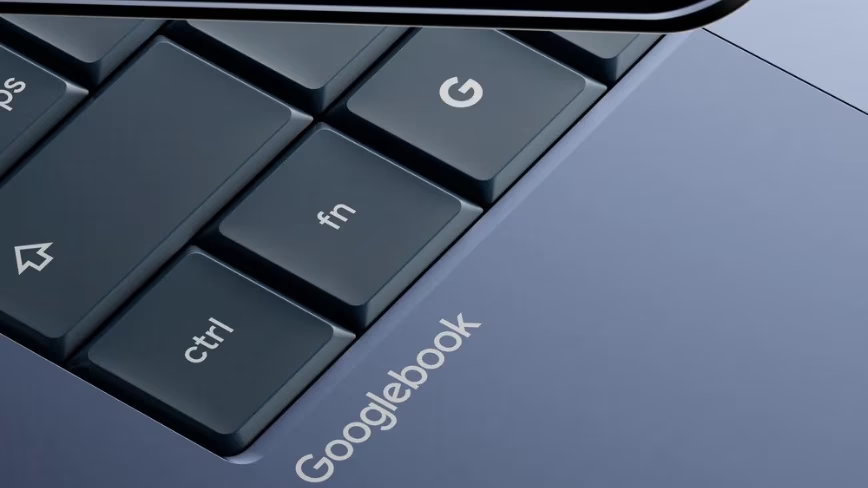
Google announced its Googlebook laptop platform on May 12, 2026. The platform runs an operating system derived from the Android stack and is positioned as the successor to Chromebooks and ChromeOS, which debuted nearly 15 years ago. According to thenextweb.com, Googlebook turns the cursor into an AI agent with Gemini at the OS level and replaces Chromebooks entirely.
The announcement highlighted deeper interaction with paired Android phones for casting apps and pulling files, prominent Gemini AI features including image generation and AI-generated widgets, and a glowing light bar on the hardware. Google emphasized Gemini integration, including in the cursor.
The company has not yet released minimum specifications or chip details beyond an Intel acknowledgement.
Rumors had circulated about an Aluminium OS that might unify Android and ChromeOS, enabling Android phones to function as portable desktops and improving tablet experiences. The Googlebook delivers an operating system that looks similar to ChromeOS with added Android foundations. Thurrott.com reported that Googlebook answers some questions while raising others about the shift.
Chromebooks gained widespread adoption in education. The new platform scales a mobile ecosystem to desktop. Demonstrated features such as phone integration and Gemini tools build on capabilities that have existed on ChromeOS for a decade. Google has not yet detailed what distinct benefits buyers would receive compared to current Chromebooks.
Competing platforms have faced their own challenges. macOS entered what one report called its Liquid Glass era with subsequent tweaks. Windows 11 drew criticism for extensive Copilot AI integrations that prompted later adjustments. Googlebook presentations featured heavy Gemini emphasis. ChromeOS previously replaced the Caps Lock key with a Quick Insert key for Gemini access in 2024.
The company has not yet detailed target users or unique computing problems the platform addresses. Performance for creative applications on Macs or broad software and gaming compatibility on Windows provide clear value propositions. The announcement leaves open questions about minimum specs and target market.