Humpback Whale Carcass Washes Ashore Near Cape Town as Shipping Traffic Around South Africa Nearly Doubles
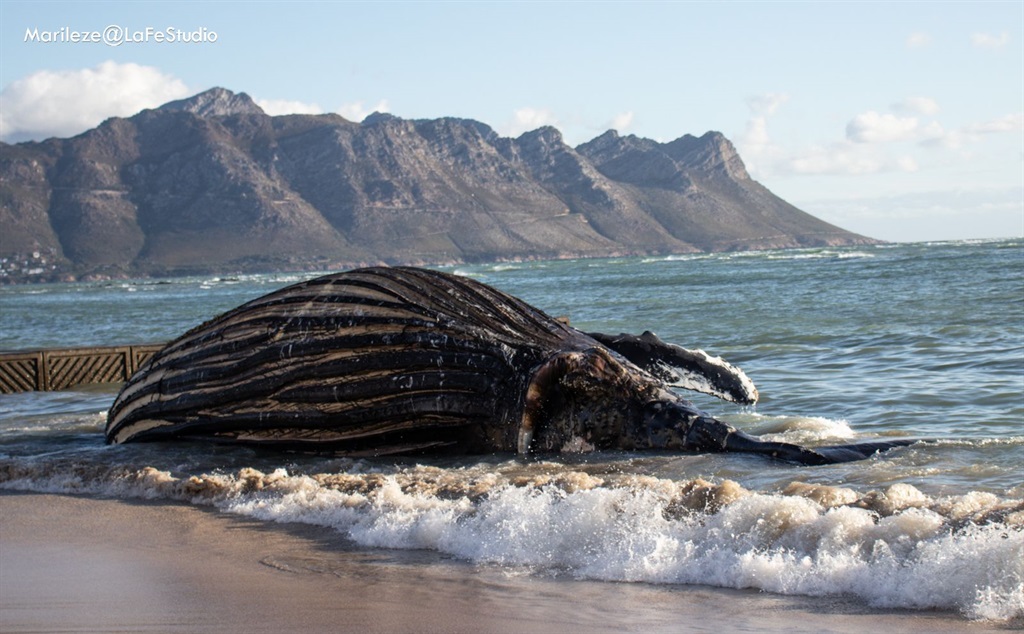
A dead humpback whale washed ashore in Simon's Town on October 15, 2024, amid sharply increased vessel traffic rerouted around the Cape of Good Hope. Researchers presented a study to the International Whaling Commission in May 2026 linking the surge to attacks in the Red Sea and blocked Strait of Hormuz.
news24.comA dead humpback whale washed up on a beach in Simon's Town, near Cape Town, South Africa, on October 15, 2024. The incident comes as researchers have documented a near-doubling of shipping traffic around Southern Africa that has substantially increased risks to the region's whale populations.
@AJEnglish reported that fighting involving the Houthis turned vessels away from the Red Sea and Suez Canal since 2023.
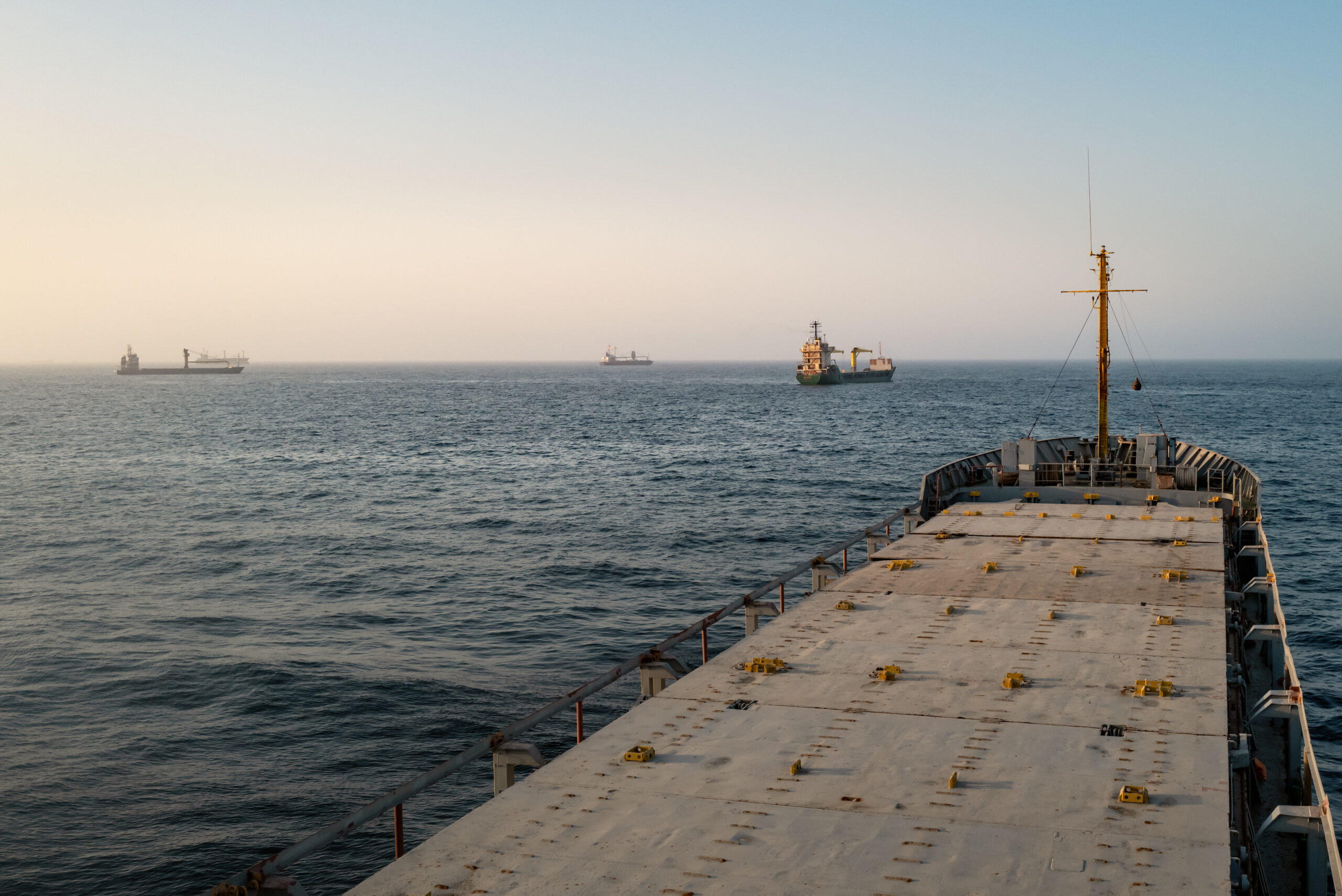
Traffic in the Red Sea area was disrupted in November 2023 when Houthi rebels began targeting vessels in solidarity with Palestinians amid Israel’s war on Gaza. More recently, rival restrictions on transit through the Strait of Hormuz imposed by Iran and the US, with the strait currently blocked by Iran, caused shipping companies to reroute vessels from the Middle East around South Africa’s Cape of Good Hope.
The disruptions have almost doubled the traffic around Southern Africa.
At least 89 commercial vessels sailed around Southern Africa between March 1 and April 24, 2026, according to the International Monetary Fund’s PortWatch Monitor. In the same period in 2023, there were only 44 vessels. A study on increased shipping traffic and whale risks was presented in May 2026 at a meeting of the International Whaling Commission.
Els Vermeulen, who led the study, said South Africa’s southwestern coast is increasingly busy, affecting the area’s significant populations of whales. Rising volume of shipping traffic near South Africa’s coast has substantially increased the risks of whales being struck. South Africa’s waters are home to more than 40 whale species.
The Cape of Good Hope hosts populations of southern right whales, humpback whales, and Bryde’s whales. Orcas, sperm whales, Minke whales, and dolphins are present in the area. Large super-pods of humpback whales feed in the area and travel annually to Antarctica.
Authorities say they are the largest groups of humpbacks known on Earth. Studies put the total number of these humpback whales at between 11,000 and 13,000. Many whale species were threatened by commercial whaling in the 20th century.
Southern right and humpback whales have recovered, while Antarctic Blue, Fin, and Sei whales are listed on the South African Red List as Endangered or Critically Endangered. Increased traffic increases chances of whales being struck by vessels. “There have been videos of people on cargo vessels that were going through high densities of humpback whales,” Vermeulen told AFP.
She added that in such cases whales are often unaware of the danger and could be distracted by feeding. “Obviously, their social media post was all about, ‘Wow, look how many nice whales we see,'” Vermeulen said. ” Fast traffic, which poses the greatest risks, has quadrupled.
Humpbacks in South Africa only started feeding off the west coast in 2011, said Ken Findlay, a blue economy consultant who contributed to the report. Between 1999 and 2019, there were 11 fatal ship strikes out of 97 deaths among southern right whales in the Western Cape Coast area. There were another 16 ship strikes on southern right whales that did not clearly lead to death in the same period.
Even small shifts of traffic lanes away from the coast of South Africa could reduce the risk of strikes to some whale species by 20 to 50 percent, according to Vermeulen’s team report to the International Whaling Commission. MSC has begun re-directing its ships to protect critical whale habitats around Greece’s Hellenic Trench to protect sperm whales and off Sri Lanka to protect blue whales.
South Africa’s Environment Ministry told AFP that all available solutions and mitigation measures will be examined to protect the whales in the Cape of Good Hope.
The ministry stated that once scientific studies and assessments are completed, maritime authorities will chart the way forward alongside the ministry.
Key Facts
Story Timeline
5 events- 2026-05-12
Al Jazeera article published detailing whale deaths linked to rerouted shipping
1 source@AJEnglish - 2026-05
Study on shipping traffic and whale risks presented at International Whaling Commission meeting
1 source@AJEnglish - 2026-03-01 to 2026-04-24
89 commercial vessels sailed around Southern Africa, nearly double the 44 recorded in same 2023 period
1 source@AJEnglish - 2024-10-15
Dead humpback whale washed ashore in Simon's Town near Cape Town
1 source@AJEnglish - 2023-11
Houthi attacks began disrupting Red Sea traffic
1 source@AJEnglish
Potential Impact
- 01
Increased vessel strikes on whales in Cape of Good Hope feeding grounds
- 02
Continued pressure on endangered whale populations such as Antarctic Blue, Fin, and Sei whales
- 03
Potential 20-50 percent risk reduction for some species through minor traffic lane adjustments
- 04
Broader adoption of rerouting practices by shipping companies as seen with MSC in Greece and Sri Lanka
Transparency Panel
Related Stories
The GuardianWHO Chief Visits DRC as Ebola Death Rate Reaches 30-50%
World Health Organization director-general Tedros Adhanom Ghebreyesus arrived in the Democratic Republic of the Congo to support containment of a new Ebola outbreak. The agency revised the death rate to 30-50% based on confirmed cases and recorded 10 confirmed and 223 suspected d…
westernjournal.comGreek National Charged in UK With Aiding Iran-Linked Intelligence Service
A 46-year-old Greek man living in Germany was charged under the UK National Security Act with assisting an intelligence service believed to be Iran by targeting a journalist at Iran International.
physicianonfire.comBilt Rewards reports $1 billion revenue target for 2026
Bilt Rewards CEO Ankur Jain said the company's flagship credit card accounts for less than 11 percent of revenue. The firm now processes more than $100 billion in annual housing spend across one in four U.S. apartment buildings.