Hunga Tonga Eruption Triggered Massive Natural Methane Destruction in Atmosphere
Satellite data showed a formaldehyde cloud forming after the January 2022 eruption, indicating chlorine atoms broke down methane at a rate of roughly 900 tons per day for more than a week.
 rnz.co.nz
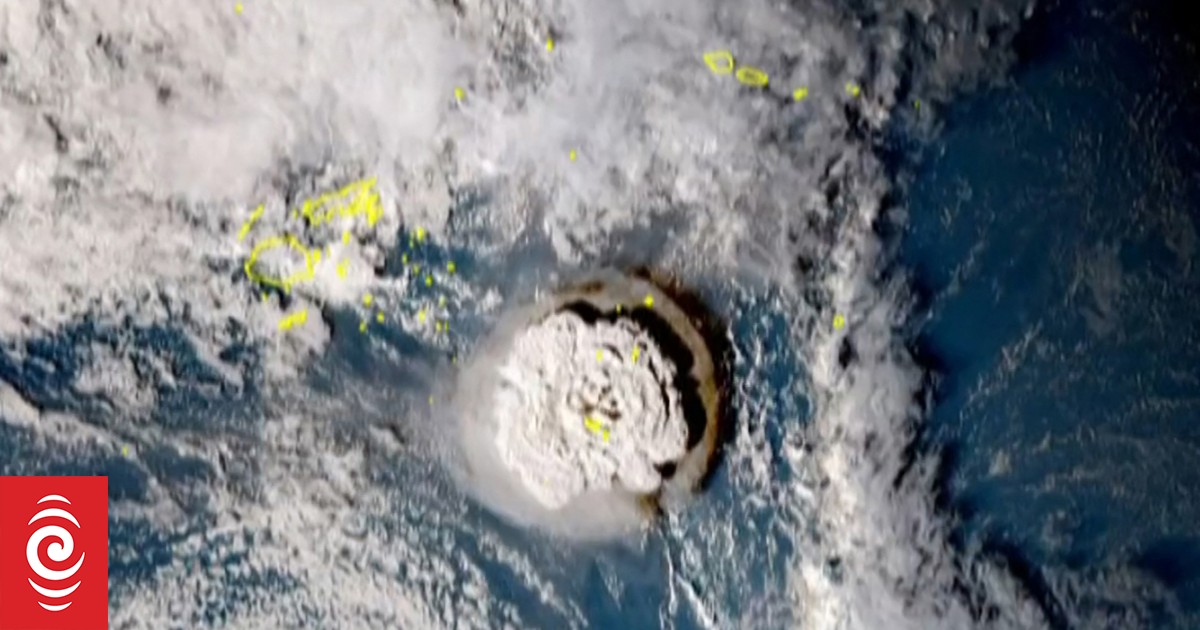
The Hunga Tonga-Hunga Ha’apai volcano erupted in January 2022, sending a plume of ash, steam and gas nearly 40 miles above the Earth’s surface. The blast released power hundreds of times stronger than the Hiroshima nuclear explosion, triggered a tsunami and generated a sonic boom that circled the planet twice.
A study published Thursday in the journal Nature Communications reported that the eruption also produced roughly 330,000 tons of methane while simultaneously destroying a portion of those emissions.
Researchers tracked a formaldehyde cloud for 10 days and calculated that about 900 tons of methane were broken down each day. ” Formaldehyde forms when methane is destroyed in the atmosphere, and its short lifespan of only a few hours indicated continuous methane removal over more than a week. The process appears to mirror chemistry previously identified over the Atlantic Ocean.
Saharan dust mixes with salt spray to create iron-based particles; sunlight striking those particles generates chlorine atoms that react with methane. The eruption lofted enough salty water vapor to fill around 58,000 Olympic-size swimming pools, allowing the same chlorine-driven reaction to occur inside the volcanic plume.
” Methane is roughly 80 times more effective than carbon dioxide at trapping heat over a 20-year period and currently accounts for about a third of global warming.
Atmospheric concentrations have doubled over the last two centuries. Pete Edwards, an atmospheric chemist at the University of York who was not involved in the research, called the findings interesting but “very difficult” to confirm. ” The study authors agreed that additional research is required before any industrial application.
Johnson said replication of the natural process is “an obvious idea for industry to try,” but only if it can be proven safe and effective. Van Herpen suggested the mechanism could eventually inform methods to remove methane emissions at their source or guide geoengineering approaches that inject iron-based particles over the ocean.
Transparency
Reported by a single outlet. This score reflects source tier and factual specificity — corroboration is limited with one source.
Story details
Related Stories
 thehindu.com
Iran Maintains Sovereignty Over Strait of Hormuz, Demands Asset Release Before Nuclear Concessions
Washington returned a stricter draft agreement to Tehran. Iran said it would not sign until frozen assets are released and rights secured.
 freepressjournal.in
Missile Strike in Indian Ocean Kills Four Near Sri Lankan Town
A missile struck a vessel off Sri Lanka's southern coast on May 31, 2026, killing four people. The incident occurred during the early phase of the U.S.-Iran conflict and was reported by local authorities.
 middleeasteye.net
Lawmakers Seek to Remove Israel Military Integration Provision From Defense Bill
Two members of Congress plan to strip a section from the annual defense budget that would increase coordination between the U.S. and Israeli militaries. The measure is part of a $1.15 trillion spending bill now moving through committee.