world
Hungary Election: Opposition Led by Péter Magyar Defeats Viktor Orbán's Fidesz Party
In Hungary's national election, Péter Magyar's Tisza party secured a victory over Prime Minister Viktor Orbán's Fidesz, achieving a record-high voter turnout. The opposition gained a two-thirds majority in parliament, enabling constitutional amendments. Orbán conceded the defeat, marking the end of his 16-year rule.
Apr 13, 6:42 AM·2m read3 sources SE
SE
 csmonitor.com
Audio version
Tap play to generate a narrated version.
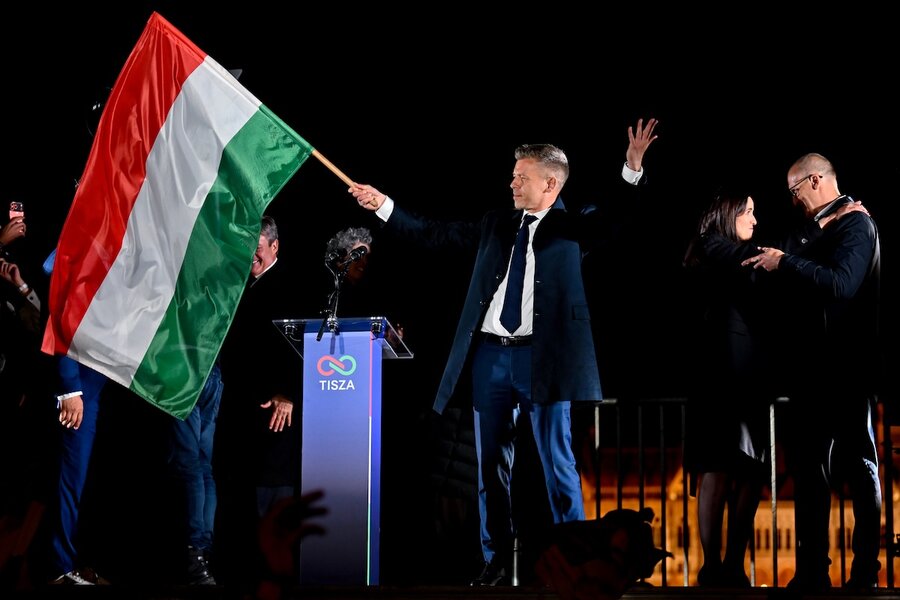
Hungary held national elections on April 12, 2026, resulting in the defeat of Prime Minister Viktor Orbán's Fidesz party by the opposition Tisza party led by Péter Magyar. Three hours after the polls closed, Magyar addressed supporters in Budapest, declaring victory and stating that Hungarians had replaced the Orbán system. The election saw a national record for voter turnout.
Magyar, a former Orbán loyalist who turned against him two years ago, led Tisza to a decisive win despite Fidesz's advantages, including rewritten election rules and control over media since 2010. Tisza secured a two-thirds legislative majority, sufficient to amend the constitution and reform bodies such as the Constitutional Court.
Orbán appeared on screen to concede, thanking his voters and acknowledging the defeat.
The campaign featured competing claims of foreign influence.
Orbán portrayed the opposition as aligned with Brussels and Ukrainian President Volodymyr Zelensky's war aims, while emphasizing economic stability. Magyar vowed to recoup funds frozen by EU institutions over rule-of-law violations, impose a wealth tax, and imprison Fidesz officials he accused of pilfering public coffers.
Independent polls showed Tisza with a lead, though concerns persisted about Fidesz's ability to mobilize voters or declare an emergency.
No civil unrest occurred despite warnings from Orbán's aides about potential violence by Tisza agents, which opposition representatives dismissed as pretexts for crackdown. A Fidesz mayor in a southern Hungarian village publicly supported the opposition, citing European values and opposition to Russian influence.
He declared, "Fellow Hungarians, countrymen: We have done it. Together we have replaced the Orbán system."