world
India Plans Mission to Recover Body Known as Green Boots from Everest
India announced plans last month to retrieve the remains of a climber who died on Mount Everest in 1996. The body, nicknamed Green Boots, lies on the mountain's north side in the death zone. Recovery operations face technical, logistical, and regulatory challenges.
 The Independent
Audio version
Tap play to generate a narrated version.
Developing·Limited corroboration so far. This page will refresh as more sources emerge.
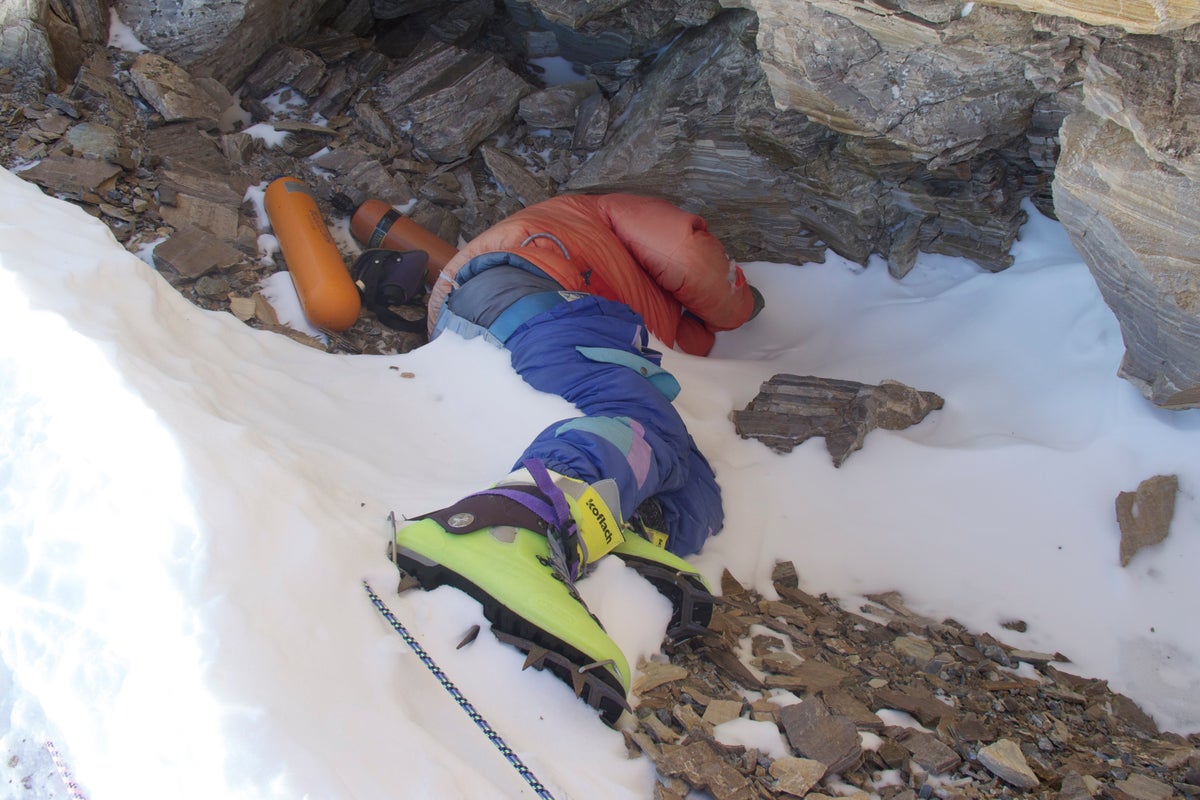
India announced plans last month to retrieve the body of a climber who died on Mount Everest in 1996. The remains, known as Green Boots for distinctive footwear, lie on the mountain's north side near the route between the First and Second Steps. The operation is expected to occur between June and September and would require coordination with Chinese authorities to move the body from Tibet to Nepal and then to India.
The other two climbers were Tsewang Paljor and Tsewang Samanla. Many mountaineers believe the body is Paljor's. The body remained near a main trekking route until Chinese authorities moved it in 2014. Climbers have reported that it remains visible off the northeast route.
Bierling, director of the Himalayan Database, said the body will be frozen to the mountain after 30 years. Alan Arnette, an Everest chronicler, said recovery teams will need ice axes to separate the remains from the mountainside. The Second Step, a 30-metre rock face fitted with a ladder, presents a technical obstacle.
Recovery workers must carry the body while wearing crampons, heavy gloves, and oxygen equipment. Helicopter transport is restricted on the Tibet side of the mountain. Arnette noted that many recovery workers would likely be Tibetan and follow Buddhism, which some practitioners view as conflicting with separating a body from the landscape.
Billi Bierling said 232 deaths occurred on the Nepal side and the remainder on the Tibet side. More than 200 bodies are reported to remain on the mountain.