India Plans to Shrink Safety Zones Around Nuclear Reactors
India will reduce the exclusion zones around its nuclear power plants from 1.6 kilometers to 500 meters. The change aims to free up land for commercial and residential use near the facilities. Officials said the revised zones align with international standards while maintaining safety requirements.
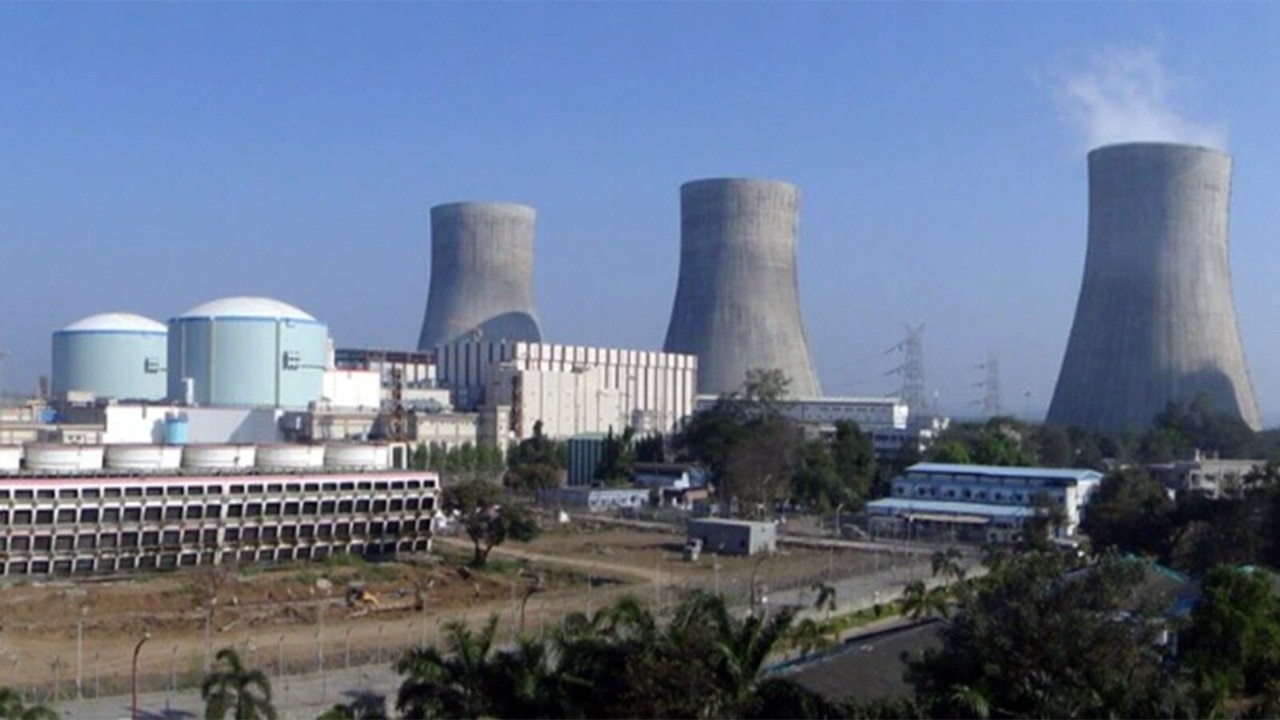 indiatoday.intoday.in
India will shrink the mandatory no-construction zones around its nuclear reactors from a radius of 1.6 kilometers to 500 meters, according to people familiar with the matter. The reduction is intended to release land currently kept off limits for development.
That land could then be used for commercial activities and residential projects near the nuclear facilities. The decision comes as the country seeks to expand its nuclear power capacity while addressing land scarcity around existing plants. Officials determined that a 500-meter radius provides sufficient safety margins based on updated risk assessments.
The revised distance matches the standard applied in several other countries with established nuclear programs. The original larger zone had been in place for decades under earlier safety protocols. The change will not affect the emergency planning distance, which remains at five kilometers.
Within that outer ring, authorities will continue to maintain evacuation and response capabilities. Plant operators will still enforce strict access controls in the inner area. Reactors currently under construction will follow the new 500-meter guideline.
Existing facilities are expected to adopt the updated zone over time through a phased implementation. The adjustment could allow for additional infrastructure to support local communities living near the sites. The plan has been under discussion for several years as part of broader efforts to modernize nuclear safety regulations.
It reflects advances in reactor design and containment technology that have lowered the assessed probability of off-site radiological releases.
The smaller exclusion zone will permit limited commercial development within the previously restricted band between 500 meters and 1.6 kilometers. Residential construction will remain prohibited in the immediate vicinity of the reactors themselves. Local governments will need to update zoning maps to reflect the revised boundaries.
Nuclear power provides roughly 3 percent of India's electricity generation. The government has set a target to increase that share significantly over the coming decade. Freeing up land near plants could help reduce project costs and speed deployment of new capacity.
The updated policy applies to both operating stations and future projects. It does not alter radiation monitoring requirements or operational safety standards at the facilities.
Key Facts
Potential Impact
- 01
Land near nuclear plants becomes available for commercial development.
- 02
Local governments will update zoning regulations around reactor sites.
- 03
Nuclear project costs could decrease due to reduced land acquisition needs.
- 04
India may accelerate addition of new nuclear capacity with smaller buffer zones.
Transparency Panel
Related Stories
 The Guardian
WHO Chief Visits DRC as Ebola Death Rate Reaches 30-50%
World Health Organization director-general Tedros Adhanom Ghebreyesus arrived in the Democratic Republic of the Congo to support containment of a new Ebola outbreak. The agency revised the death rate to 30-50% based on confirmed cases and recorded 10 confirmed and 223 suspected d…
 westernjournal.com
Greek National Charged in UK With Aiding Iran-Linked Intelligence Service
A 46-year-old Greek man living in Germany was charged under the UK National Security Act with assisting an intelligence service believed to be Iran by targeting a journalist at Iran International.
 upi.com
Supreme Court Revives Havana Docks Lawsuit Over Confiscated Cuban Property
The U.S. Supreme Court sent a Helms-Burton Act case back to lower courts for further argument. The suit seeks damages from cruise lines that used docks seized by Cuba in 1959.