Substrate
politics

Indian Supreme Court Judge Discusses Customs on Women Offering Namaz in Mosques

A Supreme Court judge in India stated that Islamic customs prefer women offering namaz at home to ensure childcare, during a bench hearing. The discussion arose in a case involving faith and fundamental rights. Advocates argued against judicial interference in religious practices.
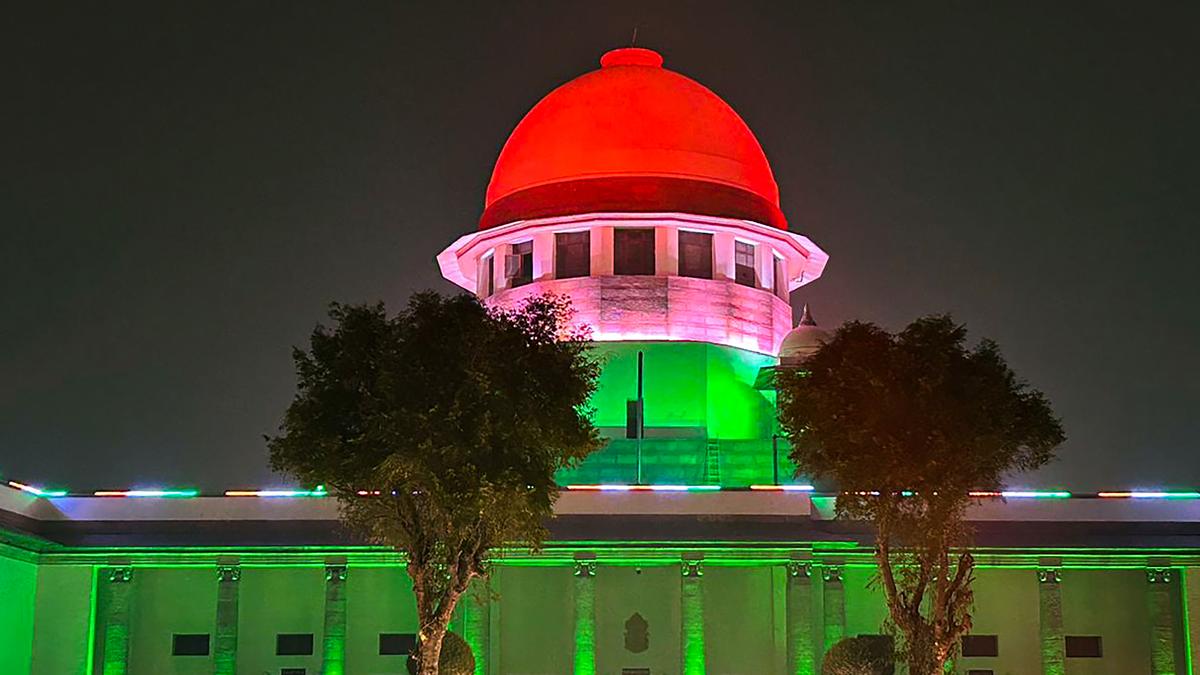
timesofindia.indiatimes.com
1 source·Apr 23, 10:30 PM(5 days ago)·1m read
Indian Supreme Court Judge Discusses Customs on Women Offering Namaz in Mosquesthehindu.com
Audio version
Tap play to generate a narrated version.
Developing·Limited corroboration so far. This page will refresh as more sources emerge.

NEW DELHI — Justice Ahsanuddin Amanullah, part of a nine-judge Supreme Court bench, stated on Thursday that since the days of the Prophet, there has been no ban on women entering mosques to offer namaz, though customs and procedures regulate how they pray.

Senior advocate M R Shamshad argued that the custom of providing separate spaces for Muslim women to offer namaz cannot be questioned by a court. Shamshad added that while there is no ban on women offering namaz in mosques, it is preferable for them to do so at home.

explained that one reason for preferring women to offer namaz at home is to ensure that children are cared for if all adults go to the mosque. The bench was addressing issues from the Sabarimala temple entry case, involving faith versus fundamental rights. Shamshad stated that a masjid is the essence of Islam and central to Muslim religious practices.

noted that a public interest litigation seeking equal treatment for women in mosques, including front-row places in congregations, is not provided for in the Quran. He added that there is no concept of a sanctum sanctorum in mosques barring women's entry, unlike in temples.

Justice Amanullah stated that whether women stand in the front row or in separate enclosures is determined by customs practiced for 1,200 years.
Key Facts

No ban on women in mosques
since Prophet's days per customs
Preference for home namaz
to care for children
Customs on prayer placement
practiced for 1,200 years
Call to overrule 1994 ruling
on mosques not essential

Story Timeline

2 events
  1. Thursday, April 23, 2026

    Justice Ahsanuddin Amanullah stated reasons for Islamic customs on women offering namaz at home during a Supreme Court bench hearing.

    1 sourcetimesofindia.indiatimes.com
  2. 1994

    Supreme Court ruled in Ismail Farooqui case that a mosque is not essential for namaz.

    1 sourcetimesofindia.indiatimes.com

Potential Impact

  1. 01

    Discussion could influence ongoing public interest litigation on women's equal treatment in mosques.

  2. 02

    The bench may overrule the 1994 Ismail Farooqui judgment, affecting future cases on religious essentials.

  3. 03

    Ruling might set precedents for judicial review of religious customs in India.

Transparency Panel

Sources cross-referenced1
Framing risk0/100 (low)
Confidence score75%
Synthesized bySubstrate AI
Word count231 words
PublishedApr 23, 2026, 10:30 PM
Bias signals removed1 across 1 outlet
Signal Breakdown
Loaded 1

Related Stories

North Korea Updates Constitution, Omits Korean Unification References Amid International Trade FairUser:Langley16 / Wikimedia (CC BY-SA 4.0)
politics1 hr ago

North Korea Updates Constitution, Omits Korean Unification References Amid International Trade Fair

North Korea has revised its constitution to eliminate references to unification with South Korea. The country also opened the Pyongyang Spring International Trade Fair on Monday, showcasing domestic products like the Jindallae smartphone. More than 290 enterprises from several na…

Reuters
South China Morning Post
Japan Times
3 sources
U.S. Pauses One-Day Ship Guidance in Strait of Hormuz as Iran Talks Advancechannelnewsasia.com
politics5 hrs agoDeveloping

U.S. Pauses One-Day Ship Guidance in Strait of Hormuz as Iran Talks Advance

President Trump announced a pause in the one-day-old effort to guide ships out of the Strait of Hormuz, citing progress toward an agreement with Iran. Secretary of State Marco Rubio declared the war with Iran concluded after a month-old cease-fire. The U.S. blockade remains in pl…

The New York Times
National Review
2 sources
Trump Signs Memorandum to Revive Presidential Physical Fitness Award at White House EventOffice of White House Press Secretary / Wikimedia (Public domain)
politics3 hrs agoDeveloping

Trump Signs Memorandum to Revive Presidential Physical Fitness Award at White House Event

President Donald Trump signed a memorandum on May 5, 2026, restoring the Presidential Physical Fitness Award and reintroducing a competitive fitness test in U.S. schools. The event featured student athletes on the White House South Lawn, where Trump demonstrated his signature dan…

Fox News
ABC News
2 sources