Substrate
ai

Investigation Finds Kenya's AI Healthcare System Overcharges Poor Households

An investigation revealed that Kenya's AI-driven healthcare contribution system overestimates incomes for poor households while underestimating for wealthier ones. The system, launched in October 2024 as part of President William Ruto's reforms, uses proxy means testing to determine premiums. Critics including health economists have highlighted inaccuracies in the algorithm's assessments.
The Guardian
1 source·May 4, 6:00 AM(2 days ago)·2m read
Investigation Finds Kenya's AI Healthcare System Overcharges Poor Householdsmedium.com
Audio version
Tap play to generate a narrated version.

An investigation by Africa Uncensored, Lighthouse Reports, and the Guardian found that Kenya's AI-powered healthcare system systematically overcharges the poorest households by overestimating their incomes, while undercharging wealthier ones by underestimating theirs.

The system, managed by the Social Health Authority (SHA), was introduced in October 2024 to replace the country's previous national insurance framework. It targets Kenya's informal workforce, which comprises 83% of the workforce, including day laborers, hawkers, and farmers.

Government volunteers conduct household surveys asking about possessions such as toilet types, roof materials, and radio ownership. These details are input into a predictive machine learning algorithm that calculates annual healthcare premiums based on proxy means testing, a method estimating income from life circumstances.

The algorithm does not use large language models but relies on machine learning to perform means testing. An audit of thousands of real households showed the system overestimates incomes for more than half of poor households, leading to premiums between 10% and 20% of their actual incomes.

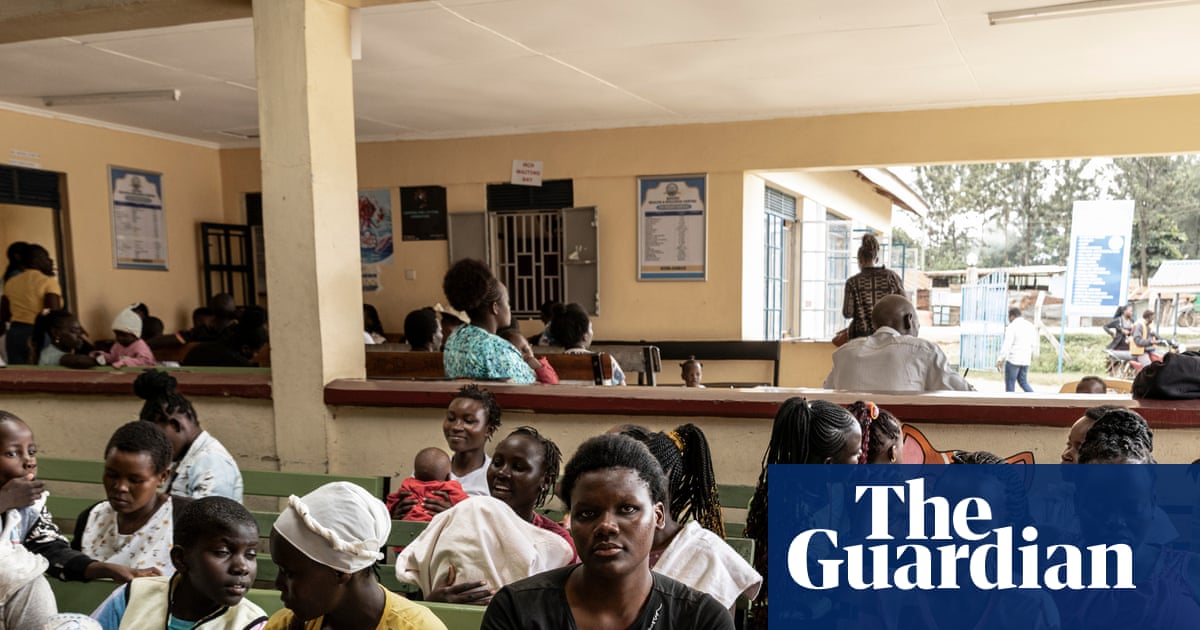
Residents in Nairobi's poorer areas have reported being charged amounts they cannot afford, resulting in denied access to treatment. For example, some individuals previously paying 500 Kenyan shillings now face bills of 1,030 Kenyan shillings, while a single mother was assessed at 3,500 Kenyan shillings monthly.

Grace Amani, a government volunteer registering households, stated that families struggle with these premiums and that some critically ill people cannot receive care. She added that people are dying at home due to inability to pay.

People are dying, people are suffering,

Grace Amani (The Guardian).

David Khaoya, a health economist who advised Kenya's health ministry, said the system prioritizes accurate assessments for wealthier households, even if it means overcharging the poor. He explained that richer individuals would not voluntarily pay more if undercharged.

Stephen Kidd, a development economist, noted that proxy means testing systems often exclude large portions of intended beneficiaries, with error rates up to 90% in some cases. He described such systems as opaque, reducing public trust. A pre-implementation report by IDinsight, shared with the government, found the system flawed and inequitable for low-income households, citing outdated data and over-representation of middle-income groups.

Despite this, the system was deployed.

Similar proxy means testing algorithms are used in programs across Africa, Asia, and Latin America, often supported by the World Bank. In Kenya, of over 20 million registered for SHA, only 5 million regularly pay premiums. The reforms were part of President William Ruto's 2023 campaign promise to provide affordable healthcare to all Kenyans.

During a 2023 rally in Kericho, Ruto stated that no Kenyan would be left behind.

Key Facts

83%
of Kenya's workforce in informal economy
Over 50%
of poor households overcharged by system
5 million
regularly paying premiums out of 20 million registered
October 2024
launch date of SHA healthcare system
Proxy means testing
method used to estimate incomes

Story Timeline

2 events
  1. October 2024

    Kenya launched the AI-powered healthcare system under the Social Health Authority to replace the national insurance system.

    1 sourceThe Guardian
  2. 2023

    President William Ruto promised universal access to affordable healthcare during his presidential campaign rally in Kericho.

    1 sourceThe Guardian

Potential Impact

  1. 01

    Increased denial of healthcare access for low-income Kenyans unable to pay assessed premiums.

  2. 02

    Potential rise in home deaths due to unaffordable treatment costs.

  3. 03

    Reduced public trust in government health services from opaque algorithm processes.

  4. 04

    Lower premium collection rates as only 5 million of 20 million registered pay regularly.

  5. 05

    Possible protests or policy revisions in response to system inaccuracies.

Transparency Panel

Sources cross-referenced1
Confidence score65%
Synthesized bySubstrate AI
Word count448 words
PublishedMay 4, 2026, 6:00 AM
Bias signals removed4 across 2 outlets
Signal Breakdown
Loaded 1Editorializing 1Amplifying 1Framing 1

Related Stories

Brockman Testifies on Heated 2017 Dispute with Musk Over OpenAI's For-Profit Shift in Federal Trialnaturalnews.com
ai1 hr agoUpdated

Brockman Testifies on Heated 2017 Dispute with Musk Over OpenAI's For-Profit Shift in Federal Trial

OpenAI President Greg Brockman detailed a heated 2017 confrontation with Elon Musk during testimony in the federal trial Musk v. Altman. He described Musk storming around a table and grabbing a painting after rejecting shared control proposals. The lawsuit seeks $150 billion in d…

The New York Times
Wired
New York Post
BBC News
Business Insider
+3
9 sources
Publishing Houses, Scott Turow Sue Meta Over AI Training Data Copyrightthenation.com
ai5 hrs agoFraming55Framing risk55/100Rewrite inherits negative framing of Meta's actions through loaded verbs and phrases, with lede misdirection centering on lawsuit filing over core infringement allegations.Click to jump to full framing analysis

Publishing Houses, Scott Turow Sue Meta Over AI Training Data Copyright

Five major publishing houses and author Scott Turow filed a class action lawsuit against Meta and CEO Mark Zuckerberg, alleging the company illegally used millions of copyrighted books and journal articles to train its Llama AI model. The suit, filed in federal court in Manhattan…

fortune.com
The Washington Post
Financial Times
NPR
4 sources
Italian Prime Minister Meloni Warns of AI-Generated Deepfakes and Shares Altered ImagePrime Minister's Office / Wikimedia (GODL-India)
ai1 hr agoDeveloping

Italian Prime Minister Meloni Warns of AI-Generated Deepfakes and Shares Altered Image

Italian Prime Minister Giorgia Meloni highlighted risks from AI-generated fake images, noting one depicting her in underwear and urging verification of online content. She filed a libel suit two years ago over similar deepfake images. Meanwhile, U.S. Secretary of State Marco Rubi…

The Independent
1 source