world
Iran Launches Missiles and Drones at UAE Facilities Near Strait of Hormuz
Iranian missiles and drones targeted the United Arab Emirates on May 5, 2026, prompting air defense responses and civilian shelter warnings. The attacks follow strikes on May 4 that hit oil facilities and ships in the Strait of Hormuz. U.S. officials stated the actions do not end an existing cease-fire, while Iran vowed to enforce a new order in the region.
LI
SE
JE
 indiatoday.intoday.in
Audio version
Tap play to generate a narrated version.
Missiles and drones were detected over the United Arab Emirates on Tuesday morning, May 5, 2026, marking the second day of Iranian attacks on the Gulf nation. The UAE Ministry of Defense reported that air defense systems were responding to the missile threat. The ministry also warned civilians to take shelter amid the ongoing assault.
The attacks on May 5 came just under 24 hours after Iran conducted drone strikes that set fire to tankers and the UAE’s largest oil storage facility on Monday, May 4, 2026. Iran fired 15 missiles and drones at UAE ships and facilities around the Strait of Hormuz on May 4, targeting the Fujairah Oil Industry Zone.
That zone serves as the largest commercial storage hub for refined crude in the Middle East.
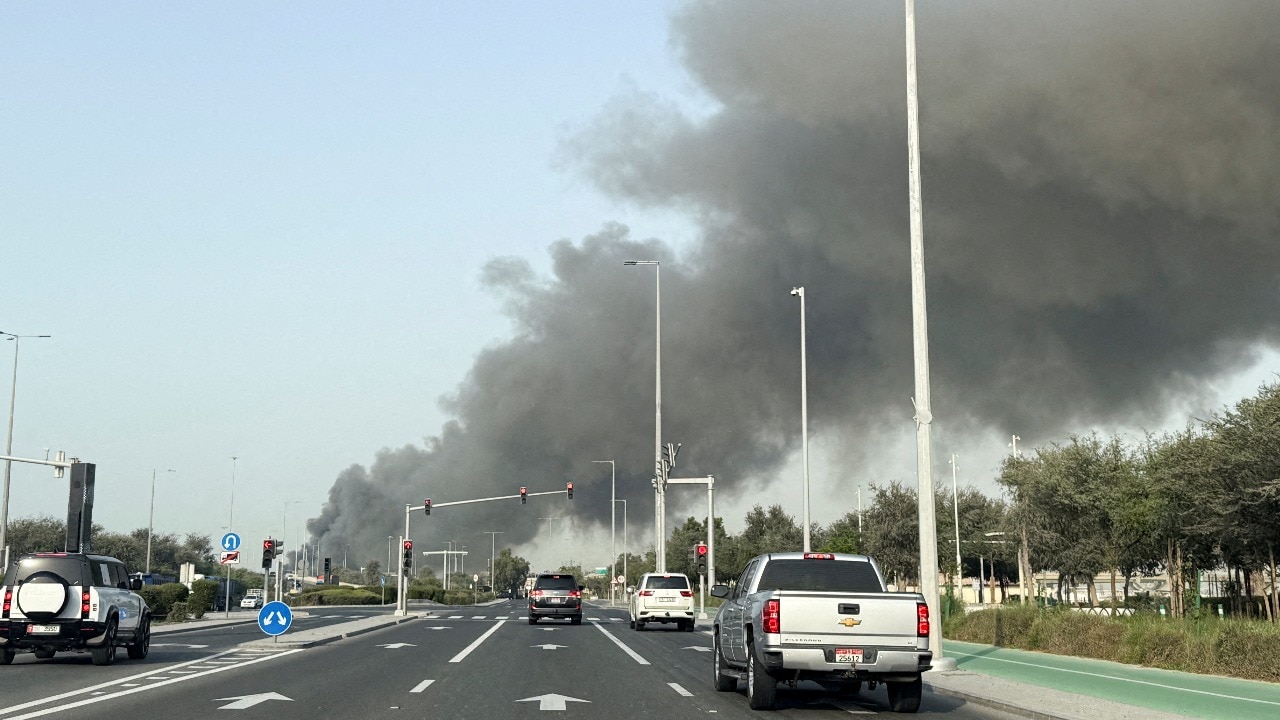
These strikes represent the first such assaults since a cease-fire with Iran went into effect prior to May 4, 2026. The UAE foreign ministry stated that the attacks constitute a dangerous escalation and an unacceptable transgression. Abu Dhabi officials detailed the May 4 assault, which saw smoke billowing from the Fujairah oil industry zone as captured in social media images via Reuters.
Iran also attacked a coastal town in Oman located just past the Strait of Hormuz. Iranian opposition media reported a huge explosion and a plume of smoke in western Tehran on Monday, May 4, 2026, shortly after the drone and missile attack on the UAE. The timing linked the Tehran incident to the broader regional tensions.
U.S. Secretary of Defense Pete Hegseth stated that Iran’s latest attacks in the Gulf do not constitute an end to the cease-fire. Gen. Dan Caine, chairman of the Joint Chiefs of Staff, echoed that assessment, telling reporters at the Pentagon on Tuesday, May 5, 2026, that Iran’s recent acts of aggression are below the threshold of major combat operations.
Both officials emphasized the persistence of the truce despite the strikes. Iran’s chief negotiator Mohammad Bagher Ghalibaf, the country’s parliament speaker, wrote on X that his nation would enforce a new Iran-led order along the strait. His statement underscored Tehran’s intent to challenge the existing dynamics in the region.


