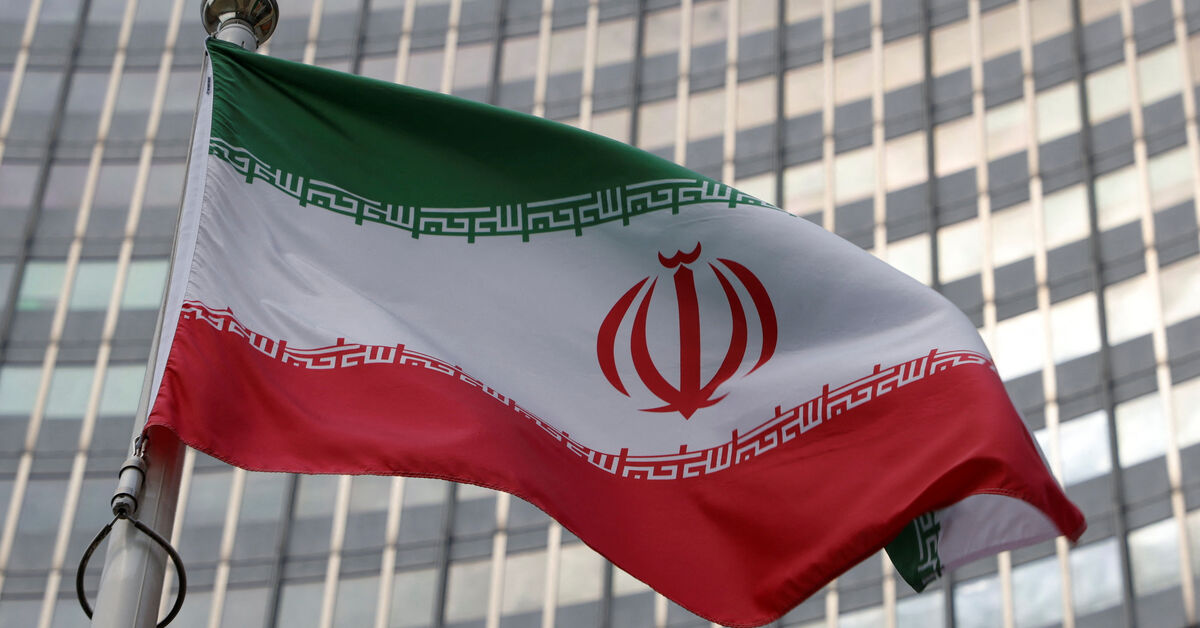
Iran Establishes Agency to Vet and Tax Ships in Strait of Hormuz
Iran has created the Persian Gulf Strait Authority to approve vessel transits and collect tolls in the Strait of Hormuz, according to shipping data firm Lloyd’s List Intelligence. The move comes as diplomatic efforts continue to end the conflict that began Feb. 28 with U.S. and Israeli strikes against Iran.
Iran has created a government agency to vet and tax vessels seeking passage through the Strait of Hormuz, a shipping data company reported Thursday. The shipping data firm Lloyd’s List Intelligence said Iran established the Persian Gulf Strait Authority to position itself as the only valid authority to grant permission to ships transiting the strait.
The authority emailed Lloyd’s List Intelligence an application form for ships seeking passage. The agency formalizes an existing vetting process that routes vessels through the strait’s northern waters near the Iranian coastline. Iran has effectively closed the strait while the U.S. is blockading Iranian ports.
The disruptions have affected shipments of oil, gas, fertilizer and other petroleum products. The United Nations Convention on the Law of the Sea calls for countries to permit peaceful passage through their territorial waters.
Ministry spokesperson Esmail Baghaei said the Islamic Republic was reviewing messages from Pakistan, which is mediating peace negotiations. Baghaei said Iran “has not yet reached a conclusion, and no response has been given to the U.S. side,” according to Iranian state TV.
Pakistani Foreign Minister Ishaq Dar spoke by phone with his Iranian counterpart Abbas Araghchi, the Pakistani Foreign Ministry said. ” Andrabi added that Pakistan hoped the parties would reach a peaceful and sustainable solution. Pakistani Prime Minister Shehbaz Sharif said Islamabad remained in continuous contact with Iran and the United States to stop the war and extend the ceasefire.
He declined to give a timeline.
The war began Feb. 28 when the U.S. and Israel launched strikes against Iran. The ceasefire between the U.S. and Iran has largely held since April 8. In-person talks between the two countries hosted by Pakistan last month failed to reach an agreement.
Late in the day, semiofficial Iranian news agencies reported explosions were heard in southern Iran near Bandar Abbas. The reports from the Fars and Tasnim agencies did not identify the source of the blasts. The Trump administration has sent mixed messages on its strategy to end the war.
A tenuous ceasefire and previous declarations that military operations were over have given way to new threats of bombing if Tehran does not accept a deal that allows for resumption of oil and natural gas shipments disrupted by the conflict. military to open a safe passage for commercial ships through the strait.
The pause would allow more time to reach a peace agreement. Only two American-flagged merchant ships are known to have passed through the U.S.-guarded route. The U.S. military said it sank six Iranian small boats threatening civilian ships. A Saudi official said the kingdom refused to support the U.S. effort to reopen the strait by force and would not allow use of its territories and bases.
Direct talks between Israel and Lebanon were scheduled to resume May 14 and 15 in Washington. Iranian President Masoud Pezeshkian said he met recently for more than two hours with Supreme Leader Mojtaba Khamenei. Pezeshkian praised the supreme leader’s sincere behavior in the long in-person meeting.
Khamenei has only released written statements since being named supreme leader in March. He replaced his father, Ayatollah Ali Khamenei, who was killed during the war’s initial strikes. Maritime law experts say Iran’s demands to vet or tax vessels violate international law.
The U.S. and its Gulf allies are pushing for the U.N. Security Council to support a resolution that condemns Iran’s actions on the strait and threatens sanctions. A prior resolution calling for reopening the strait was vetoed by Russia and China. The Iranian effort to formalize control over the channel has raised concerns about international shipping, with hundreds of commercial ships bottled up in the Persian Gulf and unable to reach the open sea.
Key Facts
Story Timeline
5 events- 2026-05-08
Lloyd’s List Intelligence reported Iran created the Persian Gulf Strait Authority to vet and tax vessels.
1 source@FortuneMagazine - 2026-05-08
Iranian and Pakistani officials held phone talks on peace negotiations.
1 source@FortuneMagazine - 2026-05-08
Semiofficial Iranian agencies reported explosions near Bandar Abbas.
1 source@FortuneMagazine - April 8, 2026
A tenuous ceasefire between the U.S. and Iran took effect.
1 source@FortuneMagazine - Feb. 28, 2026
The war began with U.S. and Israeli strikes against Iran.
1 source@FortuneMagazine
Potential Impact
- 01
Hundreds of commercial ships remain unable to exit the Persian Gulf.
- 02
Israel-Lebanon talks are scheduled to resume in Washington on May 14-15.
- 03
Shipments of oil, gas and fertilizer through the strait face continued disruption.
- 04
Pakistan continues mediating direct contacts between Iran and the United States.
- 05
U.N. Security Council efforts to pass a resolution on the strait remain stalled.
Transparency Panel
Related Stories
tass.comEight Hantavirus Cases Confirmed on MV Hondius Cruise, Three Fatal
Health officials have confirmed eight cases of Andes hantavirus tied to an expedition cruise aboard the MV Hondius, with three deaths reported. The World Health Organization assesses the broader public health risk as low. An epidemiologist highlighted rapid spread of misinformati…
thedrinksbusiness.comLVMH's Arnault Visits Seoul Stores as US Treasury Secretary Travels to Asia
LVMH Chairman and CEO Bernard Arnault is expected to visit South Korea next week for the first time in three years, touring newly opened Louis Vuitton outlets in major department stores. Separately, U.S. Treasury Secretary Scott Bessent plans a one-day stop in Seoul en route to C…
Substrate placeholder — needs reviewCDC Classifies Hantavirus Outbreak as Level 3 Emergency
The Centers for Disease Control and Prevention activated its Emergency Operations Center on Friday after classifying the ongoing hantavirus outbreak as level 3, the lowest of its emergency activation levels. Two new suspected cases were reported the same day linked to a cruise sh…