politics
Irish Protests Disrupt Fuel Supply as Iran War Drives Price Increases
Protests across Ireland have disrupted nearly half of the country's fuel supply due to rising prices from the war in Iran. Demonstrators, including farmers and haulers, have used tractors and trucks to block roads, ports, and the Whitegate oil refinery. The Irish government has approved tax cuts on fuels and deferred a carbon tax increase.
Apr 13, 7:51 PM·3m read1 source
 news.sky.com
Audio version
Tap play to generate a narrated version.
# Protests Disrupt Fuel Supply in Ireland Protests have erupted across Ireland in recent days over the surge in fuel prices driven by the war in Iran. Demonstrators have blocked key oil infrastructure and major roads in Ireland. Protesters have disrupted nearly half of Ireland’s fuel supply.
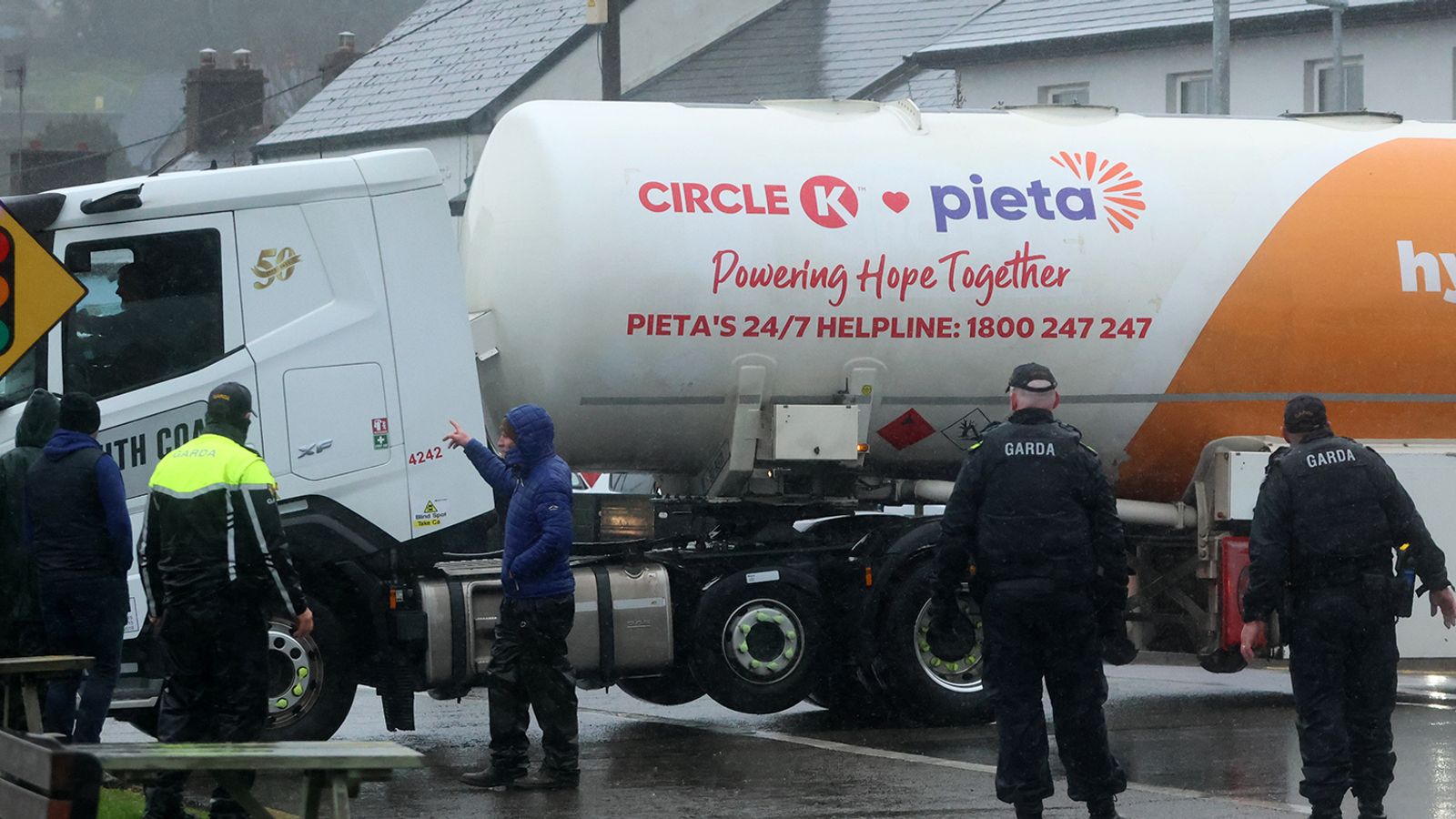
Protesters have taken to the streets across Ireland since last week using tractors and trucks to block roads. Demonstrators have set blockades on major roads, ports, and other key fuel infrastructure in Ireland. Protests have significantly curbed access to fuel across Ireland.
Tractors blocked O’Connell Street in Dublin on the fifth day of the National Fuel Protest on Saturday, April 11, 2026. Several blockades were broken up by police over the weekend at O’Connell Street in Dublin. Several blockades were broken up by police over the weekend at Foynes Port in County Limerick.
Several blockades were broken up by police over the weekend at Rosslare Harbour in County Wexford. Several blockades were broken up by police over the weekend at Whitegate oil refinery in County Cork. The Whitegate oil refinery is Ireland’s only refinery.
The Whitegate oil refinery produces about 40% of Ireland’s fuel. ” Martin said, “Businesses and people’s livelihoods depend on this fuel. ” Fuels for Ireland CEO Kevin McPartlan told RTE News on Monday that there are several hundred petrol stations without fuel due to the supply disruptions caused by the blockades.
McPartlan said that if access to the terminal and refinery returns to normal, it could take up to 10 days to fully restore fuel cycles. The price of diesel has risen to around 71 cents in Ireland since the start of the war in Iran. The price of petrol has gone up by about 35 cents in Ireland since the start of the war in Iran.
approved legislation last month that would reduce excise duty on fuels until the end of May.


