Israel Opens Factory to Mass Produce FPV Drones for Military
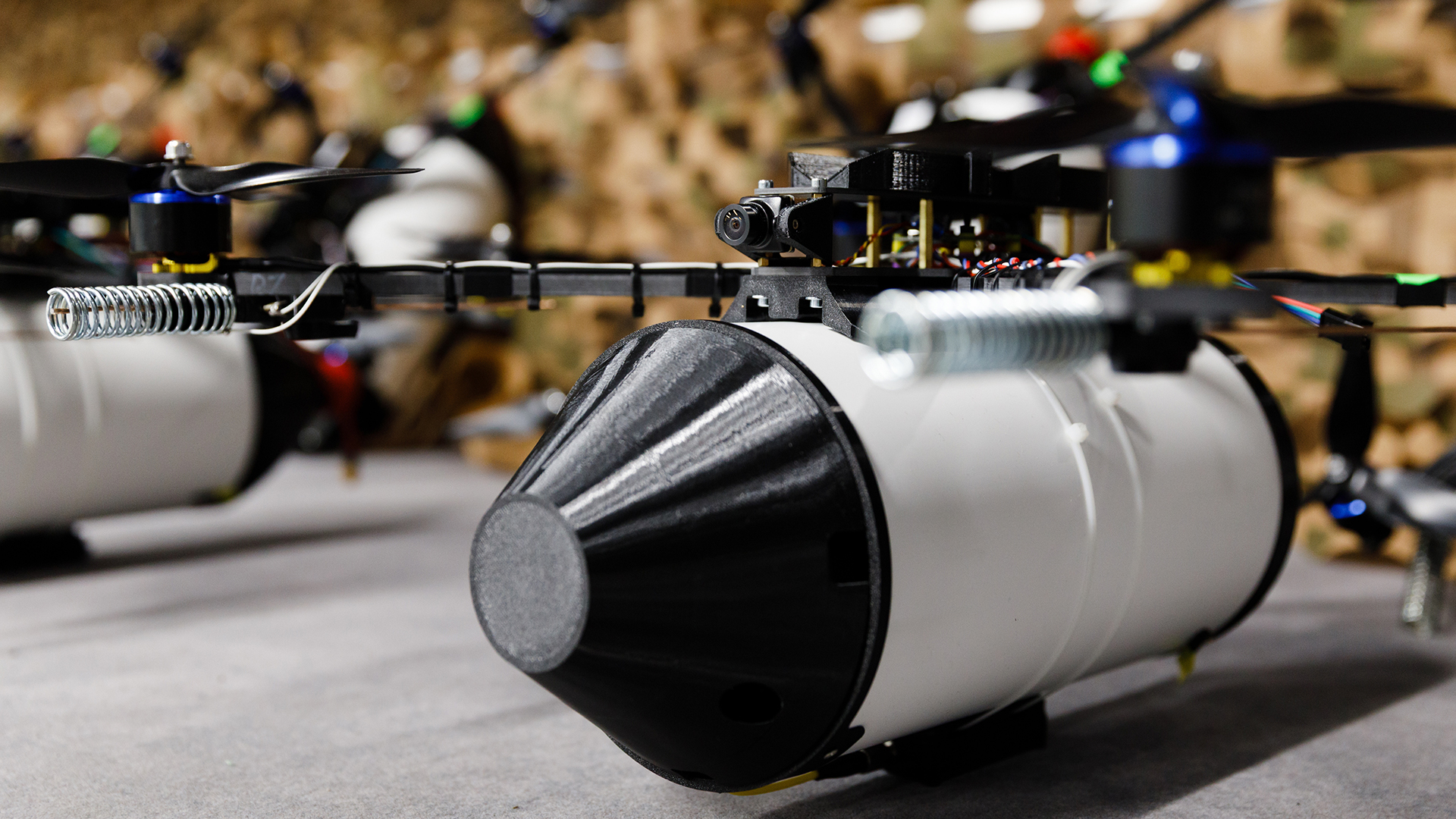
The Israeli military is establishing an in-house factory to produce thousands of first-person view suicide drones each month. The move addresses increasing Hezbollah FPV drone attacks on Israeli forces in southern Lebanon that have caused casualties and equipment damage. Production is scheduled to begin in July with an initial target of 1,000 drones per month, scaling to tens of thousands.
 The War Zone
Officials cited the need to industrialize and significantly expand the arsenal of these weapons in response to their growing role on the battlefield. The decision comes as Israeli forces face increasing attacks from Hezbollah's FPV drones in southern Lebanon.
Hezbollah has released multiple videos showing strikes on Merkava Mk. 4 tanks, a Humvee, an armored bulldozer and a Namer heavy infantry fighting vehicle in areas including the town of Al-Bayada. A domestic manufacturer has been producing FPV drones that rely on Chinese components.
Officials identified security risks and supply chain vulnerabilities associated with those parts. Bringing production in-house to the Technology and Logistics Division will allow use of only indigenous components while boosting output and reducing costs.
The factory is expected to begin supplying drones in large quantities starting in July. Initial production will target 1,000 units per month before scaling to tens of thousands.
Hezbollah has relied heavily on fiber-optic guided FPV drones. These systems resist radio-frequency jamming and overcome some line-of-sight limitations that affect conventional radio-controlled drones. The deeper Israeli forces have pushed into southern Lebanon, the more frequent such attacks have become.
While the overwhelming majority of FPV drones are intercepted before causing damage, the attacks have inflicted casualties and damaged equipment. Videos released by Hezbollah and monitoring accounts document strikes using warheads such as PG-7VL or PG-7AT high-explosive anti-tank munitions.
Israeli forces have begun deploying physical protections including netting on vehicles. The mesh is designed to entangle incoming drones or keep explosions at a safer distance from occupants. Unexploded Hezbollah FPV drones have been found caught in such nets.
Active protection systems on tanks and armored personnel carriers are being adapted for hard-kill counter-drone roles. These systems, which Israel has pioneered for decades, use sensors to detect threats and launch interceptors. Upgrades to systems such as Iron Fist are under consideration, though timelines remain unclear and lighter vehicles lack such protection.
Additional efforts include improved detection equipment and development of dedicated interceptor drones to counter FPV threats, according to Israeli media. Officials have faced domestic criticism for not accelerating defensive measures earlier after observing smaller-scale use in 2024 and the extensive FPV warfare in Ukraine.
First-person view drones became a primary strike weapon for both Russian and Ukrainian forces, with each side manufacturing and expending millions annually. Officials continue to monitor evolving tactics and countermeasures in this rapidly changing domain of warfare.
>"The IDF is currently establishing a factory that will produce suicide drones (FPV drones) for use in all theaters of war.