world
Israel Signs $34M Contract for External Fuel Tanks on F-35I Adir
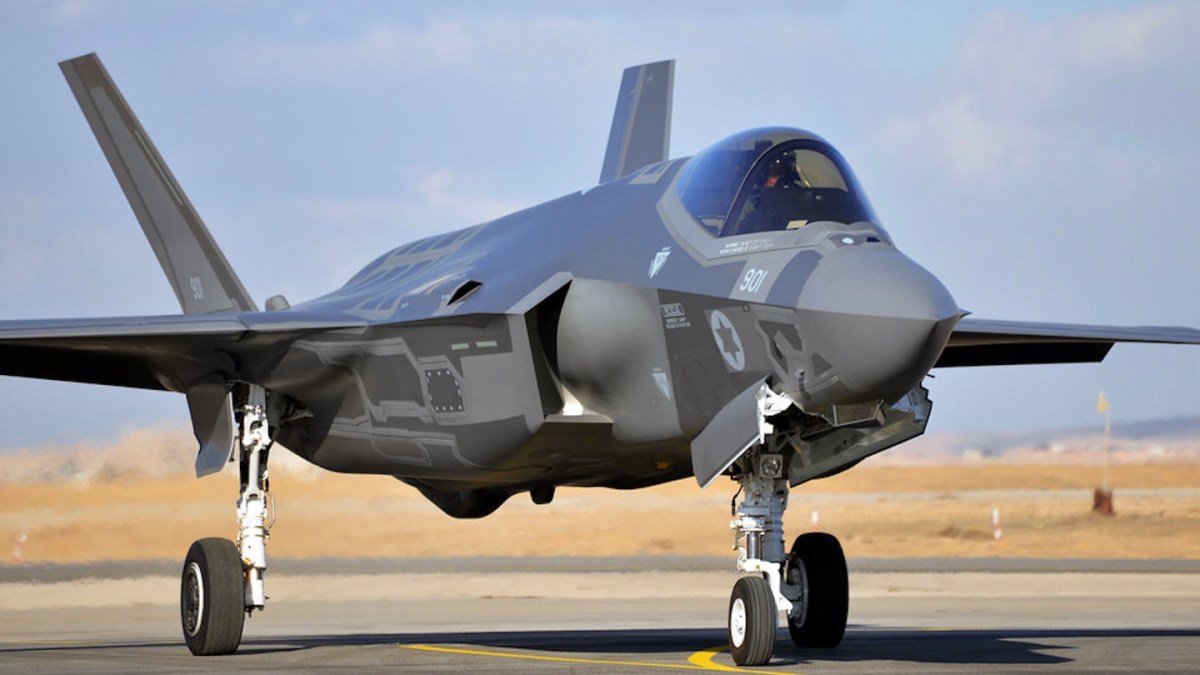
The Israeli Ministry of Defense signed a contract valued at over $34 million with Elbit Systems subsidiary Cyclone to develop and integrate external fuel tanks for the F-35I. The upgrade follows extensive combat operations against Iran in 2025 and 2026 and aims to extend range while reducing dependence on aerial refueling. Israel is on track to operate 100 F-35Is across four squadrons.
May 14, 1:45 PM·2m read2 sources
TH
 The War Zone
Audio version
Tap play to generate a narrated version.
Developing·Limited corroboration so far. This page will refresh as more sources emerge.
The Israeli Ministry of Defense signed a contract with Cyclone, a wholly owned subsidiary of Elbit Systems, to develop and integrate external fuel tanks for the F-35I Adir fighter aircraft. The contract is valued at over $34 million. The tanks will be based on an existing Cyclone design originally developed for the F-16.
Elbit Systems posted on X on May 14, 2026, announcing that Israel_MOD signed a contract with Cyclone for an extended-range capability for the F-35 Adir. "The new capability is expected to extend the aircraft’s operational range, reduce reliance on aerial refueling, and enhance operational flexibility across long-range missions," the company stated.
The announcement comes after Israeli F-35I Adirs conducted extensive combat operations striking targets in Iran during campaigns in 2025 and 2026.
Those operations highlighted the limitations of Israel’s tanker fleet, which consists of only around seven aging Boeing 707 tankers. The first of Israel’s KC-46 tankers began flight trials earlier this month as of May 2026. External drop tanks were found in multiple locations in eastern Iraq during operations against Iran.
In 2022, reports emerged suggesting Israel had developed a means of extending the range of its F-35Is to hit targets in Iran without aerial refueling. The Israeli Air Force has also been seen flying F-35Is with external ordnance including four 2,000-pound-class GBU-31 JDAMs plus AMRAAMs. The inboard stores hardpoints on the F-35 are plumbed for the carriage of external fuel tanks.
Israeli Aerospace Industries and Cyclone worked on both a conformal tank design for the F-35I and the 600-gallon drop tank. The F-35I test aircraft arrived in Israel in 2020. In 2019, Lockheed Martin studied adding two 600-gallon drop tanks under the F-35’s wings, which would increase total fuel capacity by around 40 percent.