James Webb Space Telescope Detects Galaxy Hebe from 400 Million Years After Big Bang
The James Webb Space Telescope has spotted a galaxy named Hebe that existed 400 million years after the big bang. The galaxy contains extremely pure and young stars. This detection provides data on early universe structures.
 zerohedge.com
Discovery of Early Galaxy The James Webb Space Telescope spotted a galaxy named Hebe.
This galaxy existed 400 million years after the big bang. @NewScientist reported the detection. Galaxy Hebe contains extremely pure and young stars. The James Webb Space Telescope identified these characteristics in the galaxy.
The observation highlights features of early cosmic formations.
Characteristics of Galaxy Hebe Hebe's stars are described as extremely pure and young.
This purity indicates minimal heavy element contamination from prior stellar generations. The galaxy's age places it among the earliest known structures. The detection occurred through observations by the James Webb Space Telescope.
This instrument has capabilities to observe distant, faint objects from the universe's infancy. @NewScientist reported these details on the galaxy's composition.
Implications for Early Universe Studies Galaxy Hebe's existence 400 million years after the big bang offers data on rapid galaxy formation.
The presence of pure stars suggests conditions in the primordial universe favored quick stellar birth. The James Webb Space Telescope's role in spotting Hebe underscores its contributions to cosmology. Observations of such galaxies help refine models of cosmic evolution.
Hebe's young stars provide evidence of the universe's initial star-forming phases. @NewScientist noted the significance of these findings in understanding early galaxies.
Story Timeline
2 events- 2026-04-14
James Webb Space Telescope spots galaxy Hebe
1 source@NewScientist - 400 million years after big bang
Galaxy Hebe exists with pure and young stars
1 source@NewScientist
Potential Impact
- 01
Advances understanding of early galaxy formation
- 02
Provides data on primordial star purity
- 03
Supports refinement of big bang timeline models
Transparency Panel
Related Stories
 benzinga.com
UK Foreign Office Minister Announces Halt to Chagos Islands Sovereignty Treaty with Mauritius
Stephen Doughty, a Foreign Office minister, stated that the treaty to cede sovereignty of the Chagos Islands to Mauritius has become impossible to agree at the political level. He added that the corresponding bill will not complete its passage through parliament. Doughty noted th…
 NASA Johnson Space Center / Wikimedia (Public domain)
NASA's Artemis II Completes First Manned Moon Mission Since 1972, Sets Distance Record
NASA's Artemis II mission completed a flight around the moon and splashed down in the Pacific Ocean on Saturday. The mission marks the first manned moon mission since 1972 and set a record for the furthest humans have travelled into space at 252,756 miles (406,771km). Meanwhile,…
 Science News
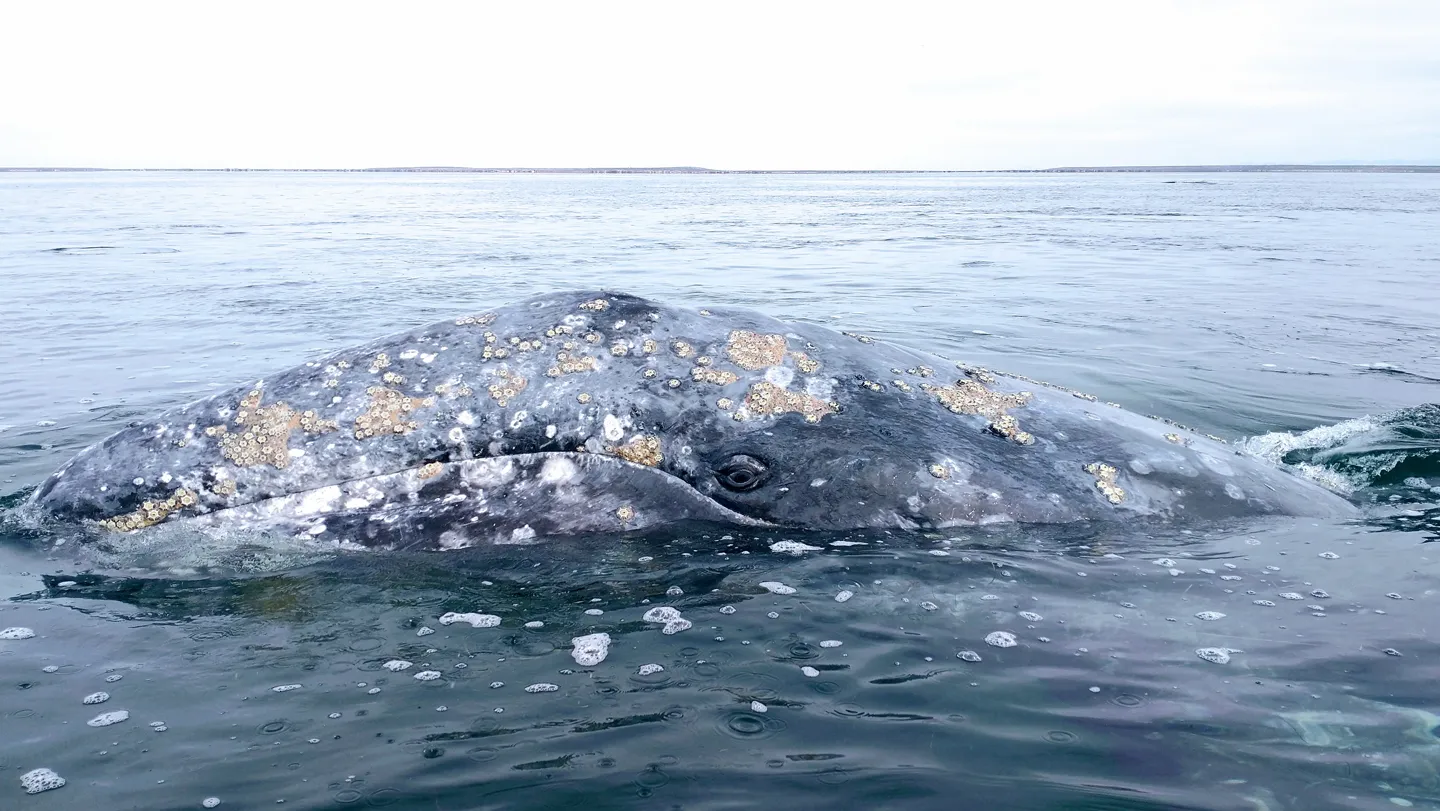
Nearly 1 in 5 Gray Whales Entering San Francisco Bay Die There, Study Finds
Researchers report that approximately 18 percent of photo-identified gray whales visiting San Francisco Bay from 2018 to 2025 died after entering the area. The deaths, often from vessel strikes, coincide with a population decline linked to reduced Arctic food availability. The fi…