Substrate
world

James Webb Telescope Finds Daily Cloud Cycle on Hot Jupiter Exoplanet

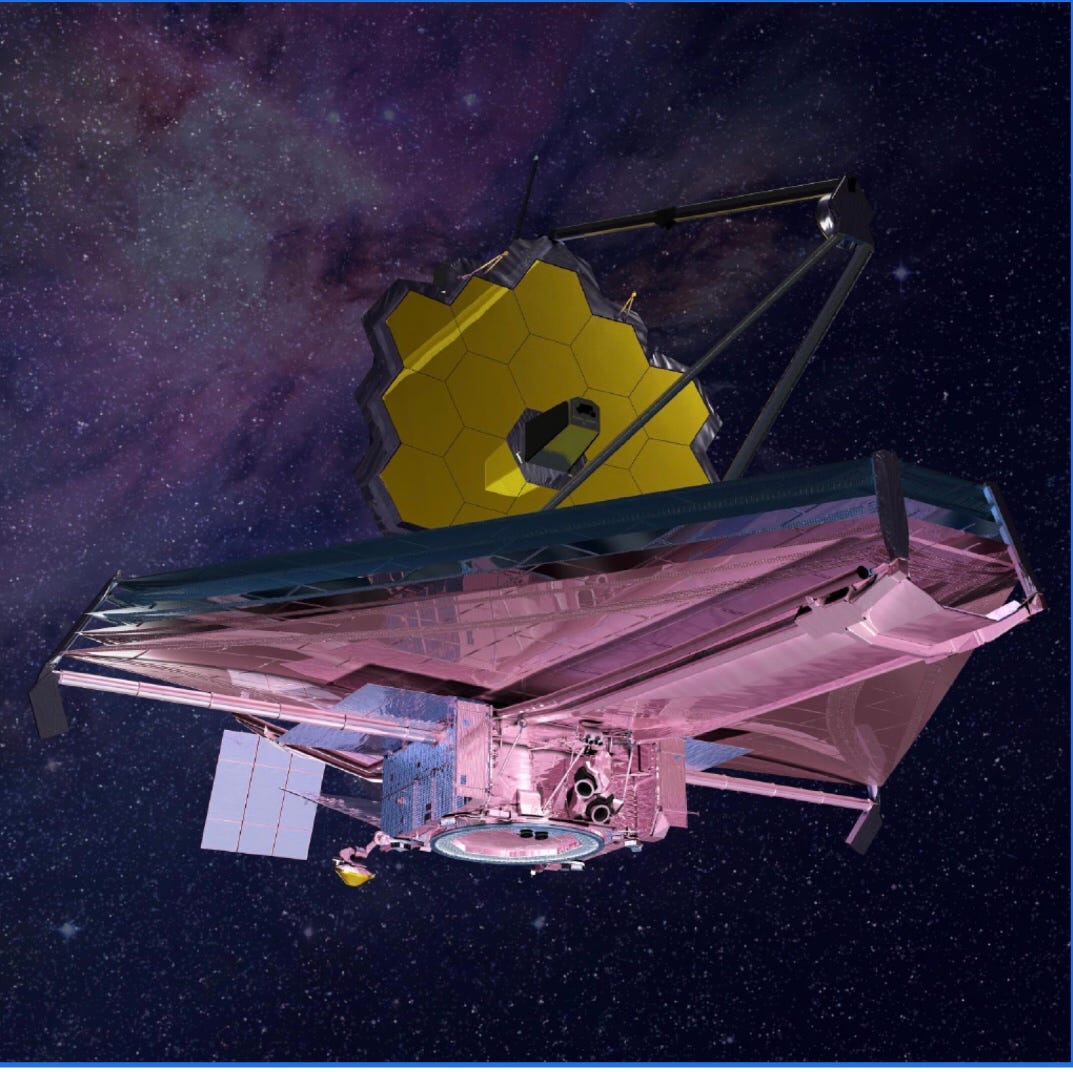
Astronomers used the James Webb Space Telescope to observe mineral clouds forming overnight and dissipating during the day on WASP-94A b, a gas giant 689 light-years away. The study, published in Science, provides separate measurements of the planet's morning and evening atmospheres.

FO
1 source·May 21, 7:12 PM(7 days ago)·1m read
James Webb Telescope Finds Daily Cloud Cycle on Hot Jupiter Exoplanetmedium.com
Audio version
Tap play to generate a narrated version.

Astronomers using the James Webb Space Telescope observed a repeating weather pattern on the exoplanet WASP-94A b. Mineral clouds form on the cooler nightside and dissipate when carried to the hotter dayside by atmospheric winds. The planet orbits its star every four days and is tidally locked, creating a temperature difference of roughly 350 degrees Fahrenheit between its permanent day and night hemispheres.

Researchers used the telescope's Near Infrared Imager and Slitless Spectrograph to measure the atmosphere as the planet passed in front of its star.

The morning side showed thick magnesium silicate clouds while the evening side appeared relatively clear with stronger water vapor signals. The clouds evaporate once temperatures exceed 1,832 degrees Fahrenheit. David Sing, a Bloomberg Distinguished Professor at Johns Hopkins University and co-author of the study, said the observations allow scientists to determine what the clouds are made of and how they condense and evaporate.

Telescope data had indicated the planet contained hundreds of times more oxygen and carbon than Jupiter. The new JWST measurements show only about five times as much, aligning more closely with current planetary formation models. Sagnick Mukherjee, lead author and now a postdoctoral fellow at Arizona State University, said the ability to separate morning and evening regions helped reveal the cloud cycle.

The team also identified similar cycles on WASP-39b and WASP-17b. WASP-94A b was first discovered in 2014 and has a mass half that of Jupiter. Its host star belongs to a binary system in the constellation Microscopium.

Key Facts

WASP-94A b
Gas giant 689 light-years from Earth
Temperature contrast
Roughly 350 degrees Fahrenheit between hemispheres
Cloud composition
Magnesium silicate clouds form at night
Atmospheric revision
Oxygen and carbon levels now five times Jupiter's

Story Timeline

2 events
  1. 2014

    WASP-94A b was first discovered.

    1 source@Forbes
  2. May 21, 2026

    Study on cloud cycling on WASP-94A b published in Science.

    1 source@Forbes

Potential Impact

  1. 01

    Future exoplanet observations may separate morning and evening atmospheric regions.

  2. 02

    Similar cloud cycles may be searched for on other Hot Jupiter planets.

Transparency Panel

Sources cross-referenced1
Confidence score75%
Synthesized bySubstrate AI
Word count260 words
PublishedMay 21, 2026, 7:12 PM
Bias signals removed2 across 1 outlet
Signal Breakdown
Loaded 1Editorializing 1

Related Stories

Journalists in Gaza to Receive 2026 Golden Pen of Freedom Awardstraitstimes.com
world2 hrs ago

Journalists in Gaza to Receive 2026 Golden Pen of Freedom Award

Three international news agencies will accept the award on behalf of their local staff still reporting from the territory. The World Association of News Publishers cited the journalists' continued coverage under extreme conditions.

Al-Monitor
AF
2 sources
Supreme Court Revives Havana Docks Lawsuit Over Confiscated Cuban Propertyupi.com
world2 hrs ago

Supreme Court Revives Havana Docks Lawsuit Over Confiscated Cuban Property

The U.S. Supreme Court sent a Helms-Burton Act case back to lower courts for further argument. The suit seeks damages from cruise lines that used docks seized by Cuba in 1959.

FO
1 source
Pakistan Population Growth Outpaces Infrastructure as Male Contraception Stays TabooFrance 24
world2 hrs agoDeveloping

Pakistan Population Growth Outpaces Infrastructure as Male Contraception Stays Taboo

Pakistan's population exceeds 258 million and could reach 300 million by 2030. Contraception remains largely taboo in a society shaped by traditional values. The country continues to lag behind neighbors India and Bangladesh in key social sectors.

FR
France 24
2 sources