Substrate
world

James Webb Telescope Finds LHS 3844 b Is a Barren, Airless World With Volcanic Rock Surface

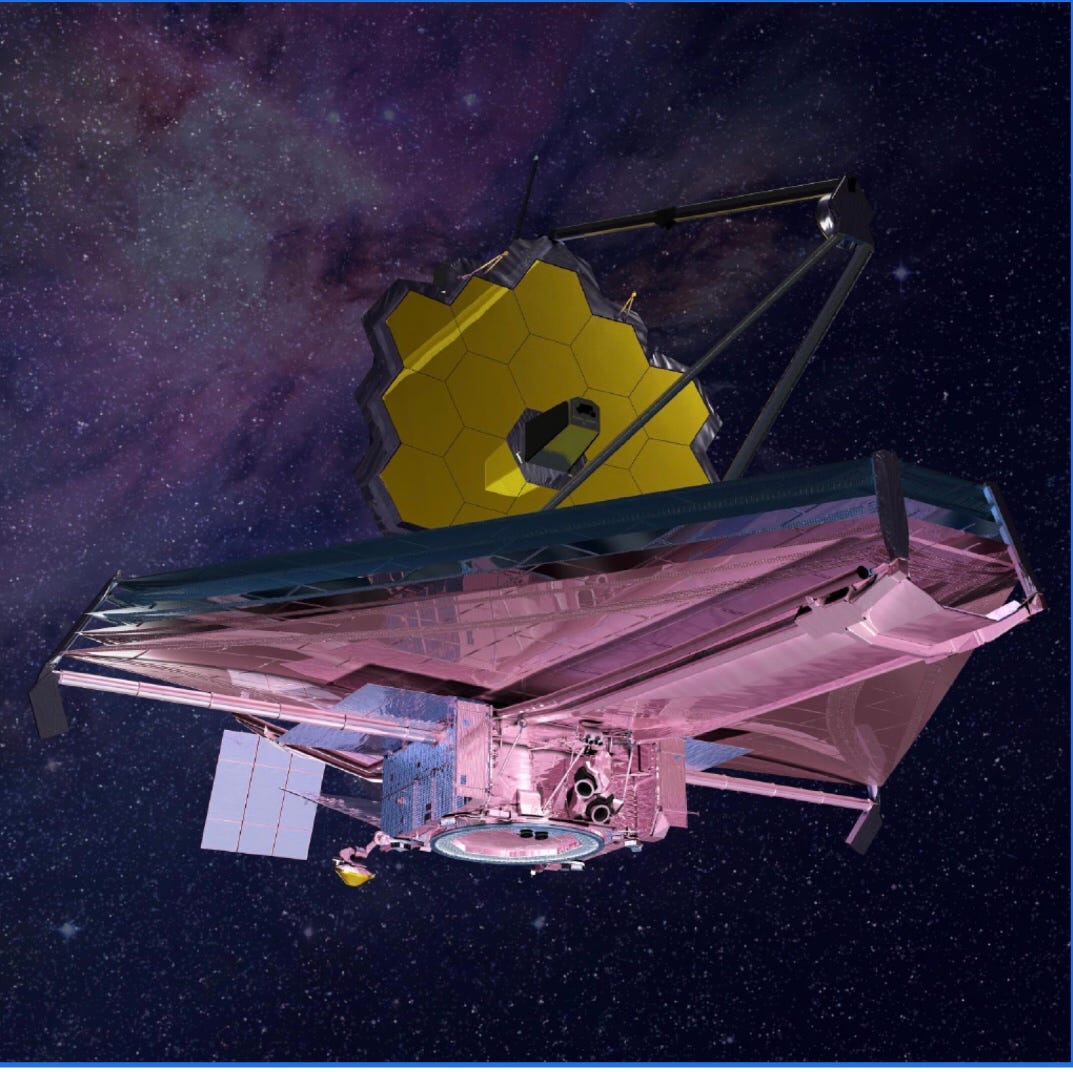
NASA’s James Webb Space Telescope has delivered the first direct look at the surface of the rocky exoplanet LHS 3844 b, also known as Kua’kua, revealing a dark, airless world dominated by ancient volcanic rock. The observations, published this week in Nature Astronomy, show a planet with extreme temperatures, no detectable atmosphere and a surface resembling Mercury.

Rappler
1 source·May 8, 10:37 AM(18 hrs ago)·2m read
James Webb Telescope Finds LHS 3844 b Is a Barren, Airless World With Volcanic Rock Surfacemedium.com
Audio version
Tap play to generate a narrated version.
Developing·Limited corroboration so far. This page will refresh as more sources emerge.

Astronomers have obtained the clearest look yet at the surface of exoplanet LHS 3844 b using NASA’s James Webb Space Telescope. The rocky world, located about 49 light-years from Earth, has a diameter about 30% larger than Earth and orbits a red dwarf star smaller and less luminous than the sun. The study detailing the findings was published this week in the journal Nature Astronomy.

The planet, also called Kua’kua after the word for butterfly in an indigenous language spoken in Costa Rica, orbits its star once every 11 hours. It is tidally locked, with one side always facing the star and the other side always facing away. The dayside surface temperature reaches about 1,340 degrees Fahrenheit (725 degrees Celsius), while there was no detectable heat on the nightside.

Webb, which was launched in 2021 and became operational in 2022, detected infrared light coming directly from the surface of LHS 3844 b. 3% that of the sun. 5 trillion km).

Dark volcanic rocks like basalt matched the observations of LHS 3844 b’s surface much better than brighter, silica-rich rocks like granite, Sebastian Zieba said. Zieba, an astronomer at the Center for Astrophysics, Harvard & Smithsonian in Massachusetts, is lead author of the study. The surfaces of Mercury and the moon are basalt-dominated.

“Different rocks have different spectral fingerprints, just like atmospheres do. On Earth, widespread granite formation is linked to water and plate tectonics.

So if you ever robustly identified granite-like surfaces on an exoplanet, that would not (automatically) mean life, but it would suggest a much more Earth-like geological history compared to other surfaces, he added. Researchers searched for volcanism-related gases like sulphur dioxide on LHS 3844 b and found none.

The observations suggest an ancient planetary surface covered by darkened regolith.

Without an atmosphere, there is scant protection from stellar radiation or charged particles from the star. Laura Kreidberg, managing director of the Max Planck Institute for Astronomy in Germany and senior author of the study, described the planet in stark terms. “This planet is not a nice place.

It’s a hellish, barren rock — much more similar to Mercury than it is to the Earth. There is no trace of an atmosphere. Instead, we’re seeing a dark surface, likely old. Picture a bare rock hurtling through space for billions of years.

You wouldn’t want to go there,” Kreidberg said. Zieba concluded that the world is almost certainly not habitable. “So overall, this is almost certainly not a habitable world,” he stated. The planet orbits a star smaller and less luminous than the sun, and its lack of a discernible atmosphere and extreme temperatures appear to render it uninhabitable.

Rappler reported that Webb is now letting astronomers directly study the geology and surface composition of exoplanets, a task that was very challenging before the telescope’s arrival. The James Webb Space Telescope has enabled revolutionary advances in the understanding of exoplanets through its robust infrared observational capabilities.

These same capabilities have now been turned to the geology and surface composition of worlds like LHS 3844 b.

The telescope’s data places Earth and the solar system in greater context by allowing comparisons of surface compositions around other stars.

Key Facts

LHS 3844 b surface composition
Dark volcanic rocks like basalt match observations; no detectable atmosphere or sulphur dioxide; dayside temperature 1,340°F (725°C)
Planet characteristics
Rocky exoplanet 30% larger than Earth, orbits red dwarf every 11 hours, tidally locked, 49 light-years away
Study publication
Published this week in Nature Astronomy with Sebastian Zieba as lead author and Laura Kreidberg as senior author

Story Timeline

3 events
  1. 2021

    James Webb Space Telescope launched

    1 sourceRappler
  2. 2022

    James Webb Space Telescope became operational

    1 sourceRappler
  3. 2026-05-08

    Study on LHS 3844 b published in Nature Astronomy; Rappler article released at 6:37 PM PHT

    1 sourceRappler

Potential Impact

  1. 01

    Reinforces that LHS 3844 b lacks conditions for habitability due to absence of atmosphere and liquid water

  2. 02

    Provides comparative data on planetary surfaces, showing processes common in our solar system may occur around other stars

Transparency Panel

Sources cross-referenced1
Confidence score75%
Synthesized bySubstrate AI
Word count528 words
PublishedMay 8, 2026, 10:37 AM
Bias signals removed2 across 2 outlets
Signal Breakdown
disclaimer 1Loaded 1

Related Stories

Eight Hantavirus Cases Confirmed on MV Hondius Cruise, Three Fataltass.com
world45 min agoFraming68Framing risk68/100Rewrite inherits strong consensus framing that centers misinformation panic and ivermectin-skeptic hero narrative over the actual hantavirus outbreak and its three fatalities.Click to jump to full framing analysis

Eight Hantavirus Cases Confirmed on MV Hondius Cruise, Three Fatal

Health officials have confirmed eight cases of Andes hantavirus tied to an expedition cruise aboard the MV Hondius, with three deaths reported. The World Health Organization assesses the broader public health risk as low. An epidemiologist highlighted rapid spread of misinformati…

MA
Stat
2 sources
LVMH's Arnault Visits Seoul Stores as US Treasury Secretary Travels to Asiathedrinksbusiness.com
world2 hrs agoFraming55Framing risk55/100Rewrite inherits anonymous sourcing and lede misdirection from sources; luxury exec visit and diplomatic travel are framed as reactive processes rather than substantive events.Click to jump to full framing analysis

LVMH's Arnault Visits Seoul Stores as US Treasury Secretary Travels to Asia

LVMH Chairman and CEO Bernard Arnault is expected to visit South Korea next week for the first time in three years, touring newly opened Louis Vuitton outlets in major department stores. Separately, U.S. Treasury Secretary Scott Bessent plans a one-day stop in Seoul en route to C…

yna.co.kr
Al Jazeera
3 sources
CDC Classifies Hantavirus Outbreak as Level 3 EmergencySubstrate placeholder — needs review
world2 hrs ago

CDC Classifies Hantavirus Outbreak as Level 3 Emergency

The Centers for Disease Control and Prevention activated its Emergency Operations Center on Friday after classifying the ongoing hantavirus outbreak as level 3, the lowest of its emergency activation levels. Two new suspected cases were reported the same day linked to a cruise sh…

JE
upi.com
oann.com
zerohedge.com
4 sources