Japan Ends Decades-Old Ban on Lethal Weapons Exports Amid Regional Security Shifts
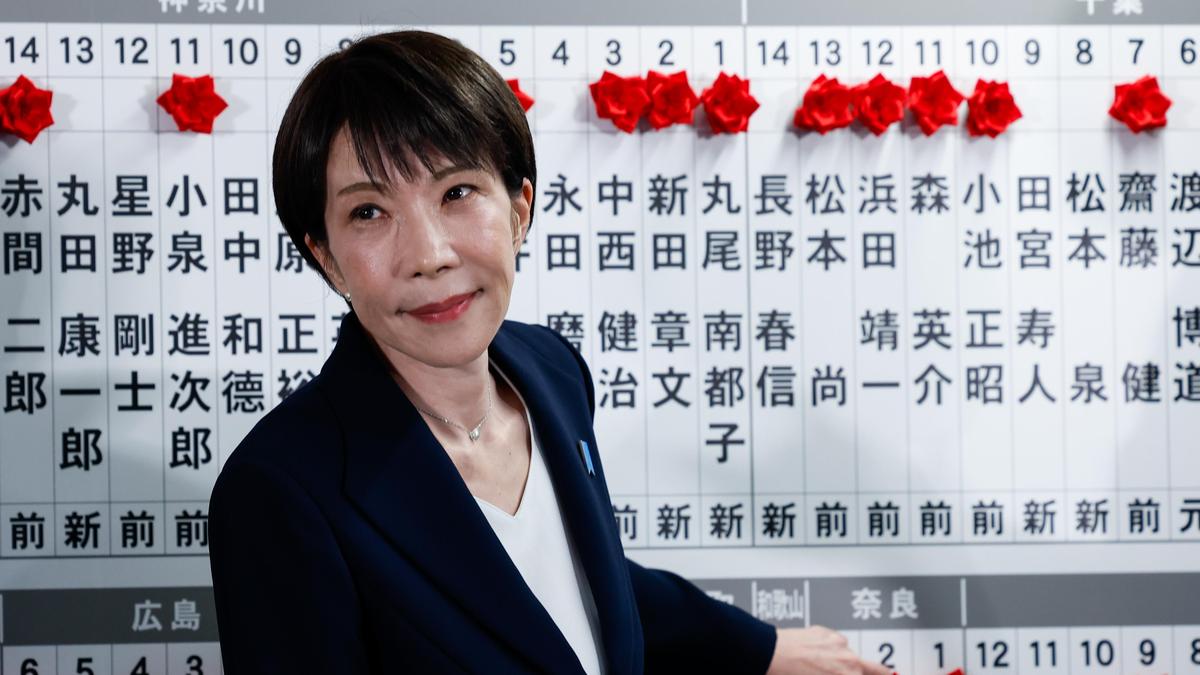
Japan ended its ban on lethal weapons exports last month, marking a shift from postwar pacifism amid rising Chinese aggression. Prime Minister Sanae Takaichi, elected in February 2026, is driving a review of national security strategy and international defense ties. The moves include joint fighter development and warship sales to Australia.
thehindu.comJapan's government lifted a decades-old ban on exporting lethal weapons last month, opening the door for its defense industry to sell arms abroad for the first time since World War II. The change, announced amid growing concerns over Chinese aggression, allows companies like Mitsubishi Heavy Industries to pursue global contracts.
" Takaichi won a resounding victory in snap elections in February 2026, giving her the mandate to accelerate policy shifts started by former Prime Minister Fumio Kishida in 2022.
Under her leadership, Japan dispatched a delegation to Finland and Sweden that same month to deepen defense technology relationships. In April 2026, the Philippines welcomed Japanese combat troops onto its soil for joint exercises, the first such deployment since World War II.
The policy reversal comes as Chinese aggression tops Japanese opinion polls of national security concerns, surpassing even North Korean missile threats.
Beijing has responded with sanctions on several Japanese companies, tightened exports of critical minerals, and efforts to discourage Chinese tourism to Japan. State-affiliated Chinese news outlets have criticized the export decision as a return to wartime militarism, though regional neighbors have shown support for closer ties.
Japan's constitution, imposed by the Allied military occupation after World War II, has long constrained its military posture.
The country technically maintains no military, relying instead on its Self-Defense Forces, which are more formidable than many foreign militaries. Japan remains almost entirely dependent on the United States for security guarantees and military equipment, a dynamic that defense planners hope to diversify through these reforms.
The defense budget is in its fourth year of a five-year plan to double from roughly $35 billion in 2022 to about $60 billion by 2027, positioning Japan as the ninth-biggest military spender worldwide.
Government contracts have grown large enough to attract profits for firms previously limited to domestic sales. This fiscal commitment supports ambitious projects, including the Ministry of Defense’s Acquisition, Technology and Logistics Agency jointly developing a sixth-generation stealth fighter with Italy and the United Kingdom.
Mitsubishi Heavy Industries is building a new hypersonic glide vehicle, marking Japan's first ballistic missile capability.
The company is also constructing 11 Mogami-class warships ordered last year by Australia, Tokyo's first major overseas arms sale. The Philippines and Indonesia have expressed interest in purchasing Japanese defense systems, including a stripped-down version of the Mogami-class frigate.
Malaysia and Vietnam, which have existing technology transfer agreements with Japan and a history of buying its nonlethal defense products, stand to benefit from expanded access.
In May 2026, Vietnam hosted Takaichi to discuss critical mineral supply chains and security in the South China Sea. These efforts aim to counter Chinese maritime coercion in Southeast Asia, where Japanese goods could make deterrence more affordable.
The war in Ukraine, now in its fourth year, has influenced Japan's priorities, highlighting the risks of depleted missile stockpiles and the need for mass-producible unmanned platforms.
Japanese planners are investing in cheaper drones, autonomous underwater vehicles, cyber capabilities, and long-range strike systems to sustain operations in a prolonged conflict. Lessons from Ukraine and recent Gulf Arab interceptor shortages have prompted a focus on old-school munitions production.
Beyond security, the defense buildup supports Tokyo's economic revival through investments in aerospace, shipbuilding, and software manufacturing.
Japanese officials hope these steps demonstrate to the Trump administration that the country is sharing the security burden more equitably. S. ambassadors have urged Japan to bolster its defenses, a call now gaining traction amid waning confidence in American guarantees.
Challenges persist, including a lack of engineering talent, underinvested facilities, and ongoing reliance on China for military components. Most Japanese defense contractors are divisions of larger conglomerates with profitable China-dependent operations, complicating expansion as Beijing's retaliation intensifies.
Cybersecurity vulnerabilities, exposed by repeated network intrusions, pose risks to intelligence sharing and intellectual property protection.
U.S. suppliers. Finkel highlighted that Japanese products could offer middle powers in Europe and Southeast Asia a reliable alternative, reducing wait times and introducing competition.
Key Facts
Story Timeline
6 events- May 2026
Vietnam hosts Sanae Takaichi to discuss critical minerals and South China Sea security
1 source@ForeignAffairs - April 2026
Philippines hosts Japanese combat troops for first joint exercises since World War II
1 source@ForeignAffairs - February 2026
Sanae Takaichi wins snap elections; delegation sent to Finland and Sweden for defense ties
1 source@ForeignAffairs - Last month (April 2026)
Japan lifts ban on lethal weapons exports; Takaichi launches national security review
1 source@ForeignAffairs - 2025
Australia orders 11 Mogami-class warships from Mitsubishi Heavy Industries
1 source@ForeignAffairs - 2022
Fumio Kishida lays groundwork for defense policy changes; five-year budget doubling begins
1 source@ForeignAffairs
Potential Impact
- 01
Cybersecurity gaps could limit Japan's credibility as a defense partner
- 02
Increased defense investments may revive Japanese manufacturing sectors like aerospace
- 03
Chinese retaliation may strain Japanese firms' supply chains and revenue
- 04
Expanded arms sales to Southeast Asia could counter Chinese maritime influence more affordably
- 05
Closer ties with U.S. partners in Europe could shorten munitions supply wait times
Transparency Panel
Related Stories
Explosion at China Fireworks Factory Kills 26 and Injures 61 in Hunan Province
An explosion at the Huasheng Fireworks Manufacturing and Display Company in Liuyang, Hunan province, killed at least 26 people and injured 61 on Monday afternoon. Rescue operations concluded with evacuations and production halts at local fireworks manufacturers. President Xi Jinp…
indiatoday.intoday.inTrump Pauses Project Freedom in Strait of Hormuz Amid Progress on Iran Agreement
President Trump announced a temporary pause to Project Freedom, the U.S. effort to escort ships through the Strait of Hormuz, citing mutual agreement with Iran to facilitate finalizing a deal while the blockade remains in place. The decision follows requests from Pakistan and oth…
Australian Government Introduces Levy on Tech Platforms to Support Local News Publishers
Australia's government introduced the News Bargaining Incentive to shield publishers from big tech's use of news content. President Trump imposed a 100% tariff on imported pharmaceuticals, but Australia stated it would not raise drug prices. On International Day of the Midwife, g…