science
Katalyst Spacecraft Launches to Attempt Boost of NASA’s Neil Gehrels Swift Observatory
The Arizona startup sent a robotic servicer into space on July 3 to grab the aging telescope and restore its original altitude. The mission marks the final flight of the Pegasus XL rocket and tests a new approach to extending satellite life.
 Al Jazeera
Audio version
Tap play to generate a narrated version.
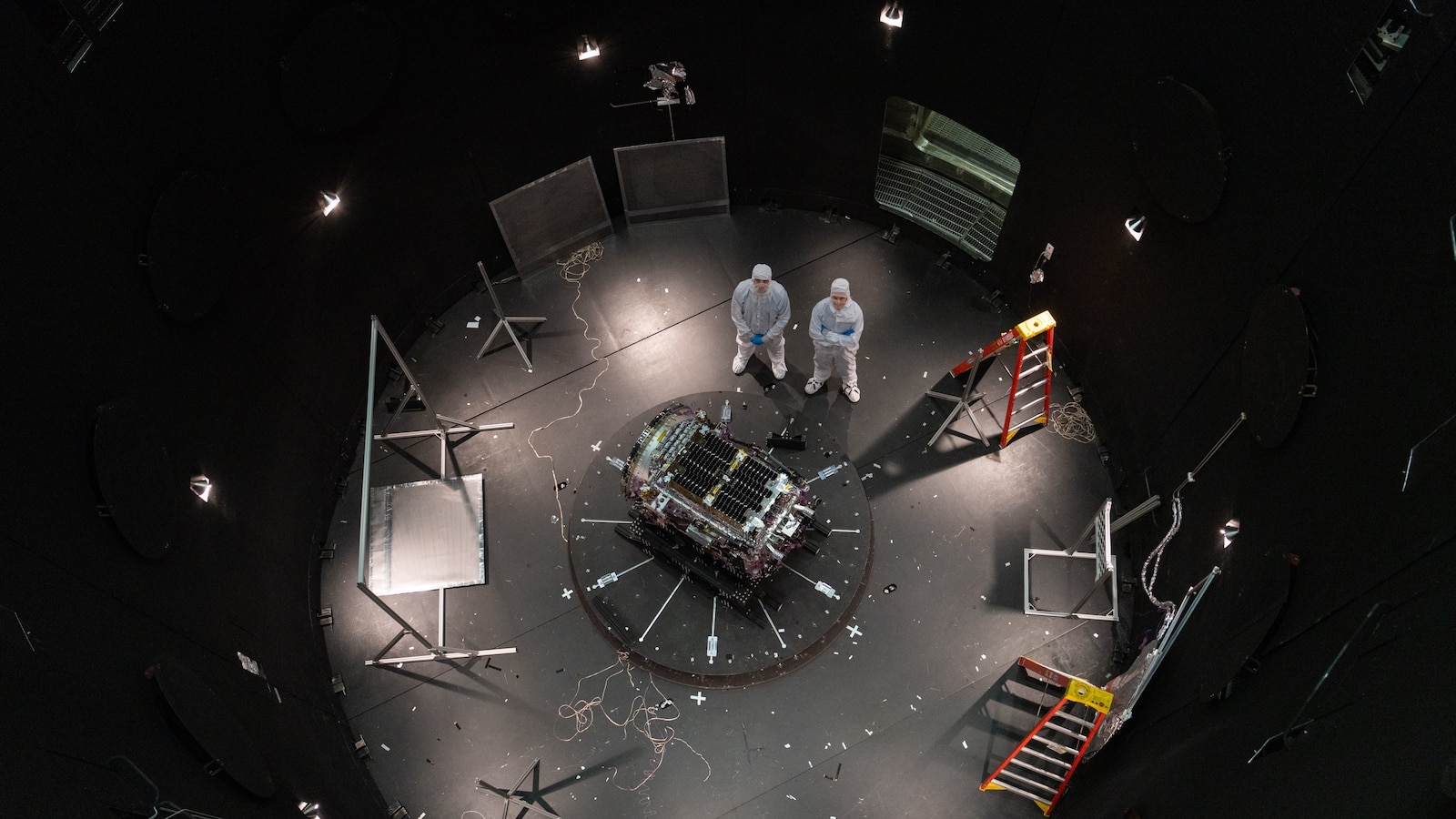
Katalyst Space Technologies launched its LINK spacecraft on the morning of July 3 aboard a Northrop Grumman Pegasus XL rocket, the final flight for that vehicle before retirement. The compact servicer will spend several weeks in orbit testing systems before approaching the Neil Gehrels Swift Observatory and using three robotic arms to grasp it.
LINK measures less than two metres in height and carries large solar arrays that supply power to its thrusters and grappling arms.
Once attached, the spacecraft will fire its engines for roughly two months to lift Swift from its current altitude of about 375 kilometres back to the 600-kilometre orbit it occupied after launch in 2004. Swift’s descent accelerated in recent years after powerful solar flares expanded the upper atmosphere and increased drag on the satellite.
The observatory, built to detect gamma-ray bursts, has recorded roughly 1,800 such events and has also observed comets, planets, supernovae and black holes.
“Swift wasn’t designed to be serviced,” said Ghonhee Lee, CEO of Katalyst. ” If successful, the two-month boost could keep Swift operational for up to another decade. The same technique could later be applied to other satellites, including the Hubble Space Telescope, whose orbit is expected to decay in the 2030s without intervention.
Transparency
How sources framed this
Innovative rescue missionRoutine orbital decay
RescueDecay
CorroborationLimited · 10 sources