LanguageLine Adopts AI Scheduling Software Amid Reports of Interpreter Pay Reductions
Interpreters at LanguageLine Solutions experienced fragmented schedules and reduced hours in 2025 after the company adopted new AI-powered software. Pay for some workers fell sharply, prompting unionization efforts. The changes reflect broader trends in algorithmic management affecting hourly workers across industries.
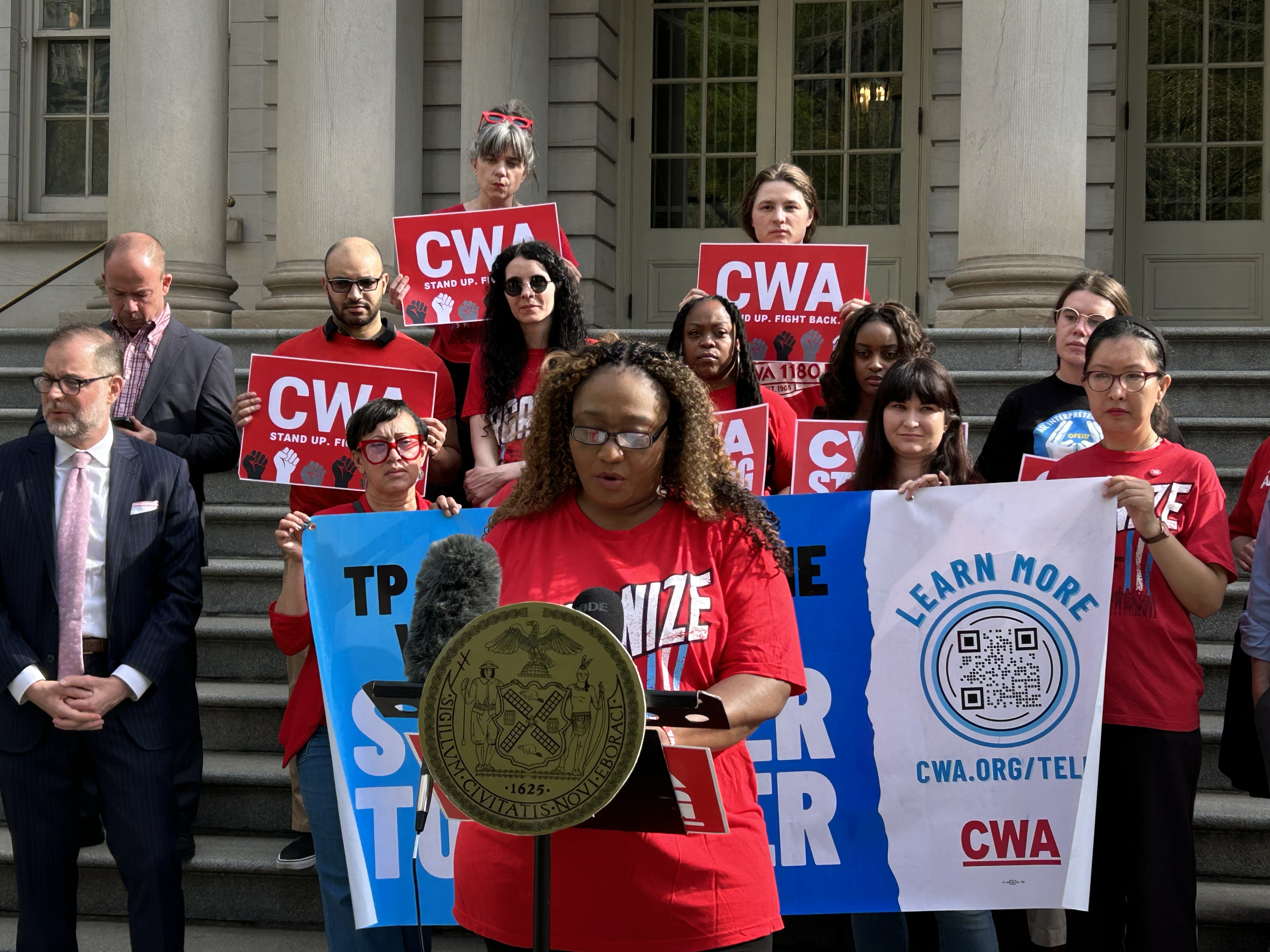
NprInterpreters at LanguageLine Solutions saw their hours cut and schedules become fragmented and unpredictable in 2025, leading to pay reductions of up to 70% for some workers. Yves Valerus, a Haitian Creole-English interpreter based in Brooklyn, reported her income from the company fell 18% from 2024 to 2025, according to tax forms she provided.
As a single mother supporting three children, Valerus prioritized her internet bill over utilities because she works remotely, and she sometimes returned from lunch breaks to find no more work for the day.
The changes coincided with LanguageLine's adoption of new workforce management software called NiCE, which advertises smarter scheduling, accurate forecasting and real-time intraday optimization powered by AI. LanguageLine stated that NiCE is used to forecast volume, determine schedules and monitor real-time occurrences like weather and travel disruptions.
NiCE highlighted in a blog post how scheduling software can help reduce labor costs, and the company is used by corporations including American Airlines, Morgan Stanley and Toyota.
When workers are placed on AEX, they do not get paid. Anna Manciano, a Polish-English interpreter who worked for LanguageLine for eight years, quit in 2025 after giving birth to her first child because her income became so unstable. One part-time worker's pay fell by over 70%.
LanguageLine has cut back interpreters' hours before, but in 2025 schedules became more fragmented after a business downturn and the software switch. LanguageLine announced it is experimenting with using AI for basic interpretation work, piloting it for routine, repetitive tasks but not aiming to cut jobs, viewing it as market expansion.
The company stated that interpreters rarely handle these tasks today.
LanguageLine barred workers from working for other translation services in its code of conduct. Multiple workers told NPR that downtime between calls disappeared, leaving only a mandatory 15 seconds. For video call interpreters like Valerus, this means barely time to stand and stretch.
LanguageLine stated it 'absolutely and categorically do not want this for our interpreters' and has a health and safety committee that reviews workplace matters. Valerus and fellow workers are trying to unionize with the Communications Workers of America, demanding higher pay, paid bathroom breaks and better benefits, with efforts starting in 2024.
Over 200 interpreters signed a petition in 2025 protesting hour reductions.
At a press conference hosted by labor organizers at New York City Hall, city comptroller Mark Levine said, 'As comptroller, we are looking at all the contracts that LanguageLine has with New York City to make sure they are in compliance,' and called on the company to respect workers' rights to form a union.
Valerus, who worked a stable full-time job with a regular schedule, set hourly rate and benefits for a year and a half, helps people bridge language barriers over the phone during hospital visits and court proceedings. Many interpreters said their jobs are intense, translating insurance policies or helping judges deliver prison sentences through phone lines and video calls.
There used to be one or two minutes of downtime between calls. LanguageLine includes the UK's National Health Service and multiple New York City agencies among its clients. Its parent company, Teleperformance, was accused of trying to surveil remote workers and reached an agreement with a labor union federation over its surveillance practices.
The experiences reflect broader trends over the past decade, where hourly workers in industries like retail, restaurants and call centers grapple with erratic schedules from technology designed to minimize labor costs and maximize productivity. He added that software like NiCE helps companies transfer business uncertainty onto workers.
Hotel cleaners have pushed back against software mandating room cleaning order, leading to back-to-back heavy lifting and movement across floors with heavy equipment, increasing injury risk.
New York's Attorney General investigated 13 major retailers in 2015 over scheduling technology matching hours to customer demand. Public outcry led to state and local Fair Workweek Laws setting minimum scheduling standards, but in most places, only retail workers are covered, according to Susan Lambert, a professor emeritus at University of Chicago who studied low-wage jobs.
Scheduling software has become prevalent in restaurants and call centers.
Virginia Goellgast, a professor at Cornell University who has studied unionized call centers, said unions tend to bargain on scheduling practices and protect workers from economic fallout. LanguageLine stated it acknowledges schedules have been more unpredictable than normal and is calibrating the system for more stability.
Valerus and her colleagues encountered the effects of algorithmic scheduling.
Valerus is taking part in the unionizing efforts and looking to take on new jobs to supplement her income to better support her children. By the end of 2025, her pay was almost 20% less than in 2024.
Key Facts
Story Timeline
6 events- 2025
LanguageLine interpreters' hours cut and schedules fragmented after business downturn and adoption of NiCE software; pay fell up to 70%; over 200 signed petition; unionization efforts ongoing; Anna Manciano quit
1 sourceNPR - 2025
LanguageLine announced experimenting with AI for basic interpretation; recent press conference at New York City Hall with Mark Levine calling for compliance review
1 sourceNPR - 2024
Unionization efforts at LanguageLine began, demanding higher pay, paid breaks and better benefits
1 sourceNPR - 2015
New York's Attorney General investigated 13 major retailers over scheduling technology
1 sourceNPR - Past decade
Hourly workers grappled with erratic schedules from technology minimizing labor costs; Fair Workweek Laws enacted in some places, mostly covering retail
1 sourceNPR - Year and a half prior to 2025
Yves Valerus worked stable full-time job with regular schedule and benefits
1 sourceNPR
Potential Impact
- 01
Increased financial strain on workers like single mothers, leading to tough choices like prioritizing bills
- 02
Risk of higher injury or burnout from reduced downtime and intense work pacing
- 03
Company contract reviews by clients like New York City agencies, affecting business relationships
- 04
Potential expansion of unionization in call centers, influencing scheduling negotiations
- 05
Broader adoption of Fair Workweek Laws to cover more industries beyond retail
Transparency Panel
Related Stories
valuewalk.comEEOC Sues New York Times Alleging Racial and Sex Discrimination in Editor Promotion
The U.S. Equal Employment Opportunity Commission filed a lawsuit against The New York Times, alleging it discriminated against a white male editor by promoting a less-experienced multiracial woman. The case, filed in Manhattan federal court, seeks policy changes and damages. The…
jns.orgGap Co-Founder Doris Fisher Dies at 94 Surrounded by Family
Doris Fisher, who co-founded The Gap Inc. in 1969 with her husband Don, died on May 2, 2026, at age 94. She served as the company's merchandiser for nearly four decades and helped build it into a global brand generating over $15 billion in annual sales. Fisher is survived by thre…
koreatimes.co.krMiddle East War Blocks Strait of Hormuz, Driving European Jet Fuel Prices from $831 to $1,838 per Tonne
The ongoing conflict in the Middle East has driven jet fuel prices to more than double in recent weeks, leading to widespread flight cancellations and higher ticket costs. Airlines across Europe and North America have reduced schedules, while governments prepare measures to mitig…