Large Anti-War Protests Held in Japan Over Military Policy Changes
Japan is experiencing its largest anti-war protests in decades as the government under Prime Minister Sanae Takaichi has lifted restrictions on arms exports and expanded the country's military role. Demonstrations have spread to multiple cities with participants citing concerns over changes to the pacifist constitution.
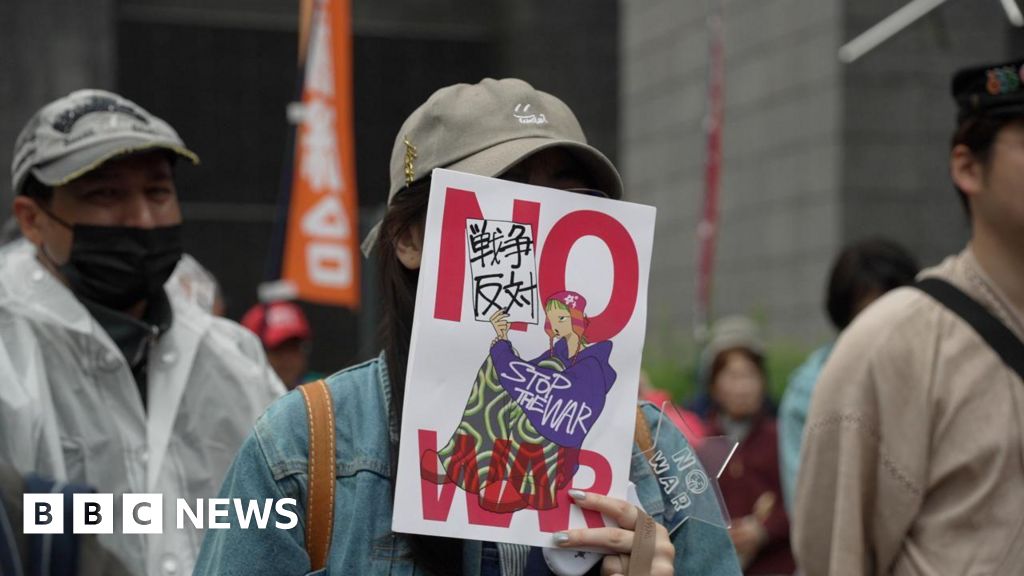
BBC NewsLarge crowds gathered in Tokyo and other Japanese cities this week to protest the government's recent steps to strengthen the country's defense capabilities. The demonstrations, described by BBC News as Japan's largest anti-war protests in decades, occurred as Prime Minister Sanae Takaichi has lifted long-standing restrictions on arms exports and expanded Japan's military role abroad since taking office in October 2025.
The government says the changes are necessary in an increasingly tense region that includes an assertive China, an unpredictable North Korea and nearby Russia. Public protests in Japan are typically restrained due to cultural emphasis on social harmony.
Large turnouts therefore signal significant underlying concerns, this time centered on the nation's pacifist identity and potential shifts away from its postwar framework.
1947 constitution includes Article 9, which renounces war as a sovereign right and prohibits maintenance of armed forces for waging war. The clause has been reinterpreted over time to permit self-defense forces. The government lifted its ban on exporting lethal weapons on 21 April, arguing that allies must support one another in a severe security environment.
The decision prompted increased protest activity outside the prime minister's office and in cities including Osaka, Kyoto and Fukuoka. Attendance at the rallies has grown week by week with social media platforms such as X helping to organize and publicize events.
Participants have included both older residents with memories of World War Two and younger people in their twenties and thirties.
One protester in her 30s, Akari Maezono, held paper lanterns and stated that she was angry these changes could be made without properly listening to the public. An older protester with a red banner said Article 9 must be protected at all costs because it kept Japan from being drawn into past conflicts.
A hibakusha, or atomic bomb survivor, named Jiro Hamasumi spoke at a 2026 Nuclear Non-Proliferation Treaty review conference. " Opinion polls show a divided public. Some indicate growing support for a stronger military to address the current security environment while others reflect resistance to constitutional changes.
Proponents argue revisions would allow Japan to deter aggression and support allies. Opponents say the changes risk undermining the pacifist principle shaped by the country's wartime experience. A cashier near one protest site told BBC News that demonstrators are always present but added it was time for a new Japan.
The country faces questions about whether to maintain its pacifist identity or adapt more rapidly to regional conditions.
Key Facts
Story Timeline
4 events- October 2025
Sanae Takaichi becomes prime minister and begins shifting defense policies.
1 sourceBBC News - 21 April 2026
Government lifts ban on exporting lethal weapons.
1 sourceBBC News - 2026
Hibakusha Jiro Hamasumi speaks at Nuclear Non-Proliferation Treaty conference.
1 sourceBBC News - May 2026
Largest anti-war protests in decades occur across multiple Japanese cities.
1 sourceBBC News
Potential Impact
- 01
Social media activity is expanding participation in rallies among younger Japanese.
- 02
Continued demonstrations could influence public debate on Japan's security policies.
- 03
Protests may increase pressure on the government regarding further constitutional revisions.
- 04
Policy shifts may affect Japan's alliances and regional military posture.
Transparency Panel
Related Stories
tass.comEight Hantavirus Cases Confirmed on MV Hondius Cruise, Three Fatal
Health officials have confirmed eight cases of Andes hantavirus tied to an expedition cruise aboard the MV Hondius, with three deaths reported. The World Health Organization assesses the broader public health risk as low. An epidemiologist highlighted rapid spread of misinformati…
thedrinksbusiness.comLVMH's Arnault Visits Seoul Stores as US Treasury Secretary Travels to Asia
LVMH Chairman and CEO Bernard Arnault is expected to visit South Korea next week for the first time in three years, touring newly opened Louis Vuitton outlets in major department stores. Separately, U.S. Treasury Secretary Scott Bessent plans a one-day stop in Seoul en route to C…
Substrate placeholder — needs reviewCDC Classifies Hantavirus Outbreak as Level 3 Emergency
The Centers for Disease Control and Prevention activated its Emergency Operations Center on Friday after classifying the ongoing hantavirus outbreak as level 3, the lowest of its emergency activation levels. Two new suspected cases were reported the same day linked to a cruise sh…