Substrate
politics

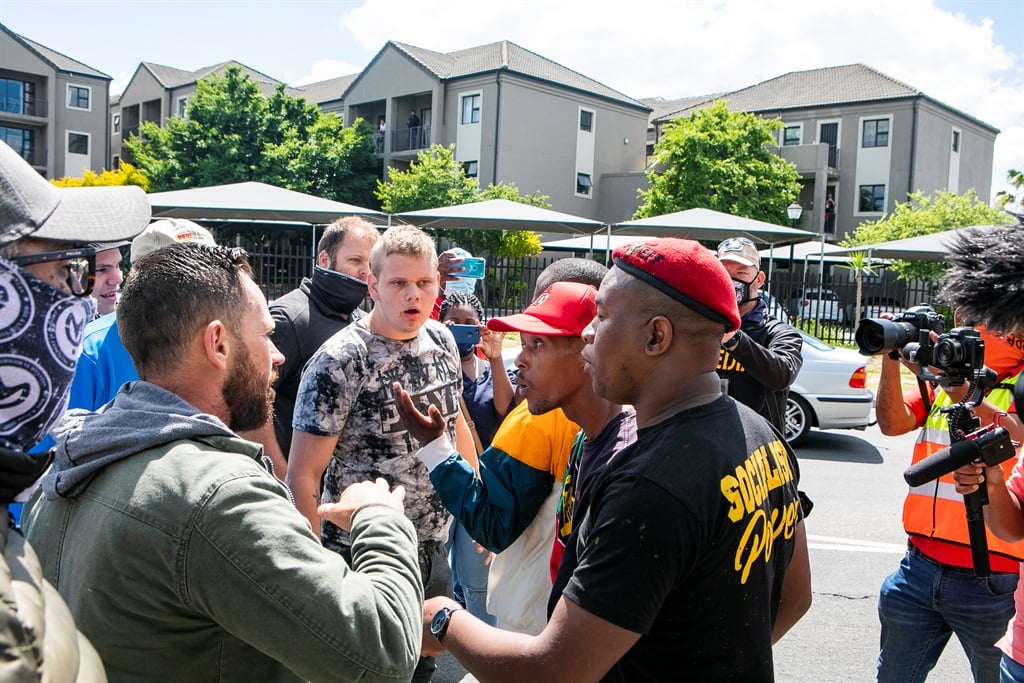
Legal Scholar Discusses Hate Speech Protections at Public Schools

A law professor argues that hate speech remains constitutionally protected at U.S. public schools and that campus speech codes risk viewpoint discrimination. The post reviews court precedents and warns that vague definitions could chill protected expression.

reason.com
1 source·May 29, 3:37 PM(2 hrs ago)·1m read
Legal Scholar Discusses Hate Speech Protections at Public Schoolsnews24.com
Audio version
Tap play to generate a narrated version.

U.S. law. The author noted that no single legal definition of hate speech exists and that attempts to craft campus codes have historically faced vagueness and overbreadth problems. V. v. City of St. Paul, in which Justice Antonin Scalia wrote that a Minneapolis anti-hate speech ordinance was underinclusive because it allowed prosecution for racist views but not for opposing viewpoints.

The author said government must remain neutral toward all viewpoints under the First Amendment.

Lower courts struck down various college speech codes in the late 1980s and 1990s. The post stated that any anti-hate speech code at a public school would likely ban or chill speech that should remain protected and would invite viewpoint discrimination.

The author cited an investigation at Georgetown Law Center involving Professor Ilya Shapiro, who was examined for months after posting a comment on social media about then-Supreme Court nominee Ketanji Brown Jackson before being cleared and later resigning.

The post said that even if certain words have limited free-speech value, allowing government to ban them grants authority to restrict other words regardless of context or speaker intent. It added that students will sometimes make offensive remarks and that punishment is not the appropriate response.

The author argued that non-censorious alternatives should be considered before schools adopt speech codes, noting that bans may reduce direct exposure but will not eliminate the underlying speech.
Key Facts

R.A.V. v. City of St. Paul
Supreme Court struck down Minneapolis hate-speech ordinance
Ilya Shapiro
Georgetown Law professor investigated then cleared
Ketanji Brown Jackson
Supreme Court nominee referenced in 2020 campaign pledge

Story Timeline

3 events
  1. Late 1980s-1990s

    Lower courts struck down multiple college speech codes.

    1 sourcereason.com
  2. 2020 presidential campaign

    Candidate Biden pledged to appoint a Black woman to the Supreme Court.

    1 sourcereason.com
  3. Recent years

    European countries restricted some pro-Palestinian protests.

    1 sourcereason.com

Potential Impact

  1. 01

    Public schools may face continued legal challenges if they adopt speech codes.

  2. 02

    Students could encounter fewer direct instances of offensive speech on campus.

Transparency Panel

Sources cross-referenced1
Confidence score65%
Synthesized bySubstrate AI
Word count235 words
PublishedMay 29, 2026, 3:37 PM
Bias signals removed1 across 1 outlet
Signal Breakdown
Loaded 1

Related Stories

Trump Meets Advisers to Decide on Iran Ceasefire ExtensionBBC News
politics20 min ago

Trump Meets Advisers to Decide on Iran Ceasefire Extension

President Trump said he is holding a Situation Room meeting to make a final decision on a possible deal with Iran. The proposed agreement would extend the ceasefire by 60 days and reopen the Strait of Hormuz.

Al Jazeera
JA
MA
AF
AJ
+6
11 sources
Trump to Decide on Iran Deal in Situation Room Meetingmiddleeasteye.net
politics20 min ago

Trump to Decide on Iran Deal in Situation Room Meeting

President Trump said Friday he is heading into the Situation Room to make a final determination on a potential agreement with Iran. The proposed deal would reopen the Strait of Hormuz without tolls and require destruction of Iran's highly-enriched uranium.

LI
Just the News
CBS News
3 sources
Trump Says U.S. Will Lift Iran Naval Blockade After Nuclear and Hormuz Pledgesrealitytea.com
politics2 hrs agoDeveloping

Trump Says U.S. Will Lift Iran Naval Blockade After Nuclear and Hormuz Pledges

President Trump stated the U.S. will end its naval blockade of Iran once Tehran commits to forgoing nuclear weapons and opens the Strait of Hormuz to unrestricted shipping. The announcement came via Truth Social and a live statement.

FI
LI
MA
3 sources