Massive Alaska Landslide in Tracy Arm Fjord Generates 1,500-Foot Tsunami and Rare Global Seismic Signal
A mountainside collapse at South Sawyer glacier on Aug. 10 sent 370 million metric tons of rock into the ocean, producing a tsunami that shook the planet for days. Scientists have documented the event as only the second such global seismic vibration from a tsunami on record.
 winnipegfreepress.com
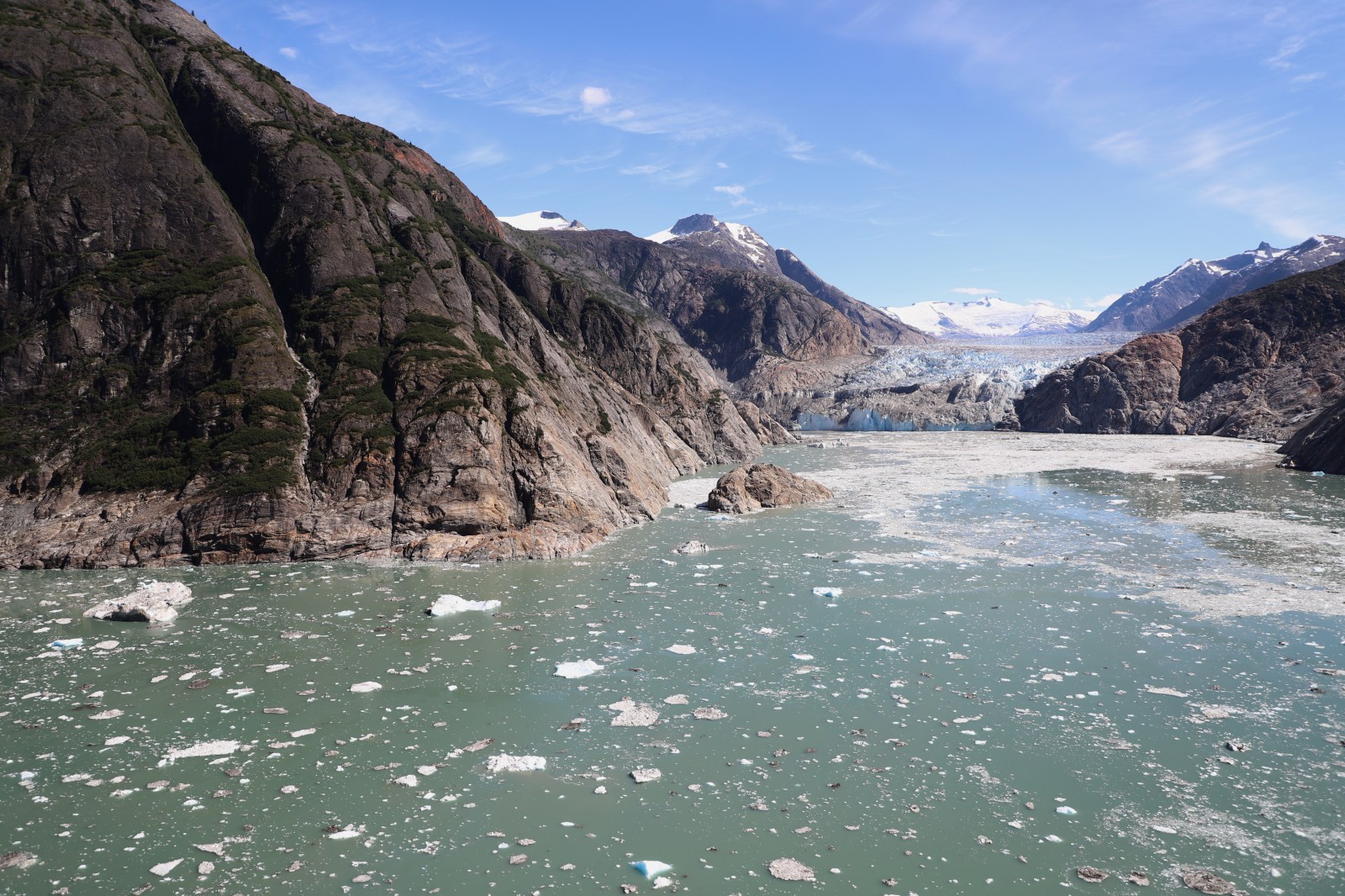
A mountainside collapse at the mouth of the receding South Sawyer glacier in Tracy Arm fjord, Alaska, produced a tsunami wave that reached a peak height of over 1,500 feet on the opposing wall on Aug. 10 at 5:30 in the morning. The event sent 370 million metric tons of rock plunging into the ocean from a slope more than 3,200 feet tall.
The tsunami stripped forests down to bare rock, ripped trees out by their roots and hurled boulders across the landscape. The wave generated a seismic vibration that shook the entire planet for days, caused by trapped energy from the wave sloshing around in the fjord. This was only the second time that a seismic vibration from a tsunami shaking the entire planet has been recorded anywhere.
A dozen scientists from the US, Canada and Europe have been studying the event in the months following the tsunami. Daniel Shugar, a geomorphologist and professor at the University of Calgary, said there were nearly imperceptible seismic tremors that preceded the August landslide. "There were no obvious signs in the months to years prior that this slope was prone to failure," Shugar stated.
Patrick Lynett, a tsunami modeler, researcher and professor at the University of Southern California, traveled with a team to the site of the landslide months later for field work. The Tracy Arm wave occurred in 45 seconds to a minute, far shorter than earthquake-caused tsunamis that have a period of 20 to 30 minutes.
Scientists recreated the tsunami in a video game using the perspective of someone riding a jet ski trying to outrun the wave.
"I saw it in real life, and I can barely believe it," Lynett said. "It's not our goal to do graphic artistry," Lynett added. " The simulation aims to help coastal Alaskan communities and tourists grasp the scale of such events.
A National Geographic Venture cruise ship was about 15 miles away from the event when it occurred. Captain Thomas Morin, captain of the National Geographic Venture cruise ship, reported that the vessel saw white water washing up on the surrounding walls of the fjord and felt strong currents from many different directions.
The fjord's bends, the ship's distance and deep water prevented greater damage.
At least three major cruise lines have announced they are suspending routes into the Tracy Arm fjord this year and swapping the route for the nearby Endicott Arm fjord. More than 20 boats per day have visited Tracy Arm fjord in past years, including large cruise ships carrying up to 6,000 passengers and crew. Cnn reported that the event served as a wake-up call for the industry.
Scientists have mapped more than 1,000 slow-moving landslides across Alaska. Some slow-moving landslides in Alaska are moving literal inches per year while others move more than 10 feet per year. Bretwood Higman, co-founder and executive director of nonprofit Ground Truth Alaska and the foremost Alaska expert on tracking slow-moving landslides, has documented the trend.
"When we look back over the last couple 100 years, we see one of these happening about every 20 years," Higman said. "But in the second-to-last decade, that number had increased to two, and in the last decade it was six such events. " Only one landslide, Barry Arm 60 miles east of Anchorage on the Alaska coast, is continuously monitored by the federal US Geological Survey.
The Trump administration’s federal layoffs and budget cuts last year winnowed some of the teams on the lookout for landslides, especially in Alaska’s heavily visited national parks. Cnn reported that most other slopes are checked only periodically from satellites or aircraft. Shugar linked the events to retreating glaciers.
"As the climate is changing, as glaciers are retreating, we are likely going to see more of these kinds of events in high latitude environments in the Arctic and the sub-Arctic," he said. " "These risks are real," Shugar stated. "We can never remove the risk of something calamitous happening.
Transparency
Reported by a single outlet. This score reflects source tier and factual specificity — corroboration is limited with one source.
Story details
Related Stories
 upi.com
NASA Retires MAVEN After 11 Years of Mars Atmosphere Discoveries Following Unrecoverable Anomaly
The agency confirmed Wednesday that the orbiter, launched in 2013, is beyond recovery following a fast spin that drained its batteries. MAVEN completed more than a decade of atmospheric observations at Mars.
 foxnews.com
Trump Budget Reduces CDC Wastewater Surveillance Funding From $125M to $25M Annually
President Donald Trump's budget plan reduces annual funding for the CDC's National Wastewater Surveillance System from $125 million to $25 million, limiting national coverage after September 30, 2026.