Matthew Wale Elected Prime Minister of Solomon Islands
Matthew Wale has been elected prime minister of Solomon Islands by parliament after a no-confidence motion removed his predecessor. Wale has previously expressed skepticism toward China and support for closer ties with Australia. The Sydney Morning Herald reported that Australian officials welcomed the change while noting the security agreement with China is likely to remain in place.
 The Sydney Morning Herald
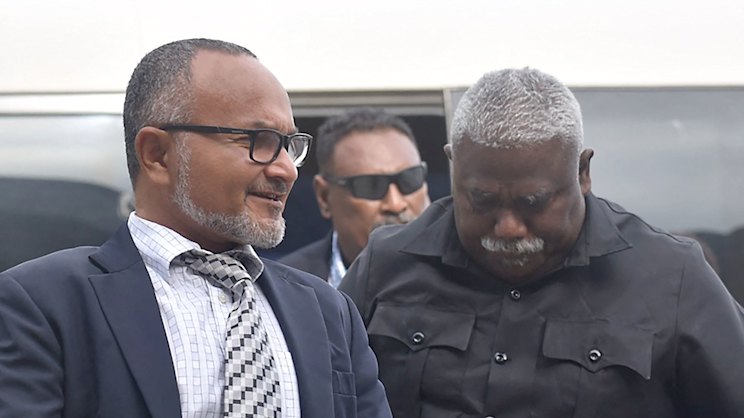
Matthew Wale has been elected prime minister of Solomon Islands, selected by parliament following a no-confidence motion that removed Jeremiah Manele earlier this month. Australian officials from the prime minister down congratulated Wale on his election on Friday.
The development follows a period in which the Solomon Islands pursued closer ties with China under previous leadership. Manasseh Sogavare, who served as prime minister until 2024, signed a security pact with China in 2022. That agreement became a point of contention in Australian politics at the time.
Wale has opposed the switch of diplomatic recognition from Taipei to Beijing in 2019 and criticized the security pact. During the 2024 election campaign he said his government would advance the Solomon Islands' national interests without deferring to Beijing.
"We need to be talking and protecting and advancing our own national interests, not kow-towing, not bowing down like beggars, with no respect," he told the ABC. " — Matthew Wale (The Sydney Morning Herald) Wale indicated he did not intend to cancel the security pact, stating the Solomon Islands should avoid causing unnecessary problems.
The country, with a population of 820,000, has faced fuel shortages as well as high levels of poverty and unemployment.
Cavanough, author of Divided Isles:
Solomon Islands and the China Switch, said Wale is unlikely to tear up the security pact or restore diplomatic recognition of Taiwan. A pragmatic approach focused on development partners is more probable. Cavanough noted that leveraging concerns about China has elevated the Solomon Islands' international profile.
The Beijing security agreement is expected to remain, though Wale may release its full text as promised during the election campaign. Connor Graham, a research fellow at the Lowy Institute, said there is a good chance Wale will authorize release of the document to demonstrate commitment to transparency.
Beijing is expected to oppose such a move.
Graham stated that Wale's victory represents the best possible result for Canberra but is not likely to produce a major shift in the Solomon Islands' international approach. Domestic issues, including corruption and the decline of the logging industry, drove his election.
The next development to monitor is Wale's choice of foreign minister. Australia has indicated preference for a candidate who has expressed stronger skepticism toward Beijing than Wale. China is expected to continue efforts to expand its influence in the Pacific using economic measures.
In a related development, Vanuatu ratified a security agreement with Australia this week after removing clauses intended to limit Chinese investment in sensitive sectors. The competition for influence in the Pacific between Australia and China continues regardless of changes in individual leadership.