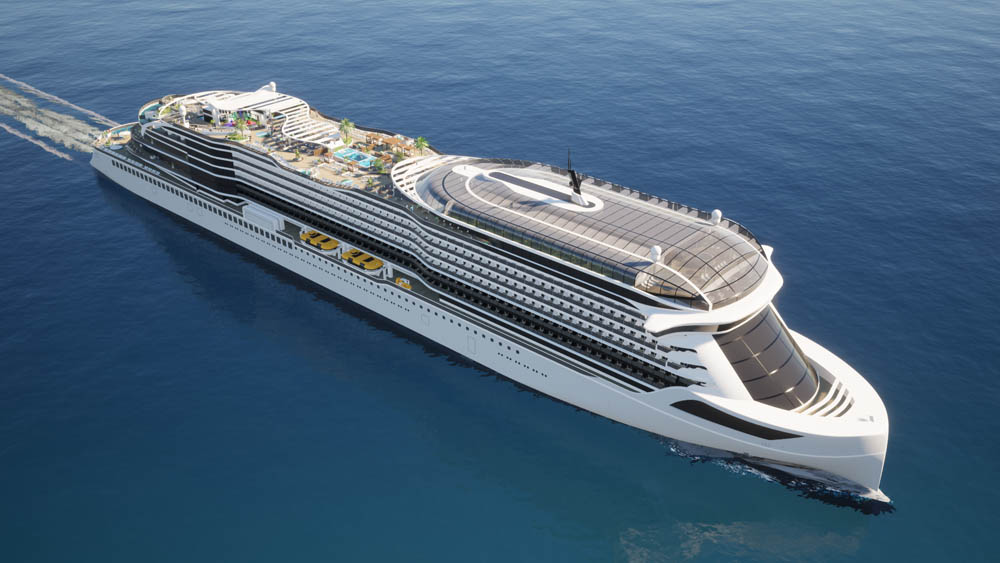
Meyer Werft Introduces Design for World's First Fully Battery-Electric Cruise Ship
Meyer Werft unveiled Project Vision, a 90,000-ton battery-electric cruise ship capable of carrying 1,900 passengers, at the Seatrade Cruise Global conference in Miami. The design aims to reduce greenhouse gas emissions by up to 95% using batteries from a Norwegian specialist. The vessel is planned for operation by 2031 on European routes with port recharging.
 wdwnt.com
Features The battery-electric system eliminates the need for main engines during normal operation, removing direct exhaust emissions.
This also reduces engine noise and vibration, potentially improving onboard comfort for passengers. Unlike traditional cruise ships, which often feature a funnel on the sun deck for exhaust, Project Vision has an unobstructed deck design. The vessel is built as an all-season, all-weather ship, with features like an indoor water park for year-round use.
Traditional cruise ships generate significant carbon dioxide emissions due to onboard amenities such as air conditioning and heated pools. Cruise liners produce more carbon dioxide annually on average than any other kind of ship due to their air conditioning, heated pools and other hotel amenities, studies have shown.
Cruise ships leave their engines running overnight while in port to power guest facilities. This affects air quality in port cities.
A 2019 report identified Barcelona as the most polluted European port by cruise ship emissions of sulfur oxides and nitrogen oxides among 50 ports studied. Two years earlier, some 32.8 tons of sulfur oxides were emitted by cruise ships in Barcelona.
Context and Future Outlook The cruise industry has faced scrutiny over its carbon footprint.
Project Vision's design addresses these concerns by relying solely on batteries for power. The ship is on track for operation by 2031. Meyer Werft is among the leading builders of large cruise ships worldwide.
If adopted, the concept could influence future industry designs toward lower emissions. The introduction highlights advancements in zero-emission maritime technology, distinguishing it from smaller concepts like a Norwegian vessel planned for 2030 service with 500 passengers using batteries, solar power, and rotor sails.