**Millions Vote in UK Local, Scottish and Welsh Elections**
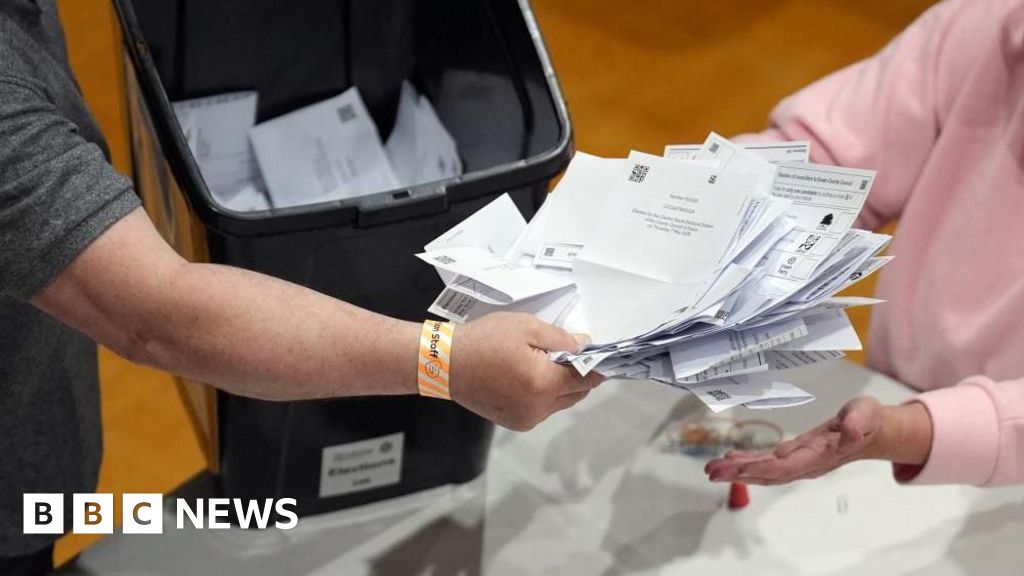
Local elections in England and devolved parliament votes in Scotland and Wales opened on 7 May 2026 with millions expected to cast ballots. Parties across the spectrum reported death threats, racial abuse and physical intimidation during the campaign, prompting condemnation from ministers and democracy groups.
BBC NewsLocal and devolved elections are taking place across England, Scotland and Wales on Thursday 7 May 2026. About 5,000 seats across 136 local councils are contested in England, along with six mayoral races in Watford and the London boroughs of Croydon, Hackney, Lewisham, Newham and Tower Hamlets.
All 129 seats in the Scottish Parliament are up for election while the Senedd expands from 60 to 96 members across 16 new constituencies.
Voters must be 18 to participate in English local elections and 16 for the Scottish and Welsh votes. Polling stations in all contests remain open until 22:00 BST. The current Scottish Parliament was established in 1999 and the Senedd building opened on St David's Day in 2006.
Everyone voting in person in England requires valid photo ID such as a passport or driving licence; no such requirement applies in Scotland or Wales.
The elections are widely expected to reflect voter dissatisfaction with national economic conditions and the delivery of government policy. Multiple outlets report that the contests represent a fragmentation of the traditional two-party system, with smaller parties positioned to make gains as Labour faces punishment at the ballot box.
Results from the English counts are expected to begin emerging on Friday morning, with most concluded by Saturday evening. Scottish and Welsh counts start Friday morning and may extend into the weekend because of the new proportional system and larger number of seats in Wales.
The Electoral Commission will publish its report on the 2026 elections in the autumn. During the 2024 general election the commission reported that many candidates experienced unacceptable levels of intimidation and harassment, particularly women and those from ethnic minority backgrounds.
More than half of candidates surveyed said they avoided some form of campaigning because of fear of abuse.
The Green party described this year’s contest as the worst in memory. A Green party spokesperson said some candidates received death threats, were yelled at or chased down the street, and that several withdrew from campaigning in certain areas because of harassment.
Security minister Dan Jarvis said anyone engaging in this sort of behaviour is directly attacking our democracy and we all must do more to stop it becoming normalised. Incidents crossed party lines. Nigel Farage criticised Elon Musk in April after Musk highlighted abuse directed at Reform UK candidates from minority ethnic backgrounds on X.
Richard Parker, the Labour mayor of the West Midlands, told the BBC he was threatened and followed while campaigning in Coventry this week. The Scottish Trades Union Congress issued a statement condemning reports of increased racial and Islamophobic harassment of candidates ahead of the Scottish parliament elections.
A Plaid Cymru spokesperson said online discourse had become increasingly toxic.
In Birmingham, two separate incidents in April targeted Green party candidate Hanooshi Hassan. While leafleting at a mosque on Dudley Road he was accosted by campaigners supporting an independent group. Hassan said one individual threatened to beat him up and the group repeatedly called the Green party "the gay party" and accused it of wanting to turn their children gay.
West Midlands police confirmed it received two reports of alleged harassment on 17 and 24 April on Dudley Road; enquiries remain ongoing. Independent candidate Bishop Desmond Jaddoo, also campaigning in Birmingham, said he faced sustained racial abuse that mainly occurred online.
Olivia Field, chief executive of the Jo Cox Foundation, said too many candidates, their families and their teams from all sides of the political spectrum have experienced abuse, harassment and threats during this year’s elections. She added that this represents one of the biggest threats to the functioning of our democracy.
Key Facts
Story Timeline
6 events- 2026-05-07
Polling stations open across England, Scotland and Wales for local and devolved elections; close at 22:00 BST
4 sourcesBBC News · The Guardian · Sky News · Al Jazeera - 2026-05-06
Bishop Desmond Jaddoo receives threatening phone call after leafleting in Birmingham
1 sourceThe Guardian - 2026-05-04
Scottish Trades Union Congress condemns increased racial and Islamophobic harassment
1 sourceThe Guardian - 2026-04-24
Second reported harassment incident involving Green candidate Hanooshi Hassan on Dudley Road, Birmingham
1 sourceThe Guardian - 2026-04-17
First reported harassment incident involving Green candidate Hanooshi Hassan on Dudley Road
1 sourceThe Guardian - 2026-04
Nigel Farage criticises Elon Musk over reports of abuse against Reform UK ethnic minority candidates
1 sourceThe Guardian
Potential Impact
- 01
Some candidates withdrew from campaigning in specific areas following death threats and street harassment.
- 02
Parties report self-censorship and reduced voter contact as candidates limit public engagement for safety.
- 03
Potential reduction in future candidate pools, particularly among women and ethnic minorities.
Transparency Panel
Related Stories
Fox NewsThree Hikers Killed, Five Injured in Powerful Eruption of Indonesia’s Mount Dukono
Three climbers, including two Singaporeans, were killed and five others injured when Mount Dukono erupted on Halmahera island Friday morning. The group had set out the previous day despite a climbing ban on the continuously active volcano. Rescue teams evacuated 17 survivors but…
Canadian Union Seeks Government Review of $55 Billion Electronic Arts Takeover
A Canadian union has asked the federal government to examine the proposed acquisition of Electronic Arts by a group including Saudi Arabia's sovereign wealth fund and a private equity firm headed by U.S. President Donald Trump's son-in-law. The union cited risks to national secur…
Washington Examiner**Iranian Economic Damage From Conflict Estimated at Up to $150 Billion**
A new analysis estimates explicit economic damage to Iran at $144 billion from the ongoing war and U.S. blockade, with the true total believed significantly higher. A CIA assessment reported by Reuters indicates Iran would not face severe economic pressure from a port blockade fo…