Mississippi Governor Says He Will Consider Redrawing State Electoral Maps After Supreme Court Ruling
Mississippi Gov. Tate Reeves said lawmakers are preparing a special session on Supreme Court districts and that he could expand it to congressional and legislative maps following the Supreme Court's decision weakening Section 2 of the Voting Rights Act. Republican governors in Alabama and Tennessee have called special sessions to redraw congressional districts.
Substrate placeholder — needs review · Wikimedia Commons (CC BY-SA 3.0)Tate Reeves told the Daily Caller in an exclusive interview Wednesday that state lawmakers are already preparing for a special session focused on the state’s Supreme Court districts. Reeves said he has the authority to expand that call to include other redistricting matters, potentially including congressional and state legislative maps.
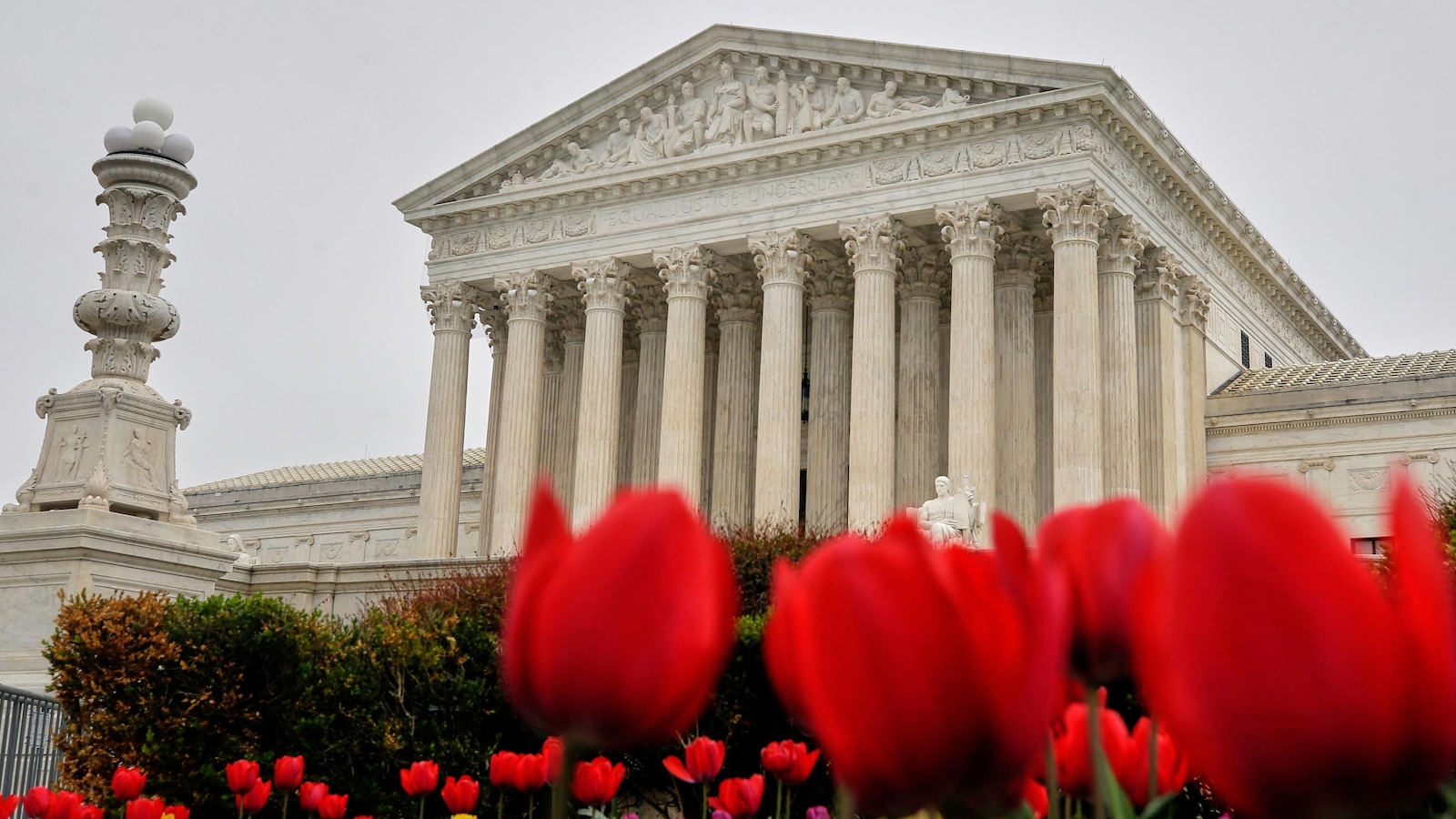
Reeves indicated the state would move at the earliest opportunity after the Supreme Court turned down a request to reconsider last week's ruling in Louisiana v. Callais. The decision weakens a key provision of the Voting Rights Act that had required states to draw some majority-minority districts in certain circumstances.
The Supreme Court on Wednesday rebuffed the request for a do-over, freeing Louisiana and other states to proceed with new maps. Within days, Republican governors in Alabama and Tennessee called special legislative sessions to redraw congressional districts.
Alabama Gov. Kay Ivey announced she would call a special session after initially saying she would not do so. Tennessee Republicans will consider redrawing the U.S. House district covering majority-Black Memphis, making the state the latest in the South to act.
Louisiana suspended its primary election to give the legislature time to redraw its map. The state could eliminate one or both of its majority-Black, Democratic-leaning districts.
Republican-led legislatures in the South are positioned to redraw maps in ways that could reduce the number of districts where Black voters form an effective majority. The Supreme Court held that the Voting Rights Act prohibits gerrymandering only if it is done with the explicit goal of racial discrimination.
If the intent appears merely partisan, the maps are now legal. The ruling overturned prior interpretations that had limited partisan gerrymandering when it diluted minority voting strength. Multiple states with upcoming deadlines are accelerating efforts to redraw lines before the November midterm elections.
Effects on the upcoming midterms are expected to be modest because many states have already passed key deadlines. However, the changes could be more dramatic for the 2028 elections and beyond as more states complete new maps. Democrats have signaled they would respond in states they control by drawing maps that maximize their own seats.
Some blue states could scrap nonpartisan redistricting commissions to join the process. Analysts have projected that aggressive gerrymandering by both parties could leave as few as 26 competitive House districts nationwide out of 435 total seats.
“It’s gonna be awful.”
The Supreme Court decision completes a two-decade trend in which the conservative majority has narrowed the Voting Rights Act's reach. The ruling shifts the legal standard from results-based tests of minority opportunity to a focus primarily on discriminatory intent.
States including Mississippi, Alabama, Tennessee, Louisiana, South Carolina and Georgia are among those identified as likely to see the largest shifts. Red states without independent redistricting commissions face fewer procedural obstacles to aggressive map changes.
Incumbent-protection instincts and fear of “dummymandering” — spreading support too thin — may limit how far some legislatures go. Still, the removal of prior Voting Rights Act constraints has removed one of the last significant federal checks on partisan map-drawing in the South.
Key Facts
Story Timeline
5 events- May 6, 2026
Mississippi Gov. Tate Reeves tells Daily Caller he may expand special session to redraw congressional and legislative maps.
2 sourcesDaily Caller - May 2026
Supreme Court rebuffs request to reconsider its Louisiana v. Callais ruling on Voting Rights Act.
5 sourcesWashington Times · CBS News - May 2026
Alabama Gov. Kay Ivey calls special session to redraw congressional maps after initially declining.
3 sourcesNPR · ABC News · The Atlantic - May 2026
Tennessee Republicans move to consider redrawing House district covering majority-Black Memphis.
2 sourcesABC News · CBS News - May 2026
Louisiana suspends primary election to redraw its congressional map.
2 sourcesThe Atlantic
Potential Impact
- 01
Louisiana will redraw its congressional map before the next election cycle.
- 02
Midterm election effects will be limited due to passed deadlines in many states.
- 03
Democratic-led states are likely to pursue aggressive counter-gerrymanders in response.
- 04
Number of competitive U.S. House districts could drop to as few as 26 by 2028.
Transparency Panel
Related Stories
jta.orgMasha Gessen Wins 2026 Pulitzer Prize for Opinion Writing
The New York Times writer received the award on Monday for a collection of essays, most of which critique President Donald Trump. Gessen, who identifies as nonbinary and uses the pronoun Gessen or X on official documents, has a long history of writing on authoritarianism, gender…
White House Releases Message Marking National Nurses Day
The White House issued a presidential message on May 6, 2026, to observe National Nurses Day. The statement recognizes nurses as the largest healthcare profession and their daily role in citizen health services without directing new agency actions or funding.
Conservative Group Seeks to Change Diversity Practices at State Department
Founders of the Ben Franklin Fellowship are working to end pro-diversity practices inside the State Department. The group also aims to support career diplomats who advance President Trump’s policy ideas. The New York Times reported on the effort and its reception inside the agenc…