Substrate
world

More children's hospitals add facility dogs for patient support

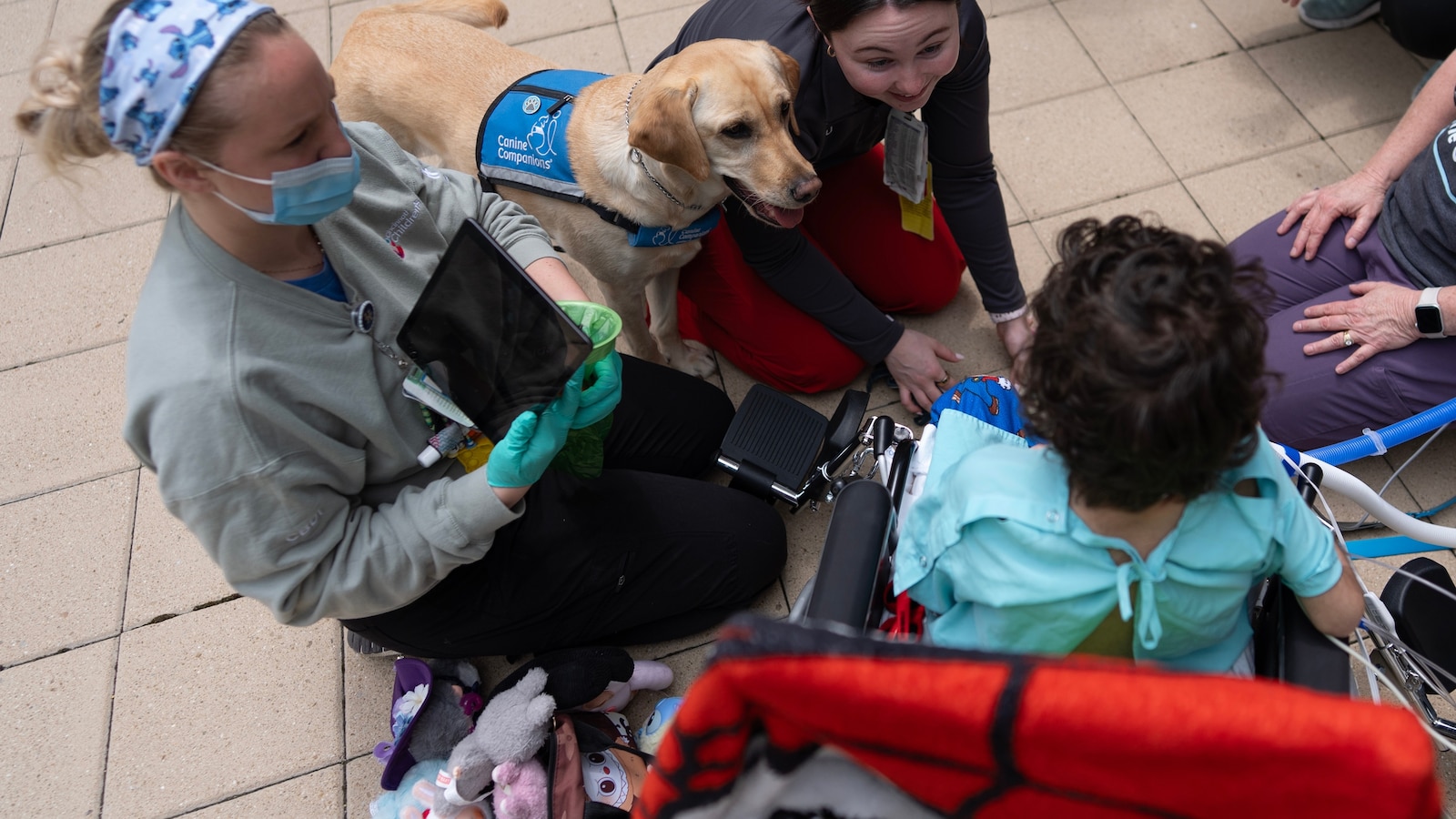
Several children's hospitals have introduced full-time facility dogs that assist with procedures, movement, and emotional support. Research cited in the coverage links short interactions with the dogs to lower pain, stress, and blood pressure readings. Programs continue to expand through placements by nonprofit training organizations.

AB
1 source·May 24, 12:52 PM(5 days ago)·1m read
More children's hospitals add facility dogs for patient supportvancouversun.com
Audio version
Tap play to generate a narrated version.

Cincinnati Children's Hospital currently staffs four facility dogs, including Hadley, a Labrador-golden retriever mix. The dogs accompany patients during procedures, encourage physical activity, and remain on site full time rather than visiting on a volunteer schedule.

Handlers and dogs live together. Hospitals cover food and veterinary expenses through fundraising or grants, while the training nonprofits retain ownership of the animals.

A 2022 survey across 17 children's hospitals found that staff reported improved rapport and a more familiar setting for families. A separate 2021 study in the Journal of Pediatric Nursing recorded reductions in pain scores and blood pressure among children who interacted with facility dogs.

Kerri Rodriguez, director of the Human-Animal Bond Lab at the University of Arizona, stated that the dogs supply “a little bit of normalcy, a little bit of comfort, in a really stressful, sterile environment.

Attendance at the annual Facility Dog Summit nearly doubled between 2024 and 2025. Canine Assistants in Georgia has placed more than 80 dogs at children's hospitals nationwide. Johns Hopkins Children's Center added its first two facility dogs in March.

Dogs already work at Mount Sinai Kravis Children's Hospital, Norton Children's Hospital, and St. Louis Children's Hospital. Hospitals generally receive the animals from groups such as Canine Companions, which breeds, raises, and trains them.

Hadley is bathed twice monthly because she works in the cancer and blood diseases unit. Handlers sanitize equipment and require hand cleaning before and after contact. Dogs stay outside isolation rooms except when a dying child requests proximity. On a recent morning, Hadley played outside with another facility dog, Grover, before returning to patient visits.


Staff noted that children confined for long periods, such as 14-year-old Aspen Franklin and 5-year-old Calvin Owens, use the dogs for both comfort and light exercise.

Key Facts

Four facility dogs
Currently work at Cincinnati Children's Hospital
More than 80 dogs
Placed by Canine Assistants at children's hospitals
Two studies
2021 and 2022 research linked dogs to lower pain and stress markers
Johns Hopkins
Added first two facility dogs in March

Story Timeline

3 events
  1. March 2026

    Johns Hopkins Children's Center introduced its first two facility dogs.

    1 source@ABC
  2. 2025

    Attendance at the Facility Dog Summit nearly doubled from the prior year.

    1 source@ABC
  3. 2022

    Survey across 17 children's hospitals documented staff observations of facility dog interactions.

    1 source@ABC

Potential Impact

  1. 01

    Hospitals may allocate additional budget lines for dog food and veterinary care.

  2. 02

    More children's hospitals may request placements from training nonprofits.

Transparency Panel

Sources cross-referenced1
Confidence score65%
Synthesized bySubstrate AI
Word count299 words
PublishedMay 24, 2026, 12:52 PM
Bias signals removed1 across 1 outlet
Signal Breakdown
Editorializing 1

Related Stories

Journalists in Gaza to Receive 2026 Golden Pen of Freedom Awardstraitstimes.com
world1 hr ago

Journalists in Gaza to Receive 2026 Golden Pen of Freedom Award

Three international news agencies will accept the award on behalf of their local staff still reporting from the territory. The World Association of News Publishers cited the journalists' continued coverage under extreme conditions.

Al-Monitor
AF
2 sources
Supreme Court Revives Havana Docks Lawsuit Over Confiscated Cuban Propertyupi.com
world1 hr ago

Supreme Court Revives Havana Docks Lawsuit Over Confiscated Cuban Property

The U.S. Supreme Court sent a Helms-Burton Act case back to lower courts for further argument. The suit seeks damages from cruise lines that used docks seized by Cuba in 1959.

FO
1 source
Pakistan Population Growth Outpaces Infrastructure as Male Contraception Stays TabooFrance 24
world1 hr agoDeveloping

Pakistan Population Growth Outpaces Infrastructure as Male Contraception Stays Taboo

Pakistan's population exceeds 258 million and could reach 300 million by 2030. Contraception remains largely taboo in a society shaped by traditional values. The country continues to lag behind neighbors India and Bangladesh in key social sectors.

FR
France 24
2 sources