world
More Than 50,000 German Pupils Expected to Strike Against Rearmament Policy
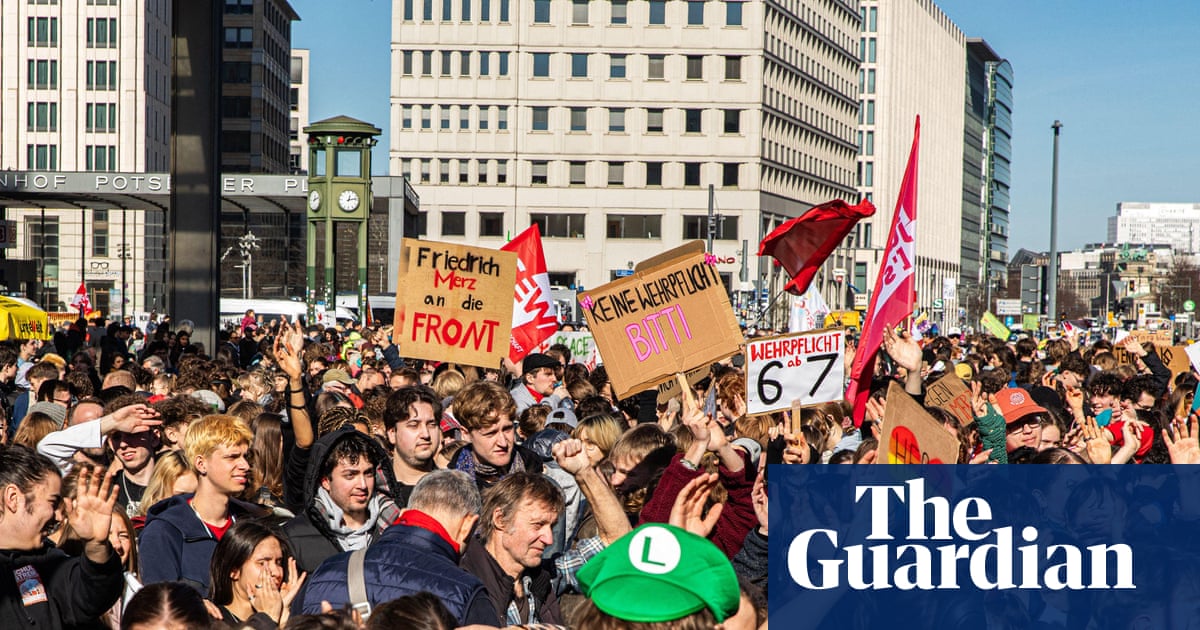
Organisers of a nationwide school strike on Friday say they expect at least 50,000 participants to protest the government's military service changes. The action is the third such boycott in five months and is timed to coincide with the anniversary of the end of the second world war in Europe.
 The Guardian
Audio version
Tap play to generate a narrated version.
Developing·Limited corroboration so far. This page will refresh as more sources emerge.
More than 50,000 pupils across Germany are expected to boycott classes and demonstrate in the streets on Friday in a nationwide protest against the government's rearmament policy. Organisers said the aim is to prevent the policy from turning young people into cannon fodder.
They expect the number of participants to match or exceed the estimated 50,000 who joined each of the first two strikes held in the past five months. Education ministries and teachers' associations have warned that anyone who demonstrates during school hours could face penalties and even expulsion.
Background to the Legislation The government introduced changes under the Military Service Modernisation Act after the legislation passed in December. Mandatory questionnaires are being sent to all 18-year-olds to assess their willingness and suitability for military service, with compulsory medical tests set to begin next year.
The law also states that men aged between 17 and 45 will in theory need permission from the armed forces to travel abroad for longer than three months. The legislation stops short of reinstating conscription, although the defence minister has said that option remains possible if the current measures do not attract enough recruits.
According to available figures, the professional military would need to expand by about 80,000 members to reach 260,000 over the next 10 years, while reservists would need to grow by 140,000 to reach 200,000 in a similar period.
The government has said it plans to allocate €779bn into defence from now until the end of the decade, roughly doubling previous five-year spending levels. Officials stated this would put Germany on track to exceed Nato spending targets of 3.5% of GDP by 2030.