technology
NASA's Artemis II Mission Approaches Lunar Flyby with Four Astronauts Aboard
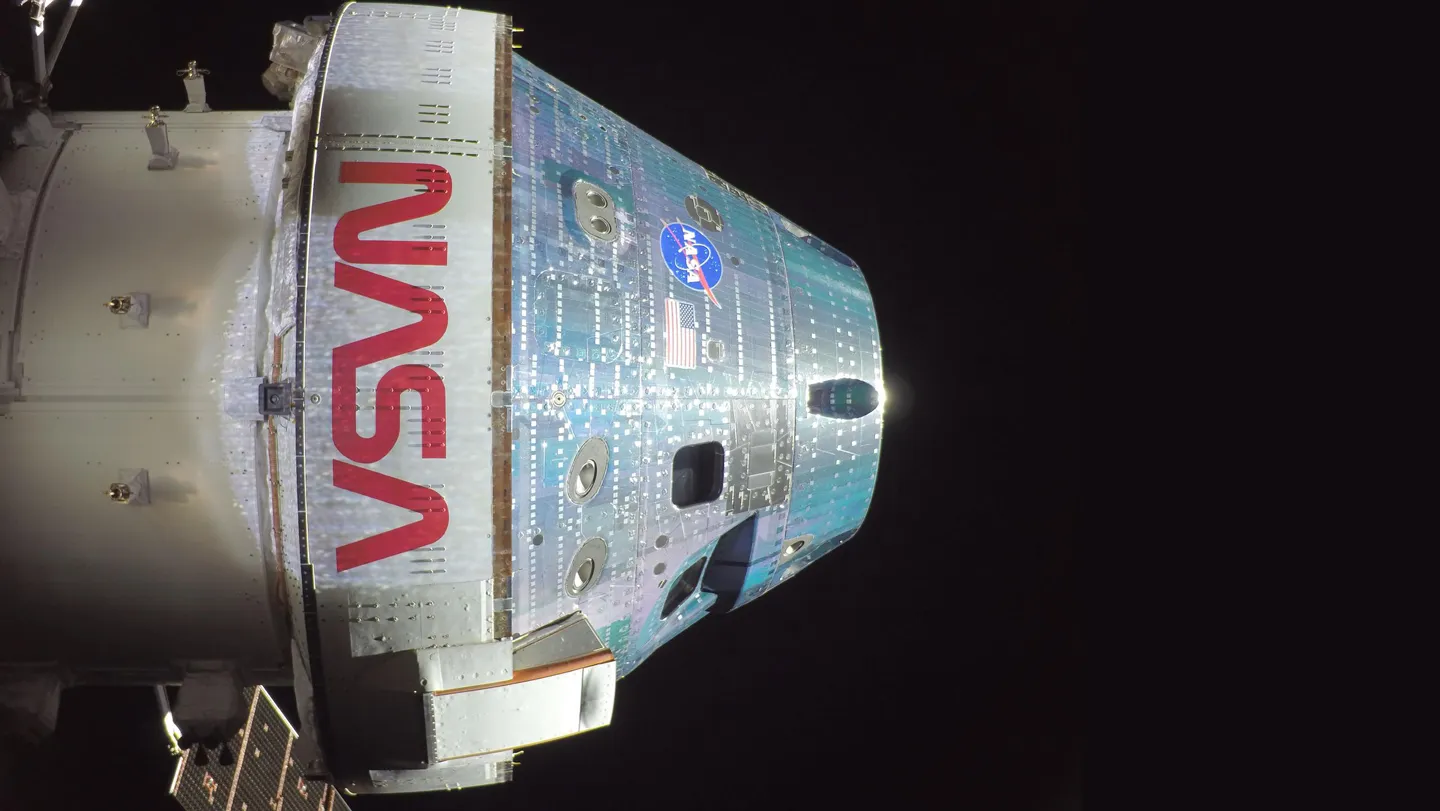
The Orion spacecraft carrying four astronauts from NASA and the Canadian Space Agency has entered the moon's sphere of influence after five days in space. The crew is set to conduct observations during a flyby of the moon's farside on April 6. The mission marks the first crewed Artemis flight, following decades since the last Apollo lunar missions.
 Science News
Audio version
Tap play to generate a narrated version.
HOUSTON — The Artemis II mission's Orion spacecraft, launched five days ago, has entered the moon's sphere of influence, where the moon's gravitational pull exceeds Earth's. The spacecraft carries four astronauts: NASA's Christina Koch, Victor Glover, and Reid Wiseman, along with Jeremy Hansen from the Canadian Space Agency.
The crew has trained for years to perform scientific observations during the upcoming lunar flyby. m. m. Eastern time. During this period, the spacecraft will pass around the moon's farside, providing views of lunar features. About 45 minutes of the flyby will occur in the moon's shadow, during which the spacecraft will be out of contact with Earth.
At the time of the flyby, roughly 20 percent of the moon's farside will be illuminated by sunlight. The astronauts will observe sunlit features on the farside, which have been seen in limited detail by humans previously. The mission will also allow views of the Apollo 12 and Apollo 14 landing sites.
The crew anticipates observing an eclipse from Orion's perspective as the moon blocks the sun. They may also witness flashes of light from meteorites impacting the moon. These observations will contribute to scientific data collection during the brief window when the moon is in view.
The Artemis II mission represents the first crewed flight in NASA's Artemis program, aimed at returning humans to the moon after the Apollo era ended in 1972. The program seeks to establish a sustainable presence on and around the moon, involving international partners like the Canadian Space Agency.
Future missions, including Artemis III, are planned to include lunar landings.
II is a test of the Orion spacecraft's systems with a crew, building on uncrewed test flights. The mission's success will inform preparations for subsequent Artemis flights. After the flyby, Orion will continue its trajectory, splashing down in the Pacific Ocean around April 11.
