Substrate
technology

NASA's Artemis II Mission Completes Crewed Lunar Flyby with Key Observations and Images

NASA's Artemis II mission launched on April 2, 2025, from Kennedy Space Center, carrying four astronauts on a 10-day crewed flyby of the moon. The crew reached 252,756 miles from Earth and captured images during a 40-minute communication blackout behind the moon. The mission tests systems for future lunar landings and advances scientific understanding of the moon.

Science News
France 24
The New York Times
The Bbc
Cnn
BN
+1
7 sources·Apr 7, 4:18 PM(29 days ago)·2m read
NASA's Artemis II Mission Completes Crewed Lunar Flyby with Key Observations and ImagesScience News
Audio version
Tap play to generate a narrated version.

II mission launched on April 2, 2025, from Kennedy Space Center in Florida.

The crew consisted of NASA astronauts Reid Wiseman as commander, Victor Glover as pilot, Christina Koch as mission specialist, and Jeremy Hansen from the Canadian Space Agency as mission specialist. The 10-day mission involved a crewed flyby of the moon without landing, serving as a test for future Artemis flights.

The spacecraft reached a distance of 252,756 miles from Earth, surpassing the Apollo 13 record for the farthest human space travel.

During the flyby on April 6, 2025, the Orion capsule approached within 4,067 miles of the moon's surface. Astronauts observed approximately 21% of the moon's far side illuminated by the sun. Communications with Earth were interrupted for about 40 minutes as the capsule passed behind the moon.

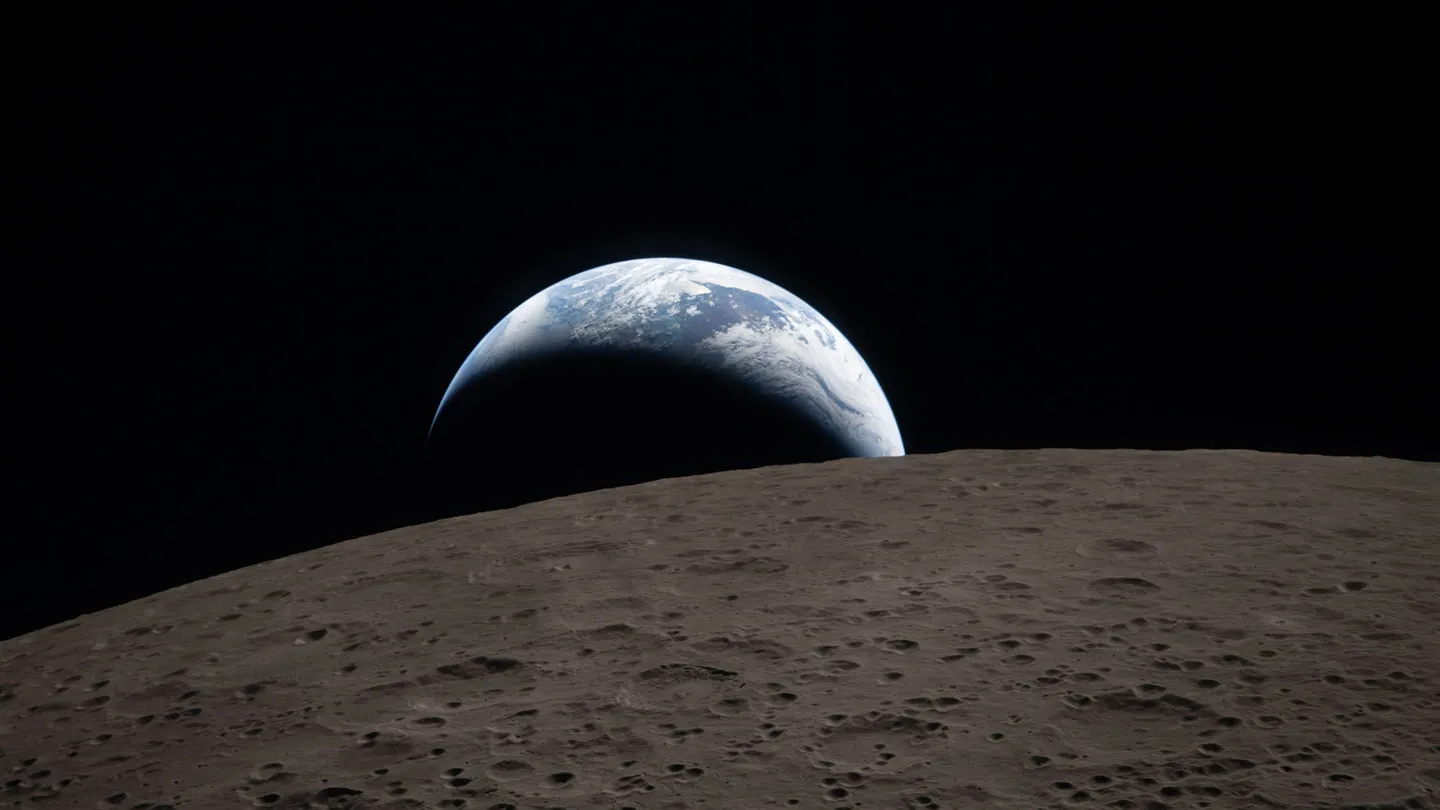
before the radio blackout on April 6, 2025, the crew photographed Earth setting behind the lunar horizon, known as an Earthset.

The image depicted Earth as a crescent with clouds over Australia and Oceania against the moon's cratered, brownish surface. This planned photograph contrasted with the spontaneous Earthrise image taken by Apollo 8 astronaut William Anders on December 24, 1968.

" — Unnamed Artemis II astronaut, April 6, 2025 (Science News) After emerging from the moon's far side, the crew captured an image of a solar eclipse, showing the sun's atmosphere as a halo around the lunar rim.

The photograph included visible stars, planets such as Saturn and Venus, and lunar hills and valleys illuminated by Earthshine. Pilot Victor Glover noted the difficulty in photographing the scene due to its unique lighting. The crew took thousands of photographs during the flyby to support scientific analysis of the moon's surface and origins.

These images will inform future missions, including the uncrewed Artemis III to the moon's south pole.

regaining contact, the crew described the views as unprecedented.

Astronaut Christina Koch emphasized the connection to Earth and humanity. > "We will always choose Earth. " — Christina Koch, Artemis II mission specialist, April 6, 2025 (The New York Times) Commander Reid Wiseman thanked the NASA team for the observing program, highlighting the collaborative effort.

Science officer Kelsey Young stated that the mission advanced lunar science and inspired global audiences. The Artemis program aims to establish sustainable human presence on the moon as a foundation for deeper space exploration.

Key Facts

April 2, 2025
Launch date of Artemis II from Kennedy Space Center
Four astronauts
Wiseman, Glover, Koch, and Hansen crew for lunar flyby
252,756 miles
Farthest distance from Earth, surpassing Apollo 13
40 minutes
Duration of communication blackout behind moon
Thousands of photographs
Captured for moon surface analysis

Story Timeline

4 events
  1. April 6, 2025

    Crew captured Earthset and solar eclipse images during lunar flyby and 40-minute blackout.

    1 sourceScience News
  2. April 6, 2025

    Crew regained contact with Earth and shared reflections on lunar views.

    1 sourceThe New York Times
  3. April 2, 2025

    Artemis II mission launched from Kennedy Space Center with four astronauts.

    1 sourceNASA Overview
  4. During flyby

    Orion capsule approached within 4,067 miles of moon's surface at 252,756 miles from Earth.

    1 sourceNASA Overview

Potential Impact

  1. 01

    Images from flyby provide data for Artemis III south pole mission planning.

  2. 02

    Mission tests Orion systems for sustainable lunar presence under Artemis program.

  3. 03

    Crew observations advance scientific understanding of moon's far side and origins.

  4. 04

    Photographs inspire global interest in space exploration efforts.

Transparency Panel

Sources cross-referenced7
Confidence score98%
Synthesized bySubstrate AI
Word count407 words
PublishedApr 7, 2026, 4:18 PM
Bias signals removed2 across 2 outlets
Signal Breakdown
Loaded 1Editorializing 1

Related Stories

Apple Settles Siri AI Lawsuit for $250 Million, No Wrongdoing Admittedforbes.com (News photo)
technology1 hr ago

Apple Settles Siri AI Lawsuit for $250 Million, No Wrongdoing Admitted

Apple agreed Tuesday to pay $250 million to resolve a class-action lawsuit alleging it misled U.S. buyers about upcoming artificial intelligence features for Siri on iPhone 15 and 16 models. The deal, filed in California federal court without any admission of wrongdoing, would pr…

washingtontimes.com
nypost.com
The New York Times
BBC News
The Guardian
+3
9 sources
OpenAI Co-Founder Brockman Testifies About 2017 Musk Proposal for Greater Control and For-Profit Shiftunder30ceo.com
ai3 hrs agoUpdated

OpenAI Co-Founder Brockman Testifies About 2017 Musk Proposal for Greater Control and For-Profit Shift

Greg Brockman, OpenAI president and co-founder, testified in Oakland federal court during the second week of a month-long trial. Elon Musk alleges Brockman, Sam Altman and OpenAI violated the 2015 founding agreement by shifting to a for-profit structure and seeks their removal pl…

The New York Times
BBC News
The Guardian
Ars Technica
Wired
+1
6 sources
Alphabet, Microsoft and xAI to Give US Government Early Access to Advanced AI Modelsinsurancejournal.com
technology3 hrs agoFraming55Framing risk55/100Rewrite inherits mild consensus framing and lede misdirection by centering the voluntary pact and process details over the substantive national-security risks being addressed.Click to jump to full framing analysis

Alphabet, Microsoft and xAI to Give US Government Early Access to Advanced AI Models

The companies will submit advanced models to the Commerce Department's Center for AI Standards and Innovation for evaluations on national security, cybersecurity and biosecurity risks. The voluntary pacts expand earlier agreements reached under the Biden administration and incorp…

SE
The Washington Post
BBC News
New York Post
4 sources