NASA's Artemis II Mission Reaches Lunar Flyby Milestone with Crew Surpassing Distance Record
The Artemis II mission, NASA's first crewed Artemis flight, is conducting a lunar flyby on April 6, 2024, with four astronauts aboard the Orion spacecraft traveling farther from Earth than any previous human mission. The event is livestreamed globally, including on Netflix and NASA platforms, featuring real-time views and a planned communications blackout.
NewsweekNASA's Artemis II mission entered its lunar flyby phase on April 6, 2024, as the Orion spacecraft carrying four astronauts passed around the far side of the Moon. The crew, consisting of NASA astronauts Reid Wiseman, Victor Glover, and Christina Koch, along with Canadian Space Agency astronaut Jeremy Hansen, reached a distance of more than 252,700 miles from Earth, surpassing the record set by Apollo 13 in 1970.
Post by @Newsquawk on X
The flyby uses the Moon's gravity to propel Orion back toward Earth without entering lunar orbit.
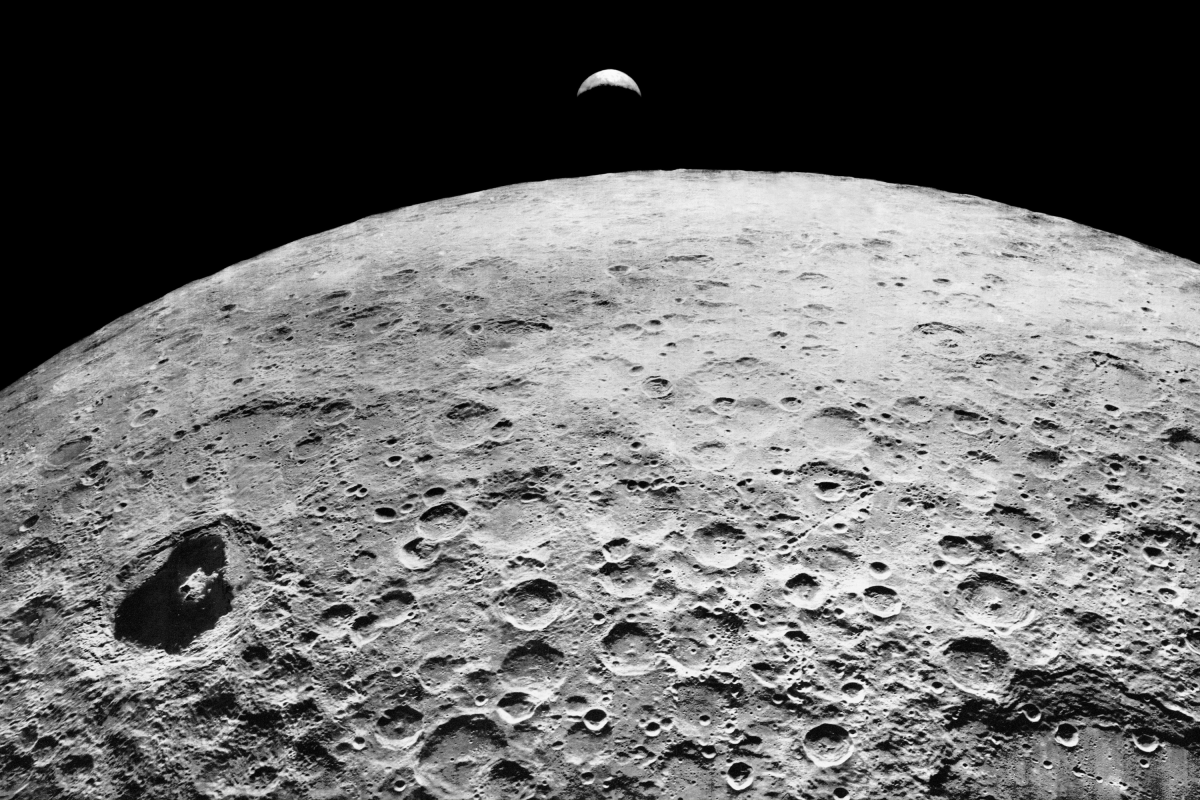
The mission launched on April 1, 2024, from Kennedy Space Center in Florida. It marks the first human journey around the Moon since Apollo 17 in 1972 and serves as the initial crewed test of the Artemis program, which aims to establish a sustainable human presence on the Moon. During the flyby, the astronauts documented lunar features on the far side, areas not visible from Earth.
m. m. ET. The broadcast is available on multiple platforms, including Netflix, NASA+, YouTube, Amazon Prime Video, Apple TV, Hulu, HBO Max, and Roku. m. m. m. CEST in Central Europe.
A 40-minute communications blackout occurred as Orion passed behind the Moon, temporarily severing contact with Earth. Viewers saw real-time footage from the spacecraft, mission control commentary, and scheduled milestones. The Guardian reported that the crew spent the weekend prior checking systems, spacesuits, and rehearsing scientific experiments.
“The possibility of alien life is a core consideration in mission planning, emphasising that exploring the universe’s secrets includes asking the question: ‘Are we alone?’”

“— Jared Isaacman, NASA official, April 6, 2024 (The Guardian)”
The astronauts conducted scientific experiments during the mission, including collecting saliva samples to monitor immune system responses to radiation, isolation, and distance from Earth over the 10-day duration. These tests examine potential reactivation of dormant viruses in space conditions.
The crew addressed a toilet malfunction early in the flight; Christina Koch repaired the $30 million system with ground assistance, restoring functionality. The new toilet features a private cubicle, an upgrade from Apollo-era methods that used bags and condom-like containers prone to leaks.
The mission faced no major disruptions during the flyby. Orion is scheduled to splash down in the Pacific Ocean later in the week, concluding the flight. Artemis II prepares for Artemis III, planned for a lunar landing by 2028, as part of NASA's effort to build a lunar base.
The Artemis program has an estimated total cost of nearly $100 billion. Critics, as noted in The Guardian, argue this expenditure overlooks domestic issues like the U.S. cost-of-living crisis. The program proceeded despite a 2023 attempt by President Donald Trump to cut NASA funding, which was blocked by bipartisan congressional support.
Skepticism exists regarding the 2028 landing timeline, with some sources indicating delays possible beyond the current presidential term.
Artemis II advances deep-space exploration capabilities, testing Orion's systems for longer missions. The crew's activities contribute data on human health in space, informing future endeavors.
Key Facts
Story Timeline
5 events- April 6, 2024 — 7:02 p.m. ET
Orion reaches closest approach to the Moon during flyby.
2 sourcesNewsweek · The Guardian - April 6, 2024 — 1:00 p.m. ET
NASA begins live coverage of the lunar flyby.
1 sourceNewsweek - April 6, 2024 — early hours
Crew experiences 40-minute communications blackout behind Moon.
2 sourcesNewsweek · The Guardian - April 1-5, 2024
Astronauts check systems, repair toilet, and conduct experiments en route to Moon.
1 sourceThe Guardian - April 1, 2024
Artemis II launches from Kennedy Space Center with four astronauts.
2 sourcesNewsweek · The Guardian
Potential Impact
- 01
Data from immune system experiments informs radiation protection for future missions.
- 02
Successful flyby validates Orion spacecraft for Artemis III lunar landing.
- 03
Global livestream increases public interest in NASA's Artemis program.
- 04
Mission outcomes support bipartisan funding for NASA deep-space efforts.
- 05
Toilet repair success improves crew comfort standards in spacecraft design.
Transparency Panel
Related Stories
koreaherald.comNASA Releases Thousands of Photos from Artemis II Lunar Mission
NASA has released over 12,000 images from the Artemis II mission, which orbited the moon in April 2026. The photos capture views of Earth, the lunar surface, and a solar eclipse observed during the crew's return. Astronauts from the mission also visited the United Nations headqua…
deccanchronicle.comThree Die in Hantavirus Cases on MV Hondius Cruise Ship
A hantavirus outbreak on the MV Hondius cruise ship has killed three passengers and sickened seven others, prompting an international response coordinated by the World Health Organization. The ship, carrying 147 people from 23 nationalities, is set to sail to Spain's Canary Islan…
newscientist.comHoutman Abrolhos Corals Show High Resilience to 2025 Heatwave, Unlike Global Losses
Coral reefs at the Houtman Abrolhos Islands off Western Australia endured a prolonged heatwave in early 2025 virtually unscathed, unlike widespread global die-offs. Researchers found exceptional heat tolerance across multiple species, with lab tests showing survival rates far exc…