Substrate
science

NASA's Artemis II Mission Surpasses Apollo 13 Distance Record During Lunar Flyby

The Artemis II crew reached a record distance of 252,756 miles from Earth, exceeding the Apollo 13 mark from 1970. The four astronauts looped around the moon's far side, entering a 41-minute communications blackout while conducting observations. The mission tests Orion spacecraft systems without a lunar landing.

Cbs News
The New York Times
The Bbc
The Independent
Npr
DI
+3
16 sources·Apr 7, 1:28 AM(29 days ago)·2m read
NASA's Artemis II Mission Surpasses Apollo 13 Distance Record During Lunar Flybyapp.buzzsumo.com
Audio version
Tap play to generate a narrated version.

NASA's Artemis II mission achieved a historic milestone on Monday when the crew traveled farther from Earth than any previous human spaceflight. m. Eastern time, surpassing the Apollo 13 record set in 1970.

m. Eastern time. m. Eastern time. This phase involves intensive observation of the lunar surface. The crew is the first to venture beyond low-Earth orbit since 1972.

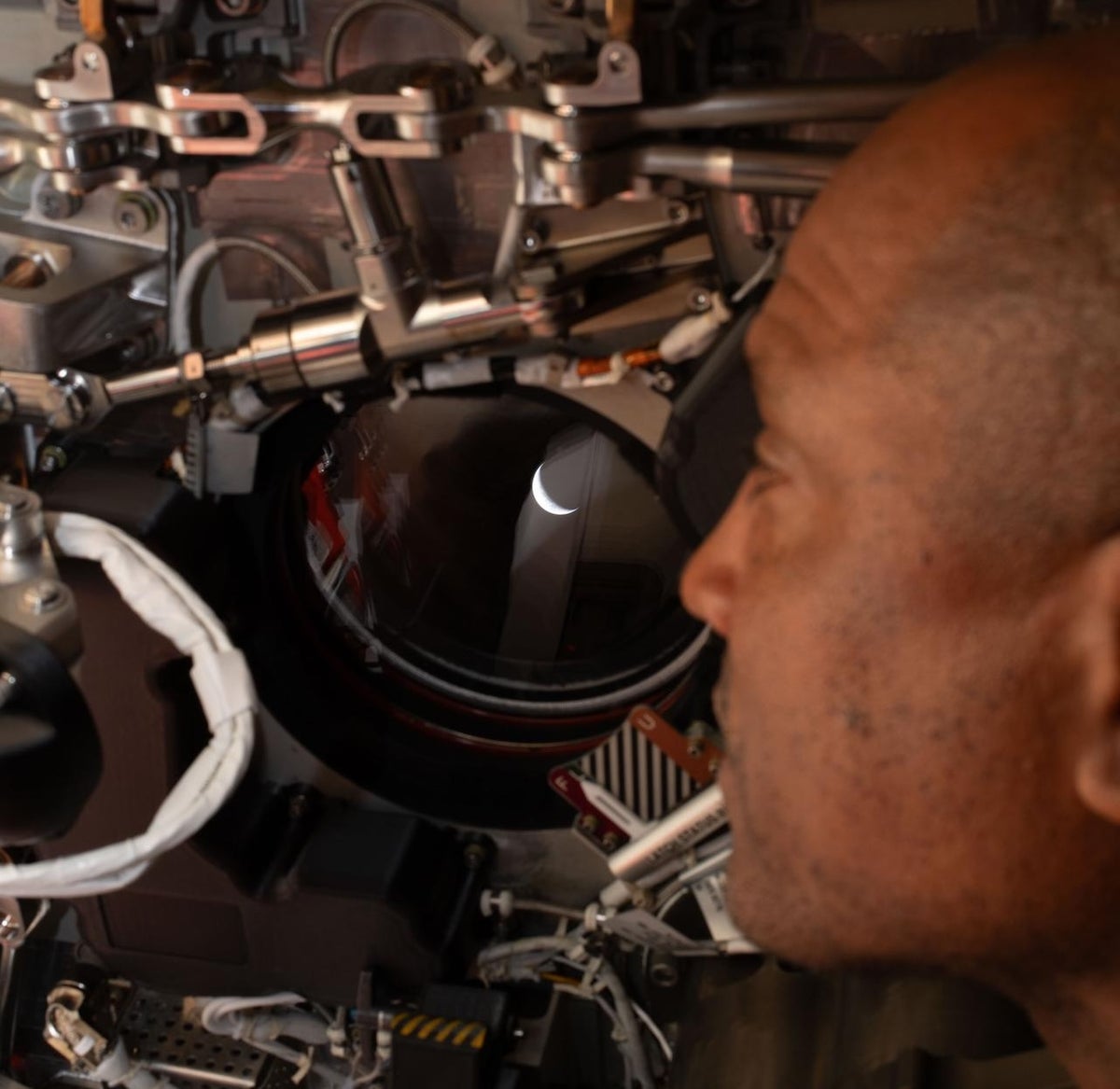
the spacecraft looped around the moon's far side, the astronauts observed previously unseen lunar features with the naked eye.

They targeted areas like Ohm crater, comparable in size to the Eye of the Sahara in northwest Africa, under varying lighting conditions to aid scientific analysis of its formation. With most of the far side in darkness, the crew searched for meteor flashes and the glow of lofted dust illuminated by Earth-reflected light. m.

Eastern time, at an altitude of 4,067 miles. Only about 20 percent of the far side was sunlit during the pass. The astronauts noted the terminator line, separating lit and dark regions, as a visually striking feature.

The spacecraft lost radio contact with Earth for approximately 41 minutes starting at 6:44 p.

m. Eastern time, due to the moon blocking signals. This blackout is a planned event and poses no concern, as similar occurrences happened during Apollo missions. Mission control uploaded navigation data beforehand to support the crew's trajectory.

The mission follows a free-return trajectory, allowing the spacecraft to coast back to Earth using gravitational forces even without engine function. NASA officials emphasized preparedness for the blackout, noting astronauts' training for such scenarios.

That is something we’re very used to in spaceflight.

Jared Isaacman, NASA Administrator, April 7 (CBS News)

II launched on the evening of April 1 from Kennedy Space Center in Florida. The crew spent the initial days testing Orion's life support systems, propulsion, and other components in high Earth orbit before departing for the moon. On days 3 and 4, they conducted additional tests and communicated with family members.

The mission entered the moon's sphere of influence at the end of day 5, where lunar gravity dominates over Earth's. Unlike Apollo missions, Artemis II does not include a lunar landing but focuses on validating spacecraft performance for future crewed lunar trips.

Challenges encountered included issues with the vehicle's toilet and personal computing devices. m. Eastern time, providing views of the solar corona and glimpses of Earth and other planets. NASA streams live coverage on YouTube, X, its website, and smart TV apps.

The spacecraft was 251,257 miles from Earth as of the latest update.

re-establishing contact, astronaut Christina Koch reported positive sentiments about resuming communication with Earth. The crew continued observations, including potential inspirational views akin to the Apollo 8 Earthrise image from 1968. The mission prioritizes safety, with focus on life support and thermal protection systems for re-entry.

Victor Glover highlighted the terminator line's visual appeal, describing valleys resembling black holes. The overall journey tests systems critical for NASA's Artemis program, aimed at sustainable lunar presence. Return to Earth is planned after completing the flyby loop.

Key Facts

252,756 miles
maximum distance from Earth achieved by crew
41 minutes
duration of planned communications blackout
4,067 miles
closest approach altitude to moon
April 1 launch
start of 10-day Artemis II mission
Four astronauts
three Americans and one Canadian on board

Story Timeline

5 events
  1. April 8 — 7:07 p.m. ET

    Crew reached maximum distance of 252,756 miles from Earth during lunar flyby.

    2 sourcesNYT · CBS
  2. April 8 — 6:44 p.m. ET

    Communications blackout began as spacecraft passed behind moon's far side.

    2 sourcesNYT · CBS
  3. April 8 — 1:56 p.m. ET

    Distance from Earth surpassed Apollo 13 record of 248,655 miles.

    2 sourcesNYT · CBS
  4. April 8 — Morning

    Crew began lunar flyby phase with surface observations around 2:45 p.m. ET.

    1 sourceNYT
  5. April 1 — Evening

    Artemis II launched from Kennedy Space Center atop SLS rocket.

    1 sourceNYT

Potential Impact

  1. 01

    Validated Orion systems advance Artemis III lunar landing preparations.

  2. 02

    Free-return trajectory success confirms safety for deep-space missions.

  3. 03

    Data from lunar observations inform future crater formation studies.

  4. 04

    Crew experiences enhance training protocols for blackout scenarios.

  5. 05

    Solar eclipse views provide unique data on solar corona.

Transparency Panel

Sources cross-referenced16
Confidence score98%
Synthesized bySubstrate AI
Word count546 words
PublishedApr 7, 2026, 1:28 AM
Bias signals removed4 across 3 outlets
Signal Breakdown
Amplifying 3Speculative 1

Related Stories

NASA Releases Thousands of Photos from Artemis II Lunar Missionkoreaherald.com
science7 hrs ago

NASA Releases Thousands of Photos from Artemis II Lunar Mission

NASA has released over 12,000 images from the Artemis II mission, which orbited the moon in April 2026. The photos capture views of Earth, the lunar surface, and a solar eclipse observed during the crew's return. Astronauts from the mission also visited the United Nations headqua…

Nbc News
UN
The Atlantic
Benzinga
Business Insider
5 sources
Three Die in Hantavirus Cases on MV Hondius Cruise Shipdeccanchronicle.com
science17 hrs agoFraming55Framing risk55/100Rewrite largely sticks to facts but inherits mild consensus framing around human-to-human transmission risk and repeatedly centers WHO spokespeople for reassurance.Click to jump to full framing analysis

Three Die in Hantavirus Cases on MV Hondius Cruise Ship

A hantavirus outbreak on the MV Hondius cruise ship has killed three passengers and sickened seven others, prompting an international response coordinated by the World Health Organization. The ship, carrying 147 people from 23 nationalities, is set to sail to Spain's Canary Islan…

Stat
Cbs News
2 sources
Houtman Abrolhos Corals Show High Resilience to 2025 Heatwave, Unlike Global Lossesnewscientist.com
science9 hrs agoDeveloping

Houtman Abrolhos Corals Show High Resilience to 2025 Heatwave, Unlike Global Losses

Coral reefs at the Houtman Abrolhos Islands off Western Australia endured a prolonged heatwave in early 2025 virtually unscathed, unlike widespread global die-offs. Researchers found exceptional heat tolerance across multiple species, with lab tests showing survival rates far exc…

New Scientist
1 source