NATO Exercise Tests Response to Sabotage Threat Against Sweden
A Swedish-led NATO war game this week simulated an attack on the island of Gotland involving troop buildups, power outages and food shortages. Ukraine sent drone pilots to advise on tactics while U.S. forces also participated. The exercise occurred as European nations assess potential changes in American military support.
 The Independent
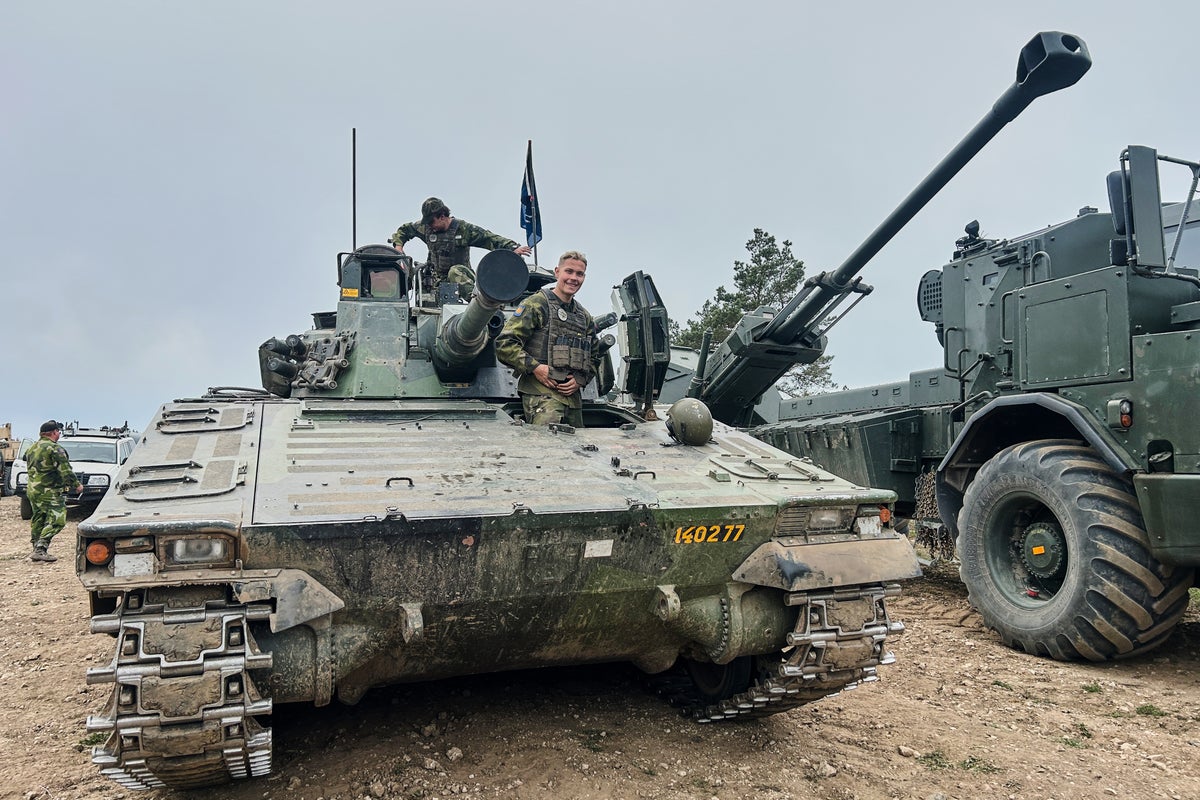
NATO allies conducted a war game this week that tested their response to a simulated threat against Sweden, one of the alliance's newest members. The scenario involved an unnamed country building up troops along the eastern border of the alliance. Non-NATO member Ukraine provided advice on drone warfare during the exercise, which the Associated Press was permitted to observe.
The war game played out with recent Russian actions in mind. For months Russia has increased sabotage operations including cyberattacks on critical infrastructure and disinformation campaigns across Europe. The scenario focused on the Swedish island of Gotland facing power outages and food shortages from sabotage before NATO's Article 5 collective defense clause would be invoked.
"In theory, it could happen tomorrow," said Rear Adm. Jonas Wikström, director of the exercise. The exercise included U.S. forces. Sweden's chief of defense noted that the United States remains Europe's most militarily capable ally and that any change in American presence would affect overall dynamics.
Most recently the U.S. has withdrawn at least 5,000 troops from Germany and moved air defense systems toward the Middle East, which has prompted some European nations to face delays in weapons orders.
Ukrainian drone pilots demonstrated tactics learned in combat by destroying Swedish troops during parts of the exercise. A 24-year-old Ukrainian pilot using the call sign Tarik said the training was stopped three times for Swedish forces to adjust tactics.
He added that in a real situation the troops would have been killed. He described operations using small first-person-view attack drones against Russian forces. The Swedish chief of defense stated that all Western forces need to learn rapidly how to conduct drone and counter-drone operations and that the fastest way is to listen to the Ukrainians.
"What they’ve taught us is you have to really focus on your survivability and how you can’t be detected," said Brig. Gen. Curtis King with the U.S. military. He added that Western nations also need to develop deep detection capabilities to spot drones from far away.
The goal is to integrate radar systems made by different companies and countries to share data and track threats.
The exercise centered on Gotland because of its location in the Baltic Sea between the Russian exclave of Kaliningrad and Sweden. Control of the island would provide dominance over the central Baltic Sea, which serves as a key route for Russian vessels transporting oil and liquefied natural gas.
After the Cold War Sweden reduced its military presence on Gotland but strengthened it following Russia's full-scale invasion of Ukraine in 2022. Sweden and Finland joined NATO in 2024. The Swedish chief of defense described as a very reasonable scenario one in which Russian President Vladimir Putin might attempt to seize a small piece of alliance territory on Gotland to test NATO's collective reaction.